FactbookCompare 0
← Back to all countries
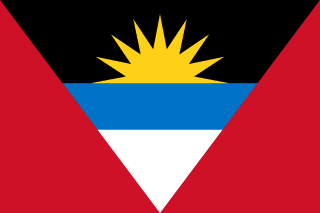
Flag of Antigua and Barbuda

Antigua and Barbuda

Antigua and Barbuda

Background
The Siboney were the first people to inhabit the islands of Antigua and Barbuda in 2400 B.C., but the Arawaks populated the islands when Christopher COLUMBUS landed on his second voyage in 1493. Early Spanish and French settlements were succeeded by an English colony in 1667. Slavery, which provided labor on the sugar plantations on Antigua, was abolished in 1834. The islands became an independent state within the British Commonwealth of Nations in 1981. In 2017, Hurricane Irma passed over the island of Barbuda, devastating the island and forcing the evacuation of the population to Antigua. Almost all of the structures on Barbuda were destroyed and the vegetation stripped, but Antigua was spared the worst.
Location
Caribbean, islands between the Caribbean Sea and the North Atlantic Ocean, east-southeast of Puerto Rico
Geographic coordinates
17 03 N, 61 48 W
Map references
Central America and the Caribbean
Area
total: 443 sq km (Antigua 280 sq km; Barbuda 161 sq km)
land: 443 sq km
water: 0 sq km
Area - comparative
2.5 times the size of Washington, D.C.
Land boundaries
total: 0 km
Coastline
153 km
Maritime claims
territorial sea: 12 nm
contiguous zone: 24 nm
exclusive economic zone: 200 nm
continental shelf: 200 nm or to the edge of the continental margin
Climate
tropical maritime; little seasonal temperature variation
Terrain
mostly low-lying limestone and coral islands, with some higher volcanic areas
Elevation
highest point: Mount Obama 402 m
lowest point: Caribbean Sea 0 m
Natural resources
NEGL; pleasant climate fosters tourism
Land use
agricultural land: 20.5% (2023 est.)
agricultural land: arable land: arable land: 9.1% (2023 est.)
agricultural land: permanent crops: permanent crops: 2.3% (2023 est.)
agricultural land: permanent pasture: permanent pasture: 9.1% (2023 est.)
forest: 18% (2023 est.)
other: 61.5% (2023 est.)
Irrigated land
1.3 sq km (2012)
Population distribution
the island of Antigua is home to approximately 97% of the population; nearly the entire population of Barbuda lives in Codrington
Natural hazards
hurricanes and tropical storms (July to October); periodic droughts
Geography - note
Antigua has a deeply indented shoreline with many natural harbors and beaches; Barbuda has a large western harbor
Population
total: 102,634 (2024 est.)
male: 48,311
female: 54,323
Nationality
noun: Antiguan(s), Barbudan(s)
adjective: Antiguan, Barbudan
Ethnic groups
African descent 87.3%, mixed 4.7%, Hispanic 2.7%, White 1.6%, other 2.7%, unspecified 0.9% (2011 est.)
Languages
English (official), Antiguan Creole (an English-based creole)
Religions
Protestant 68.3% (Anglican 17.6%, Seventh Day Adventist 12.4%, Pentecostal 12.2%, Moravian 8.3%, Methodist 5.6%, Wesleyan Holiness 4.5%, Church of God 4.1%, Baptist 3.6%), Roman Catholic 8.2%, other 12.2%, unspecified 5.5%, none 5.9% (2011 est.)
Age structure
0-14 years: 21.8% (male 11,384/female 11,034)
15-64 years: 67.6% (male 32,312/female 37,094)
65 years and over: 10.5% (2024 est.) (male 4,615/female 6,195)
Dependency ratios
total dependency ratio: 47.9 (2024 est.)
youth dependency ratio: 32.3 (2024 est.)
elderly dependency ratio: 15.6 (2024 est.)
potential support ratio: 6.4 (2024 est.)
Median age
total: 34.1 years (2025 est.)
male: 31.9 years
female: 35.7 years
Population growth rate
1.09% (2025 est.)
Birth rate
14.7 births/1,000 population (2025 est.)
Death rate
5.77 deaths/1,000 population (2025 est.)
Net migration rate
1.97 migrant(s)/1,000 population (2025 est.)
Population distribution
the island of Antigua is home to approximately 97% of the population; nearly the entire population of Barbuda lives in Codrington
Urbanization
urban population: 24.3% of total population (2023)
rate of urbanization: 0.87% annual rate of change (2020-25 est.)
Major urban areas - population
21,000 SAINT JOHN'S (capital) (2018)
Sex ratio
at birth: 1.05 male(s)/female
0-14 years: 1.03 male(s)/female
15-64 years: 0.87 male(s)/female
65 years and over: 0.74 male(s)/female
total population: 0.89 male(s)/female (2024 est.)
Maternal mortality ratio
35 deaths/100,000 live births (2023 est.)
Infant mortality rate
total: 13.3 deaths/1,000 live births (2025 est.)
male: 16.4 deaths/1,000 live births
female: 10.7 deaths/1,000 live births
Life expectancy at birth
total population: 78.3 years (2024 est.)
male: 76.1 years
female: 80.5 years
Total fertility rate
1.92 children born/woman (2025 est.)
Gross reproduction rate
0.94 (2025 est.)
Drinking water source
improved: urban: urban: 98.4% of population (2022 est.)
improved: rural: rural: 98.3% of population (2022 est.)
improved: total: total: 98.4% of population (2022 est.)
unimproved: urban: urban: 1.6% of population (2022 est.)
unimproved: rural: rural: 1.7% of population (2022 est.)
unimproved: total: total: 1.6% of population (2022 est.)
Health expenditure
Health expenditure (as % of GDP): 5.9% of GDP (2021)
Health expenditure (as % of national budget): 14% of national budget (2022 est.)
Physician density
2.92 physicians/1,000 population (2017)
Hospital bed density
3.3 beds/1,000 population (2020 est.)
Sanitation facility access
improved: urban: urban: 95.4% of population (2022 est.)
improved: rural: rural: 98% of population (2022 est.)
improved: total: total: 97.4% of population (2022 est.)
unimproved: urban: urban: 4.6% of population (2022 est.)
unimproved: rural: rural: 2% of population (2022 est.)
unimproved: total: total: 2.6% of population (2022 est.)
Obesity - adult prevalence rate
18.9% (2016)
Alcohol consumption per capita
total: 11.88 liters of pure alcohol (2019 est.)
beer: 2.97 liters of pure alcohol (2019 est.)
wine: 3.95 liters of pure alcohol (2019 est.)
spirits: 4.55 liters of pure alcohol (2019 est.)
other alcohols: 0.41 liters of pure alcohol (2019 est.)
Education expenditure
Education expenditure (% GDP): 3.1% of GDP (2023 est.)
Education expenditure (% national budget): 5.9% national budget (2025 est.)
Environmental issues
limited natural freshwater resources; water management hampered by tree-clearing to increase crop production, causing rapid rainfall runoff
International environmental agreements
party to: Biodiversity, Climate Change, Climate Change-Kyoto Protocol, Climate Change-Paris Agreement, Comprehensive Nuclear Test Ban, Desertification, Endangered Species, Environmental Modification, Hazardous Wastes, Law of the Sea, Marine Dumping-London Convention, Marine Dumping-London Protocol, Nuclear Test Ban, Ozone Layer Protection, Ship Pollution, Wetlands, Whaling
signed, but not ratified: none of the selected agreements
Climate
tropical maritime; little seasonal temperature variation
Land use
agricultural land: 20.5% (2023 est.)
agricultural land: arable land: arable land: 9.1% (2023 est.)
agricultural land: permanent crops: permanent crops: 2.3% (2023 est.)
agricultural land: permanent pasture: permanent pasture: 9.1% (2023 est.)
forest: 18% (2023 est.)
other: 61.5% (2023 est.)
Urbanization
urban population: 24.3% of total population (2023)
rate of urbanization: 0.87% annual rate of change (2020-25 est.)
Carbon dioxide emissions
total emissions: 725,000 metric tonnes of CO2 (2023 est.)
from petroleum and other liquids: 725,000 metric tonnes of CO2 (2023 est.)
Particulate matter emissions
8.3 micrograms per cubic meter (2019 est.)
Waste and recycling
municipal solid waste generated annually: 30,600 tons (2024 est.)
percent of municipal solid waste recycled: 15.3% (2022 est.)
Total water withdrawal
municipal: 7.2 million cubic meters (2022 est.)
industrial: 2.5 million cubic meters (2022 est.)
agricultural: 1.8 million cubic meters (2022 est.)
Total renewable water resources
52 million cubic meters (2022)
Country name
conventional long form: Antigua and Barbuda
conventional short form: Antigua and Barbuda
etymology: antiguo is Spanish for "ancient" or "old;" Christopher COLUMBUS named the island in 1493, after the church of Santa Maria la Antigua (Old Saint Mary's) in Seville, Spain; barbuda is Spanish for "bearded" and may refer to the island's lichen-covered fig trees
Government type
parliamentary democracy under a constitutional monarchy; a Commonwealth realm
Capital
name: Saint John's
geographic coordinates: 17 07 N, 61 51 W
time difference: UTC-4 (1 hour ahead of Washington, DC, during Standard Time)
etymology: named after Saint John the Apostle
Administrative divisions
6 parishes and 2 dependencies*; Barbuda*, Redonda*, Saint George, Saint John, Saint Mary, Saint Paul, Saint Peter, Saint Philip
Legal system
common law based on the English model
Constitution
history: several previous; latest presented 31 July 1981, effective 31 October 1981 (The Antigua and Barbuda Constitution Order 1981)
amendment process: proposed by either house of Parliament; passage of amendments to constitutional sections such as citizenship, fundamental rights and freedoms, the establishment, power, and authority of the executive and legislative branches, the Supreme Court Order, and the procedure for amending the constitution requires approval by at least two-thirds majority vote of the membership of both houses, approval by at least two-thirds majority in a referendum, and assent to by the governor general; passage of other amendments requires only two-thirds majority vote by both houses
International law organization participation
has not submitted an ICJ jurisdiction declaration; accepts ICCt jurisdiction
Citizenship
citizenship by birth: yes
citizenship by descent only: yes
dual citizenship recognized: yes
residency requirement for naturalization: 7 years
Suffrage
18 years of age; universal
Executive branch
chief of state: King CHARLES III (since 8 September 2022); represented by Governor General Rodney WILLIAMS (since 14 August 2014)
head of government: Prime Minister Gaston BROWNE (since 13 June 2014)
cabinet: Council of Ministers appointed by the governor general on the advice of the prime minister
election/appointment process: the monarchy is hereditary; governor general appointed by the monarch on the advice of the prime minister; following legislative elections, the governor general usually appoints the leader of the majority party or majority coalition as prime minister
Legislative branch
legislature name: Parliament
legislative structure: bicameral
Legislative branch - lower chamber
chamber name: House of Representatives
number of seats: 18 (all directly elected)
electoral system: plurality/majority
scope of elections: full renewal
term in office: 5 years
most recent election date: 1/18/2023
parties elected and seats per party: Antigua and Barbuda Labour Party (ABLP) (9); United Progressive Party (UPP) (6); Barbuda People's Movement (BPM) (1); Independents (1); (1); Republican Force (1)
percentage of women in chamber: 5.6%
expected date of next election: January 2028
Legislative branch - upper chamber
chamber name: Senate
number of seats: 17 (all appointed)
scope of elections: full renewal
term in office: 5 years
most recent election date: 2/17/2023
percentage of women in chamber: 41.2%
expected date of next election: February 2028
Judicial branch
highest court(s): the Eastern Caribbean Supreme Court (ECSC) is the superior court of the Organization of Eastern Caribbean States; the ECSC is headquartered on St. Lucia and consists of the Court of Appeal -- headed by the chief justice and 4 judges -- and the High Court with 18 judges; the Court of Appeal travels to member states on a schedule to hear appeals from the High Court and subordinate courts
judge selection and term of office: chief justice of Eastern Caribbean Supreme Court appointed by the British monarch; other justices and judges appointed by the Judicial and Legal Services Commission; Court of Appeal justices appointed for life with mandatory retirement at age 65; High Court judges appointed for life with mandatory retirement at age 62
subordinate courts: Industrial Court; Magistrates' Courts
Political parties
Antigua Labor Party or ABLPBarbuda People's Movement or BPMDemocratic National Alliance or DNAGo Green for Life or GGLUnited Progressive Party or UPP
Diplomatic representation in the US
chief of mission: Ambassador Sir Ronald SANDERS (since 17 September 2015)
chancery: 3216 New Mexico Ave. NW, Washington, DC 20016
telephone: [1] (202) 362-5122
FAX: [1] (202) 362-5225
email address and website: embantbar@aol.comhttps://www.antigua-barbuda.org/Aghome01.htm
consulate(s) general: Miami, New York
Diplomatic representation from the US
embassy: the US does not have an embassy in Antigua and Barbuda; the US Ambassador to Barbados is accredited to Antigua and Barbuda
International organization participation
ACP, ACS, AOSIS, C, Caricom, CDB, CELAC, FAO, G-77, IBRD, ICAO, ICC (NGOs), ICCt, ICRM, IDA, IFAD, IFC, IFRCS, ILO, IMF, IMO, IMSO, Interpol, IOC, IOM, ISO (subscriber), ITU, ITUC (NGOs), MIGA, NAM (observer), OAS, OECS, OPANAL, OPCW, Petrocaribe, UN, UNCTAD, UNESCO, UPU, WFTU (NGOs), WHO, WIPO, WMO, WTO
Independence
1 November 1981 (from the UK)
National holiday
Independence Day, 1 November (1981)
Flag
description: red, with an inverted isosceles triangle in the center that spans the flag from top to bottom; the triangle contains three horizontal bands of black (top), light blue, and white, with a yellow rising sun in the black bandmeaning: the sun stands for the dawn of a new era, black for the African heritage of most of the population, blue for hope, and red for the dynamism of the people; the "V" shape of the triangle stands for victory; the yellow, blue, and white colors are also meant to evoke the country's tourist attractions of sun, sea, and sand
National symbol(s)
fallow deer
National color(s)
red, white, blue, black, yellow
National anthem(s)
title: "God Save the King"
lyrics/music: unknown
history: royal anthem, as a Commonwealth country
National heritage
total World Heritage Sites: 1 (cultural)
selected World Heritage Site locales: Antigua Naval Dockyard (Nelson's Dockyard)
Economic overview
dual island-tourism and construction-driven economy; emerging “blue economy”; limited water supply and susceptibility to hurricanes limit activity; improving road infrastructure; friendly to foreign direct investment; looking at financial innovation in cryptocurrency and blockchain technologies
Real GDP (purchasing power parity)
Real GDP (purchasing power parity) 2024: $2.772 billion (2024 est.)
Real GDP (purchasing power parity) 2023: $2.657 billion (2023 est.)
Real GDP (purchasing power parity) 2022: $2.594 billion (2022 est.)
Real GDP growth rate
Real GDP growth rate 2024: 4.3% (2024 est.)
Real GDP growth rate 2023: 2.4% (2023 est.)
Real GDP growth rate 2022: 9.1% (2022 est.)
Real GDP per capita
Real GDP per capita 2024: $29,600 (2024 est.)
Real GDP per capita 2023: $28,500 (2023 est.)
Real GDP per capita 2022: $27,900 (2022 est.)
GDP (official exchange rate)
$2.225 billion (2024 est.)
Inflation rate (consumer prices)
Inflation rate (consumer prices) 2024: 6.2% (2024 est.)
Inflation rate (consumer prices) 2023: 5.1% (2023 est.)
Inflation rate (consumer prices) 2022: 7.5% (2022 est.)
GDP - composition, by sector of origin
agriculture: 1.9% (2023 est.)
industry: 19% (2023 est.)
services: 69.1% (2023 est.)
Agricultural products
tropical fruits, milk, mangoes/guavas, eggs, lemons/limes, pumpkins/squash, sweet potatoes, vegetables, cucumbers/gherkins, yams (2023)
Industries
tourism, construction, light manufacturing (clothing, alcohol, household appliances)
Industrial production growth rate
1% (2023 est.)
Remittances
Remittances 2024: 1.2% of GDP (2024 est.)
Remittances 2023: 1.7% of GDP (2023 est.)
Remittances 2022: 1.9% of GDP (2022 est.)
Budget
revenues: $251.418 million (2014 est.)
expenditures: $266.044 million (2014 est.)
Public debt
Public debt 2016: 86.2% of GDP (2016 est.)
Current account balance
Current account balance 2024: -$181.366 million (2024 est.)
Current account balance 2023: -$271.047 million (2023 est.)
Current account balance 2022: -$291.674 million (2022 est.)
Exports
Exports 2024: $1.314 billion (2024 est.)
Exports 2023: $1.185 billion (2023 est.)
Exports 2022: $1.111 billion (2022 est.)
Exports - partners
Suriname 29%, Poland 21%, USA 8%, Dominican Republic 7%, Australia 5% (2023)
Exports - commodities
refined petroleum, ships, soybean meal, shellfish, paintings (2023)
Imports
Imports 2024: $1.282 billion (2024 est.)
Imports 2023: $1.273 billion (2023 est.)
Imports 2022: $1.227 billion (2022 est.)
Imports - partners
USA 43%, Poland 6%, China 5%, UK 4%, Germany 4% (2023)
Imports - commodities
ships, refined petroleum, cars, plastic products, furniture (2023)
Reserves of foreign exchange and gold
Reserves of foreign exchange and gold 2024: $358.441 million (2024 est.)
Reserves of foreign exchange and gold 2023: $364.367 million (2023 est.)
Reserves of foreign exchange and gold 2022: $396.506 million (2022 est.)
Exchange rates
Currency: East Caribbean dollars (XCD) per US dollar -
Exchange rates 2024: 2.7 (2024 est.)
Exchange rates 2023: 2.7 (2023 est.)
Exchange rates 2022: 2.7 (2022 est.)
Exchange rates 2021: 2.7 (2021 est.)
Exchange rates 2020: 2.7 (2020 est.)
Electricity access
electrification - total population: 100% (2022 est.)
Electricity
installed generating capacity: 148,000 kW (2023 est.)
consumption: 322.923 million kWh (2023 est.)
transmission/distribution losses: 38.121 million kWh (2023 est.)
Electricity generation sources
fossil fuels: 93.6% of total installed capacity (2023 est.)
solar: 6.4% of total installed capacity (2023 est.)
Coal
imports: 25 metric tons (2023 est.)
Petroleum
refined petroleum consumption: 5,000 bbl/day (2023 est.)
Energy consumption per capita
Total energy consumption per capita 2023: 110.114 million Btu/person (2023 est.)
Telephones - fixed lines
total subscriptions: 27,000 (2021 est.)
subscriptions per 100 inhabitants: 29 (2022 est.)
Telephones - mobile cellular
total subscriptions: 186,182 (2022 est.)
subscriptions per 100 inhabitants: 201 (2022 est.)
Broadcast media
state-controlled Antigua and Barbuda Broadcasting Service (ABS) operates 1 TV station; multi-channel cable TV subscription services are available; ABS operates 1 radio station; roughly 20 radio stations (2024)
Internet country code
.ag
Internet users
percent of population: 78% (2023 est.)
Broadband - fixed subscriptions
total: 10,000 (2022 est.)
subscriptions per 100 inhabitants: 11 (2022 est.)
Civil aircraft registration country code prefix
V2
Airports
4 (2025)
Heliports
2 (2025)
Merchant marine
total: 614 (2023)
by type: bulk carrier 24, container ship 109, general cargo 425, oil tanker 6, other 50
Ports
total ports: 1 (2024)
large: 0
medium: 1
small: 0
very small: 0
ports with oil terminals: 1
key ports: St. John's
Military and security forces
Antigua and Barbuda Defense Force (ABDF): Antigua and Barbuda Regiment, Air Wing, Coast GuardRoyal Police Force of Antigua and Barbuda (RPFAB) (2025)
Military and security service personnel strengths
approximately 300 active Defense Force personnel (2025)
Military equipment inventories and acquisitions
the ABDF's equipment inventory is limited to small arms, light weapons, and soft-skin vehicles; the Coast Guard maintains ex-US patrol vessels and some smaller boats (2025)
Military service age and obligation
18-23 years of age for voluntary military service for both men and women; no conscription (2025)
Military - note
the ABDF’s responsibilities include providing for internal security and support to the police in maintaining law and order, interdicting narcotics smuggling, responding to natural disasters, and monitoring the country’s territorial waters and maritime resources; established in 1981 from colonial forces originally created in 1897, it is one of the world’s smallest militariesthe country has been a member of the Caribbean Regional Security System (RSS) since its creation in 1982; RSS signatories (Barbados, Dominica, Grenada, Guyana, Saint Kitts and Nevis, Saint Lucia, and Saint Vincent and the Grenadines) agreed to prepare contingency plans and assist one another, on request, in national emergencies, prevention of smuggling, search and rescue, immigration control, fishery protection, customs and excise control, maritime policing duties, protection of off-shore installations, pollution control, national and other disasters, and threats to national security (2025)
Refugees and internally displaced persons
refugees: 5 (2024 est.)