- Country name
- conventional long form: none
conventional short form: Canada
etymology: the name is probably derived from the Huron or Iroquois word kanata, meaning village or camp - Government type
- federal parliamentary democracy (Parliament of Canada) under a constitutional monarchy; a Commonwealth realm; federal and state authorities and responsibilities regulated in constitution
- Capital
- name: Ottawa
geographic coordinates: 45 25 N, 75 42 W
time difference: UTC-5 (same time as Washington, DC, during Standard Time)
daylight saving time: +1hr, begins second Sunday in March; ends first Sunday in November
time zone note: Canada has six time zones
etymology: the city lies on the south bank of the Ottawa River, from which it derives its name; the river name comes from the Algonquin word adawe, meaning "to trade" - Administrative divisions
- 10 provinces and 3 territories*; Alberta, British Columbia, Manitoba, New Brunswick, Newfoundland and Labrador, Northwest Territories*, Nova Scotia, Nunavut*, Ontario, Prince Edward Island, Québec, Saskatchewan, Yukon*
- Legal system
- common law system except in Quebec, where civil law based on the French civil code prevails
- Constitution
- history:
consists of unwritten and written acts, customs, judicial decisions, and traditions dating from 1763; the written part of the constitution consists of the Constitution Act of 29 March 1867, which created a federation of four provinces, and the Constitution Act of 17 April 1982
amendment process:
proposed by either house of Parliament or by the provincial legislative assemblies; there are 5 methods for passage though most require approval by both houses of Parliament, approval of at least two thirds of the provincial legislative assemblies and assent and formalization as a proclamation by the governor general in council; the most restrictive method is reserved for amendments affecting fundamental sections of the constitution, such as the office of the monarch or the governor general, and the constitutional amendment procedures, which require unanimous approval by both houses and by all the provincial assemblies, and assent of the governor general in council - International law organization participation
- accepts compulsory ICJ jurisdiction with reservations; accepts ICCt jurisdiction
- Citizenship
- citizenship by birth: yes
citizenship by descent only: yes
dual citizenship recognized: yes
residency requirement for naturalization: minimum of 3 of last 5 years resident in Canada - Suffrage
- 18 years of age; universal
- Executive branch
- chief of state: King CHARLES III (since 8 September 2022); represented by Governor General Mary SIMON (since 26 July 2021)
head of government: Prime Minister Mark CARNEY (since 14 March 2025)
cabinet: Federal Ministry chosen by the prime minister usually from among members of his/her own party sitting in Parliament
election/appointment process:
the monarchy is hereditary; governor general appointed by the monarch on the advice of the prime minister for a 5-year term; after legislative elections, the governor general usually designates the leader of the majority party or majority coalition in the House of Commons as prime minister
note: the governor general position is largely ceremonial - Legislative branch
- legislature name: Parliament of Canada - Parlement du Canada
legislative structure: bicameral - Legislative branch - lower chamber
- chamber name: House of Commons
number of seats: 343 (all directly elected)
electoral system: plurality/majority
scope of elections: full renewal
term in office: 4 years
most recent election date: 4/28/2025
parties elected and seats per party: Liberal Party (169); Conservative Party (144); Bloc Québécois (BQ) (22); Other (30)
percentage of women in chamber: 30.3%
expected date of next election: October 2029 - Legislative branch - upper chamber
- chamber name: Senate
number of seats: 105 (all appointed)
percentage of women in chamber: 54.8% - Judicial branch
- highest court(s): Supreme Court of Canada (consists of the chief justice and 8 judges)
judge selection and term of office: chief justice and judges appointed by the prime minister in council; all judges appointed for life with mandatory retirement at age 75
subordinate courts:
federal level: Federal Court of Appeal; Federal Court; Tax Court; federal administrative tribunals; Courts Martial; provincial/territorial level: provincial superior, appeals, first instance, and specialized courts
note: in 1999, the Nunavut Court -- a circuit court with the power of a provincial superior court, as well as a territorial court -- was established to serve isolated settlements - Political parties
- Bloc Québécois
Conservative Party of Canada or CPC
Green Party of Canada
Liberal Party of Canada
New Democratic Party - Diplomatic representation in the US
- chief of mission: Ambassador Kirsten HILLMAN (since 17 July 2020)
chancery: 501 Pennsylvania Avenue NW, Washington, DC 20001
telephone: [1] (844) 880-6519
FAX: [1] (202) 682-7738
email address and website:
ccs.scc@international.gc.ca
https://www.international.gc.ca/country-pays/us-eu/washington.aspx?lang=eng
consulate(s) general: Atlanta, Boston, Chicago, Dallas, Denver, Detroit, Los Angeles, Miami, Minneapolis, New York, San Francisco, Seattle
trade office(s): Houston, Palo Alto (CA), San Diego; note - there are trade offices in the Consulates General - Diplomatic representation from the US
- chief of mission: Ambassador Pete HOEKSTRA (since 29 April 2025)
embassy: 490 Sussex Drive, Ottawa, Ontario K1N 1G8
mailing address: 5480 Ottawa Place, Washington DC 20521-5480
telephone: [1] (613) 688-5335
FAX: [1] (613) 241-7845
email address and website:
OttawaNIV@state.gov
https://ca.usembassy.gov/
consulate(s) general: Calgary, Halifax, Montreal, Quebec City, Toronto, Vancouver
consulate(s): Winnipeg - International organization participation
- ADB (nonregional member), AfDB (nonregional member), APEC, Arctic Council, ARF, ASEAN (dialogue partner), Australia Group, BIS, C, CD, CDB, CE (observer), EAPC, EBRD, EITI (implementing country), FAO, FATF, G-7, G-8, G-10, G-20, IADB, IAEA, IBRD, ICAO, ICC (national committees), ICCt, ICRM, IDA, IEA, IFAD, IFC, IFRCS, IGAD (partners), IHO, ILO, IMF, IMO, IMSO, Interpol, IOC, IOM, IPU, ISO, ITSO, ITU, ITUC (NGOs), MIGA, MINUSTAH, MONUSCO, NAFTA, NATO, NEA, NSG, OAS, OECD, OIF, OPCW, OSCE, Pacific Alliance (observer), Paris Club, PCA, PIF (partner), UN, UNCTAD, UNESCO, UNFICYP, UNHCR, UNMISS, UNOOSA, UNRWA, UNTSO, UPU, USMCA, Wassenaar Arrangement, WCO, WFTU (NGOs), WHO, WIPO, WMO, WTO, ZC
- Independence
- 1 July 1867 (union of British North American colonies); 11 December 1931 (recognized by UK per Statute of Westminster)
- National holiday
- Canada Day, 1 July (1867)
- Flag
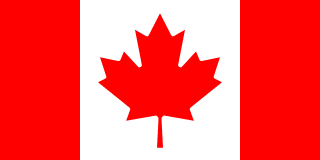
- description: two vertical bands of red on each side, with a white square between them; a large 11-pointed red maple leaf is centered in the white square
meaning: the maple leaf is a national symbol - National symbol(s)
- maple leaf, beaver
- National color(s)
- red, white
- National coat of arms
- The current design of the Royal Coat of Arms of Canada was adopted in 1921 and references the four nations that helped found Canada. England is represented with royal lions, a union flag, and a rose, and Scotland with a royal lion, a unicorn, and a thistle. Ireland’s symbols include a harp and a shamrock, and France’s symbols are a royal fleur-de-lis and a royal flag. The maple leaves are the Canadian national symbol. A red circle displays the motto Desiderantes Meliorem Patriam (Desiring a Better Country), and a blue ribbon displays A Mari usque ad Mare (From Sea to Sea).
- National anthem(s)
- title: "God Save the King"
lyrics/music: unknown
history: royal anthem, as a Commonwealth country - National heritage
- total World Heritage Sites: 22 (10 cultural, 11 natural, 1 mixed) (2021)
selected World Heritage Site locales:
L'Anse aux Meadows (c); Canadian Rocky Mountain Parks (n); Dinosaur Provincial Park (n); Historic District of Old Quebec (c); Old Town Lunenburg (c); Wood Buffalo National Park (n); Head-Smashed-In Buffalo Jump (c); Gros Morne National Park (n); Pimachiowin Aki (m)