FactbookCompare 0
← Back to all countries
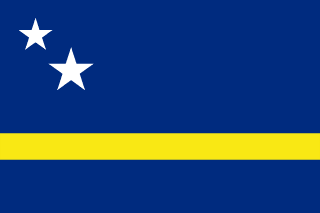
Flag of Curaçao

Curaçao

Country of Curaçao

Background
The original Arawak Indian settlers who arrived on Curaçao from South America in about A.D. 1000 were largely enslaved by the Spanish early in the 16th century and forcibly relocated to other colonies where labor was needed. The Dutch seized Curaçao from the Spanish in 1634. Once the center of the Caribbean slave trade, Curaçao was hard hit economically when the Dutch abolished slavery in 1863. Its prosperity (and that of neighboring Aruba) was restored in the early 20th century with the construction of the Isla Refineria to service the newly discovered Venezuelan oilfields. In 1954, Curaçao and several other Dutch Caribbean colonies were reorganized as the Netherlands Antilles, part of the Kingdom of the Netherlands. In referenda in 2005 and 2009, the citizens of Curaçao voted to become a self-governing country within the Kingdom of the Netherlands. The change in status became effective in 2010 with the dissolution of the Netherlands Antilles.
Location
Caribbean, an island in the Caribbean Sea, 55 km off the coast of Venezuela
Geographic coordinates
12 10 N, 69 00 W
Map references
Central America and the Caribbean
Area
total: 444 sq km
land: 444 sq km
water: 0 sq km
Area - comparative
more than twice the size of Washington, D.C.
Land boundaries
total: 0 km
Coastline
364 km
Maritime claims
territorial sea: 12 nm
exclusive economic zone: 200 nm
Climate
tropical marine climate, ameliorated by northeast trade winds, results in mild temperatures; semiarid with average rainfall of 60 cm/year
Terrain
generally low, hilly terrain
Elevation
highest point: Mt. Christoffel 372 m
lowest point: Caribbean Sea 0 m
Natural resources
calcium phosphates, protected harbors, hot springs
Land use
agricultural land: 0% (2022 est.)
agricultural land: arable land: arable land: 10% (2018)
forest: 0.2% (2022 est.)
other: 99.8% (2022 est.)
Irrigated land
NA
Population distribution
largest concentration on the island is Willemstad; smaller settlements near the coast can be found throughout the island, particularly in the northwest
Natural hazards
Curacao is south of the Caribbean hurricane belt and is rarely threatened
Geography - note
Curaçao is a part of the Windward Islands (southern) group in the Lesser Antilles
Population
total: 153,289 (2024 est.)
male: 73,755
female: 79,534
Nationality
noun: Curacaoan
adjective: Curacaoan; Dutch
Ethnic groups
Curacaoan 75.4%, Dutch 6%, Dominican 3.6%, Colombian 3%, Bonairean, Sint Eustatian, Saban 1.5%, Haitian 1.2%, Surinamese 1.2%, Venezuelan 1.1%, Aruban 1.1%, other 5%, unspecified 0.9% (2011 est.)
Languages
Papiamento (official) (a creole language that is a mixture of Portuguese, Spanish, Dutch, English, and, to a lesser extent, French, as well as elements of African languages and the language of the Arawak) 80%, Dutch (official) 8.8%, Spanish 5.6%, English (official) 3.1%, other 2.3%, unspecified 0.3% (2011 est.)
Religions
Roman Catholic 72.8%, Pentecostal 6.6%, Protestant 3.2%, Adventist 3%, Jehovah's Witness 2%, Evangelical 1.9%, other 3.8%, none 6%, unspecified 0.6% (2011 est.)
Age structure
0-14 years: 19.2% (male 15,069/female 14,337)
15-64 years: 62.3% (male 47,258/female 48,217)
65 years and over: 18.5% (2024 est.) (male 11,428/female 16,980)
Dependency ratios
total dependency ratio: 60.6 (2024 est.)
youth dependency ratio: 30.8 (2024 est.)
elderly dependency ratio: 29.8 (2024 est.)
potential support ratio: 3.4 (2024 est.)
Median age
total: 38.1 years (2025 est.)
male: 35.5 years
female: 40.2 years
Population growth rate
0.25% (2025 est.)
Birth rate
12.71 births/1,000 population (2025 est.)
Death rate
8.91 deaths/1,000 population (2025 est.)
Net migration rate
-1.3 migrant(s)/1,000 population (2025 est.)
Population distribution
largest concentration on the island is Willemstad; smaller settlements near the coast can be found throughout the island, particularly in the northwest
Urbanization
urban population: 89% of total population (2023)
rate of urbanization: 0.57% annual rate of change (2020-25 est.)
Major urban areas - population
144,000 WILLEMSTAD (capital) (2018)
Sex ratio
at birth: 1.05 male(s)/female
0-14 years: 1.05 male(s)/female
15-64 years: 0.98 male(s)/female
65 years and over: 0.67 male(s)/female
total population: 0.93 male(s)/female (2024 est.)
Infant mortality rate
total: 7.4 deaths/1,000 live births (2025 est.)
male: 8.3 deaths/1,000 live births
female: 6.7 deaths/1,000 live births
Life expectancy at birth
total population: 79.9 years (2024 est.)
male: 77.6 years
female: 82.3 years
Total fertility rate
1.95 children born/woman (2025 est.)
Gross reproduction rate
0.95 (2025 est.)
Education expenditure
7.4% of GDP (2020 est.)
Environmental issues
waste management, including pollution of marine areas from domestic sewage, inadequate sewage treatment facilities, industrial effluents, agricultural runoff, mismanagement of toxic substances, and ineffective regulations; damage from neglect and a lack of controls at major refinery
Climate
tropical marine climate, ameliorated by northeast trade winds, results in mild temperatures; semiarid with average rainfall of 60 cm/year
Land use
agricultural land: 0% (2022 est.)
agricultural land: arable land: arable land: 10% (2018)
forest: 0.2% (2022 est.)
other: 99.8% (2022 est.)
Urbanization
urban population: 89% of total population (2023)
rate of urbanization: 0.57% annual rate of change (2020-25 est.)
Waste and recycling
municipal solid waste generated annually: 24,700 tons (2024 est.)
Country name
conventional long form: Country of Curacao
conventional short form: Curacao
local long form: Land Curacao (Dutch)/ Pais Korsou (Papiamento)
local short form: Curacao (Dutch)/ Korsou (Papiamento)
former: Netherlands Antilles; Curacao and Dependencies
etymology: the origin of the name is disputed; many historians now agree that the name derives from a similar-sounding word the original inhabitants used to describe themselves
Government type
parliamentary democracy
Dependency status
one of four constituent countries of the Kingdom of the Netherlands; full autonomy in internal affairs granted in 2010; Dutch government responsible for defense and foreign affairs
Capital
name: Willemstad
geographic coordinates: 12 06 N, 68 55 W
time difference: UTC-4 (1 hour ahead of Washington, DC, during Standard Time)
etymology: the name means "William's Town" in Dutch; named after Prince WILLEM of Orange (1533-84), the first stadtholder of the United Provinces of the Netherlands
Legal system
based on Dutch civil law
Constitution
history: previous 1947, 1955; latest adopted 5 September 2010, entered into force 10 October 2010 (regulates governance of Curacao but is subordinate to the Charter for the Kingdom of the Netherlands)
Citizenship
see the Netherlands
Suffrage
18 years of age; universal
Executive branch
chief of state: King WILLEM-ALEXANDER of the Netherlands (since 30 April 2013); represented by Governor Lucille A. GEORGE-WOUT (since 4 November 2013)
head of government: Prime Minister Gilmar PISAS (since 14 June 2021)
cabinet: Cabinet sworn-in by the governor
election/appointment process: the monarch is hereditary; governor appointed by the monarch; following legislative elections, the legislature usually elects the leader of the majority party as prime minister
most recent election date: 21 March 2025
expected date of next election: 2029
Legislative branch
legislature name: Parliament of Curacao
legislative structure: unicameral
number of seats: 21 (directly elected)
electoral system: proportional representation
scope of elections: full renewal
term in office: 4 years
most recent election date: 3/19/2021
parties elected and seats per party: MFK (9); PAR (4); PNP (4); MAN (2); KEM (1); TPK (1)
percentage of women in chamber: 28.6%
expected date of next election: 2025
Judicial branch
highest court(s): Joint Court of Justice of Aruba, Curacao, Sint Maarten, and of Bonaire, Sint Eustatius and Saba or "Joint Court of Justice" (sits as a 3-judge panel); final appeals heard by the Supreme Court in The Hague, Netherlands
judge selection and term of office: Joint Court judges appointed by the monarch for life
subordinate courts: first instance courts, appeals court; specialized courts
Political parties
Korsou di Nos Tur or KdnTKorsou Esun Miho or KEMMovementu Futuro Korsou or MFKMovementu Progresivo or MPMovishon Antia Nobo or MANPartido Antia Restruktura or PARPartido Inovashon Nashonal or PINPartido Nashonal di Pueblo or PNPPueblo Soberano or PSTrabou pa Kòrsou or TPKUn Korsou Hustu
Diplomatic representation in the US
none (represented by the Kingdom of the Netherlands)
Diplomatic representation from the US
chief of mission: Consul General Ramón “Chico” NEGRÓN (since 9 June 2025); note - also accredited to Aruba and Sint Maarten
embassy: P.O. Box 158, J.B. Gorsiraweg 1
mailing address: 3160 Curacao Place, Washington DC 20521-3160
telephone: [599] (9) 461-3066
FAX: [599] (9) 461-6489
email address and website: ACSCuracao@state.govhttps://cw.usconsulate.gov/
International organization participation
ACS (associate), Caricom (observer), FATF, ILO, ITU, UNESCO (associate), UPU
Independence
none (part of the Kingdom of the Netherlands)
National holiday
King's Day (birthday of King WILLEM-ALEXANDER), 27 April (1967)
Flag
description: on a blue field, a horizontal yellow band divides the flag below the center; two five-pointed white stars -- the smaller above and to the left of the larger -- appear in the upper leftmeaning: the blue stands for the sky and sea, and yellow for the sun; the stars symbolize Curacao and its uninhabited sister island of Klein Curacao (Little Curacao); the star points represent the five continents from which Curacao's inhabitants originate
National symbol(s)
laraha (citrus tree)
National color(s)
blue, yellow, white
National anthem(s)
title: "Himmo di Korsou" (Anthem of Curacao)
lyrics/music: Guillermo ROSARIO, Mae HENRIQUEZ, Enrique MULLER, Betty DORAN/Frater Candidus NOWENS, Errol "El Toro" COLINA
history: adapted 1978; the lyrics, originally written in 1899, were rewritten in 1978 to remove colonial references
National heritage
total World Heritage Sites: 1 (cultural); note - excerpted from the Netherlands entry
selected World Heritage Site locales: Historic Willemstad
Economic overview
high-income island economy; developed infrastructure; tourism and financial services-based economy; investing in information technology incentives; oil refineries service Venezuela and China
Real GDP (purchasing power parity)
Real GDP (purchasing power parity) 2023: $4.312 billion (2023 est.)
Real GDP (purchasing power parity) 2022: $4.138 billion (2022 est.)
Real GDP (purchasing power parity) 2021: $3.834 billion (2021 est.)
Real GDP growth rate
Real GDP growth rate 2023: 4.2% (2023 est.)
Real GDP growth rate 2022: 7.9% (2022 est.)
Real GDP growth rate 2021: 4.2% (2021 est.)
Real GDP per capita
Real GDP per capita 2023: $27,700 (2023 est.)
Real GDP per capita 2022: $27,600 (2022 est.)
Real GDP per capita 2021: $25,200 (2021 est.)
GDP (official exchange rate)
$3.281 billion (2023 est.)
Inflation rate (consumer prices)
Inflation rate (consumer prices) 2019: 2.6% (2019 est.)
Inflation rate (consumer prices) 2018: 2.6% (2018 est.)
Inflation rate (consumer prices) 2017: 1.6% (2017 est.)
GDP - composition, by sector of origin
agriculture: 0.3% (2023 est.)
industry: 11.7% (2023 est.)
services: 73.3% (2023 est.)
GDP - composition, by end use
household consumption: 73.2% (2018 est.)
government consumption: 14.5% (2018 est.)
investment in fixed capital: 34% (2018 est.)
investment in inventories: 7.1% (2018 est.)
exports of goods and services: 63.2% (2018 est.)
imports of goods and services: -92% (2018 est.)
Agricultural products
aloe, sorghum, peanuts, vegetables, tropical fruit
Industries
tourism, petroleum refining, petroleum transshipment, light manufacturing, financial and business services
Remittances
Remittances 2023: 5.4% of GDP (2023 est.)
Remittances 2022: 5.2% of GDP (2022 est.)
Remittances 2021: 5.2% of GDP (2021 est.)
Current account balance
Current account balance 2023: -$654.688 million (2023 est.)
Current account balance 2022: -$822.667 million (2022 est.)
Current account balance 2021: -$508.758 million (2021 est.)
Exports
Exports 2023: $2.107 billion (2023 est.)
Exports 2022: $2.046 billion (2022 est.)
Exports 2021: $1.363 billion (2021 est.)
Exports - partners
Armenia 57%, USA 15%, Guyana 5%, Dominican Republic 4%, Netherlands 2% (2023)
Exports - commodities
diamonds, refined petroleum, crude petroleum, gold, petroleum coke (2023)
Imports
Imports 2023: $2.764 billion (2023 est.)
Imports 2022: $2.891 billion (2022 est.)
Imports 2021: $1.91 billion (2021 est.)
Imports - partners
USA 39%, Netherlands 24%, China 6%, Colombia 5%, Brazil 3% (2023)
Imports - commodities
refined petroleum, cars, garments, plastic products, packaged medicine (2023)
Exchange rates
Currency: Netherlands Antillean guilders (ANG) per US dollar -
Exchange rates 2024: 1.79 (2024 est.)
Exchange rates 2023: 1.79 (2023 est.)
Exchange rates 2022: 1.79 (2022 est.)
Exchange rates 2021: 1.79 (2021 est.)
Exchange rates 2020: 1.79 (2020 est.)
Electricity access
electrification - total population: 100% (2022 est.)
Telephones - fixed lines
total subscriptions: 51,000 (2022 est.)
subscriptions per 100 inhabitants: 27 (2022 est.)
Telephones - mobile cellular
total subscriptions: 173,926 (2023 est.)
subscriptions per 100 inhabitants: 94 (2023 est.)
Broadcast media
government-run TeleCuracao operates a TV station and a radio station; 2 other privately owned TV stations and several privately owned radio stations (2019)
Internet country code
.cw
Internet users
percent of population: 68% (2017 est.)
Broadband - fixed subscriptions
total: 61,000 (2022 est.)
subscriptions per 100 inhabitants: 33 (2022 est.)
Civil aircraft registration country code prefix
PJ
Airports
1 (2025)
Merchant marine
total: 57 (2023)
by type: general cargo 5, oil tanker 1, other 51
Ports
total ports: 4 (2024)
large: 0
medium: 2
small: 1
very small: 1
ports with oil terminals: 3
key ports: Bullenbaai, Caracasbaai, Sint Michelsbaai, Willemstad
Military and security forces
Curaçao Militia (CURMIL); Curaçao Volunteer Corps; Curacao Police Force (Korps Politie Curacao) (2025)
Military - note
defense is the responsibility of the Kingdom of the Netherlands; the Dutch Government controls foreign and defense policy; local security forces are supported by the Royal Netherlands Marechaussee (Gendarmerie), the Dutch Caribbean Police Force (Korps Politie Caribisch Nederland, KPCN), and the Dutch Caribbean Coast Guard (DCCG or Kustwacht Caribisch Gebied (KWCARIB)); there are two Dutch naval bases on Curaçao, and the Dutch Army maintains a small unit on a rotational basis (2025)