FactbookCompare 0
← Back to all countries
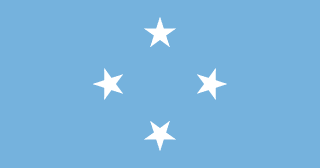
Flag of Micronesia

Micronesia

Federated States of Micronesia

Background
Each of the four states that compose the Federated States of Micronesia (FSM) -- Chuuk, Kosrae, Pohnpei, and Yap -- has its own unique history and cultural traditions. The first humans arrived in what is now the FSM in the second millennium B.C. In the 800s A.D., construction of the artificial islets at the Nan Madol complex in Pohnpei began, with the main architecture being built around 1200. At its height, Nan Madol united the approximately 25,000 people of Pohnpei under the Saudeleur Dynasty. By 1250, Kosrae was united in a kingdom centered in Leluh. Yap’s society became strictly hierarchical, with chiefs receiving tributes from islands up to 1,100 km (700 mi) away. Widespread human settlement in Chuuk began in the 1300s, and the different islands in the Chuuk Lagoon were frequently at war with one another. Portuguese and Spanish explorers visited a few of the islands in the 1500s, and Spain began exerting nominal, but not day-to-day, control over some of the islands -- which they named the Caroline Islands -- in the 1600s. In 1899, Spain sold all of the FSM to Germany. Japan seized the islands in 1914 and was granted a League of Nations mandate to administer them in 1920. During WWII, Japan built military bases across most of the islands and headquartered their Pacific naval operations in Chuuk. The US bombed Chuuk in 1944 but largely bypassed the other islands in its leapfrog campaign across the Pacific.  In 1947, the FSM came under US administration as part of the Trust Territory of the Pacific Islands, which comprised six districts: Chuuk, the Marshall Islands, the Northern Mariana Islands, Palau, Pohnpei, and Yap; Kosrae was separated from Pohnpei into a separate district in 1977. In 1979, Chuuk, Kosrae, Pohnpei, and Yap ratified the FSM Constitution and declared independence while the other three districts opted to pursue separate political status. There are significant inter-island rivalries stemming from their different histories and cultures. Chuuk, the most populous but poorest state, has pushed for secession, but an independence referendum has been repeatedly postponed.
Location
Oceania, island group in the North Pacific Ocean, about three-quarters of the way from Hawaii to Indonesia
Geographic coordinates
6 55 N, 158 15 E
Map references
Oceania
Area
total: 702 sq km
land: 702 sq km
water: 0 sq km (fresh water only)
Area - comparative
four times the size of Washington, D.C. (land area only)
Land boundaries
total: 0 km
Coastline
6,112 km
Maritime claims
territorial sea: 12 nm
exclusive economic zone: 200 nm
Climate
tropical; heavy year-round rainfall, especially in the eastern islands; located on southern edge of the typhoon belt with occasionally severe damage
Terrain
islands vary geologically from high mountainous islands to low, coral atolls; volcanic outcroppings on Pohnpei, Kosrae, and Chuuk
Elevation
highest point: Nanlaud on Pohnpei 782 m
lowest point: Pacific Ocean 0 m
Natural resources
timber, marine products, deep-seabed minerals, phosphate
Land use
agricultural land: 7.1% (2023 est.)
agricultural land: arable land: arable land: 2.9% (2023 est.)
agricultural land: permanent crops: permanent crops: 0% (2022 est.)
agricultural land: permanent pasture: permanent pasture: 4.3% (2023 est.)
forest: 92.2% (2023 est.)
other: 0.7% (2023 est.)
Irrigated land
0 sq km (2022)
Population distribution
the majority of the population lives in the coastal areas of the high islands; the mountainous interior is largely uninhabited; less than half of the population lives in urban areas
Natural hazards
typhoons (June to December)
Geography - note
composed of four major island groups totaling 607 islands
Population
total: 99,603 (2024 est.)
male: 48,708
female: 50,895
Nationality
noun: Micronesian(s)
adjective: Micronesian; Chuukese, Kosraen(s), Pohnpeian(s), Yapese
Ethnic groups
Chuukese/Mortlockese 49.3%, Pohnpeian 29.8%, Kosraean 6.3%, Yapese 5.7%, Yap outer islanders 5.1%, Polynesian 1.6%, Asian 1.4%, other 0.8% (2010 est.)
Languages
English (official and common language), Chuukese, Kosrean, Pohnpeian, Yapese, Ulithian, Woleaian, Nukuoro, Kapingamarangi
Religions
Roman Catholic 54.7%, Protestant 41.1% (includes Congregational 38.5%, Baptist 1.1%, Seventh Day Adventist 0.8%, Assembly of God 0.7%), Church of Jesus Christ 1.5%, other 1.9%, none 0.7%, unspecified 0.1% (2010 est.)
Age structure
0-14 years: 27% (male 13,673/female 13,239)
15-64 years: 67.3% (male 32,527/female 34,487)
65 years and over: 5.7% (2024 est.) (male 2,508/female 3,169)
Dependency ratios
total dependency ratio: 48.6 (2024 est.)
youth dependency ratio: 40.2 (2024 est.)
elderly dependency ratio: 8.5 (2024 est.)
potential support ratio: 11.8 (2024 est.)
Median age
total: 28.7 years (2025 est.)
male: 27.3 years
female: 29.1 years
Population growth rate
-0.77% (2025 est.)
Birth rate
17.55 births/1,000 population (2025 est.)
Death rate
4.23 deaths/1,000 population (2025 est.)
Net migration rate
-20.98 migrant(s)/1,000 population (2025 est.)
Population distribution
the majority of the population lives in the coastal areas of the high islands; the mountainous interior is largely uninhabited; less than half of the population lives in urban areas
Urbanization
urban population: 23.4% of total population (2023)
rate of urbanization: 1.52% annual rate of change (2020-25 est.)
Major urban areas - population
7,000 PALIKIR (capital) (2018)
Sex ratio
at birth: 1.05 male(s)/female
0-14 years: 1.03 male(s)/female
15-64 years: 0.94 male(s)/female
65 years and over: 0.79 male(s)/female
total population: 0.96 male(s)/female (2024 est.)
Maternal mortality ratio
129 deaths/100,000 live births (2023 est.)
Infant mortality rate
total: 20.4 deaths/1,000 live births (2025 est.)
male: 23.8 deaths/1,000 live births
female: 17.8 deaths/1,000 live births
Life expectancy at birth
total population: 75 years (2024 est.)
male: 72.9 years
female: 77.2 years
Total fertility rate
2.17 children born/woman (2025 est.)
Gross reproduction rate
1.06 (2025 est.)
Health expenditure
Health expenditure (as % of GDP): 11% of GDP (2021)
Health expenditure (as % of national budget): 1.9% of national budget (2022 est.)
Physician density
0.97 physicians/1,000 population (2020)
Sanitation facility access
improved: total: total: 88.3% of population
Obesity - adult prevalence rate
45.8% (2016)
Alcohol consumption per capita
total: 1.59 liters of pure alcohol (2019 est.)
beer: 0.92 liters of pure alcohol (2019 est.)
wine: 0.13 liters of pure alcohol (2019 est.)
spirits: 0.52 liters of pure alcohol (2019 est.)
other alcohols: 0.01 liters of pure alcohol (2019 est.)
Currently married women (ages 15-49)
51.7% (2023 est.)
Education expenditure
Education expenditure (% GDP): 11.6% of GDP (2020 est.)
Education expenditure (% national budget): 18.6% national budget (2020 est.)
Environmental issues
overfishing; sea-level rise; water and toxic pollution from mining; solid waste disposal
International environmental agreements
party to: Biodiversity, Climate Change, Climate Change-Kyoto Protocol, Climate Change-Paris Agreement, Comprehensive Nuclear Test Ban, Desertification, Hazardous Wastes, Law of the Sea, Ozone Layer Protection
signed, but not ratified: none of the selected agreements
Climate
tropical; heavy year-round rainfall, especially in the eastern islands; located on southern edge of the typhoon belt with occasionally severe damage
Land use
agricultural land: 7.1% (2023 est.)
agricultural land: arable land: arable land: 2.9% (2023 est.)
agricultural land: permanent crops: permanent crops: 0% (2022 est.)
agricultural land: permanent pasture: permanent pasture: 4.3% (2023 est.)
forest: 92.2% (2023 est.)
other: 0.7% (2023 est.)
Urbanization
urban population: 23.4% of total population (2023)
rate of urbanization: 1.52% annual rate of change (2020-25 est.)
Carbon dioxide emissions
total emissions: 121,000 metric tonnes of CO2 (2023 est.)
from petroleum and other liquids: 121,000 metric tonnes of CO2 (2023 est.)
Particulate matter emissions
8.1 micrograms per cubic meter (2019 est.)
Waste and recycling
municipal solid waste generated annually: 26,000 tons (2024 est.)
percent of municipal solid waste recycled: 15.2% (2022 est.)
Country name
conventional long form: Federated States of Micronesia
conventional short form: none
local long form: Federated States of Micronesia
local short form: none
former: New Philippines; Caroline Islands; Trust Territory of the Pacific Islands, Ponape, Truk, and Yap Districts
abbreviation: FSM
etymology: the name is a 19th-century construct of two Greek words, mikros (small) and nesoi (islands), and refers to its thousands of small islands in the western Pacific Ocean
Government type
federal republic in free association with the US
Capital
name: Palikir
geographic coordinates: 6 55 N, 158 09 E
time difference: UTC+11 (16 hours ahead of Washington, DC, during Standard Time)
time zone note: Micronesia has two time zones
Administrative divisions
4 states; Chuuk (Truk), Kosrae (Kosaie), Pohnpei (Ponape), Yap
Legal system
mixed system of common and customary law
Constitution
history: drafted June 1975, ratified 1 October 1978, entered into force 10 May 1979
amendment process: proposed by Congress, by a constitutional convention, or by public petition; passage requires approval by at least three-fourths majority vote in at least three fourths of the states
International law organization participation
has not submitted an ICJ jurisdiction declaration; non-party state to the ICCt
Citizenship
citizenship by birth: no
citizenship by descent only: at least one parent must be a citizen of FSM
dual citizenship recognized: no
residency requirement for naturalization: 5 years
Suffrage
18 years of age; universal
Executive branch
chief of state: President Wesley W. SIMINA (since 12 May 2023)
head of government: President Wesley W. SIMINA (since 12 May 2023)
cabinet: Cabinet includes the vice president and the heads of the 8 executive departments
election/appointment process: president and vice president indirectly elected by Congress from among the 4 'at large' senators for a 4-year term (eligible for a second term)
most recent election date: 12 May 2023
expected date of next election: 2027
Legislative branch
legislature name: Congress
legislative structure: unicameral
number of seats: 14 (all directly elected)
electoral system: plurality/majority
scope of elections: partial renewal
term in office: 2 years
most recent election date: 3/4/2025
percentage of women in chamber: 21.4%
expected date of next election: March 2027
Judicial branch
highest court(s): Federated States of Micronesia Supreme Court (consists of the chief justice and not more than 5 associate justices and organized into appellate and criminal divisions)
judge selection and term of office: justices appointed by the FSM president with the approval of two-thirds of Congress; justices appointed for life
subordinate courts: the highest state-level courts are: Chuuk Supreme Court; Korsae State Court; Pohnpei State Court; Yap State Court
Political parties
no formal parties
Diplomatic representation in the US
chief of mission: Ambassador Jackson T. SORAM (since 27 February 2024)
chancery: 1725 N Street NW, Washington, DC 20036
telephone: [1] (202) 223-4383
FAX: [1] (202) 223-4391
email address and website: dcmission@fsmembassy.fmhttps://fsmembassy.fm/
consulate(s) general: Honolulu, Portland (OR), Tamuning (Guam)
Diplomatic representation from the US
chief of mission: Ambassador Jennifer L. JOHNSON (since 13 September 2023)
embassy: 1286 US Embassy Place, Kolonia, Pohnpei, FM 96941
mailing address: 4120 Kolonia Place, Washington, D.C. 20521-4120
telephone: [691] 320-2187
FAX: [691] 320-2186
email address and website: koloniaacs@state.govhttps://fm.usembassy.gov/
International organization participation
ACP, ADB, AOSIS, FAO, G-77, IBRD, ICAO, ICRM, IDA, IFC, IFRCS, IMF, IOC, IOM, IPU, ITSO, ITU, MIGA, OPCW, PIF, Sparteca, SPC, UN, UNCTAD, UNESCO, WHO, WMO
Independence
3 November 1986 (from the US-administered UN trusteeship)
National holiday
Constitution Day, 10 May (1979)
Flag
description: light blue with four five-pointed white stars centered and arranged in a diamond patternmeaning: blue stands for the Pacific Ocean, and the stars for the four island groups of Chuuk, Kosrae, Pohnpei, and Yap
National symbol(s)
four five-pointed white stars on a light blue field, hibiscus flower
National color(s)
light blue, white
National anthem(s)
title: "Patriots of Micronesia"
lyrics/music: unknown
history: adopted 1991
National heritage
total World Heritage Sites: 1 (cultural)
selected World Heritage Site locales: Nan Madol: Ceremonial Center of Eastern Micronesia
Economic overview
lower middle-income Pacific island economy; US aid reliance, sunsetting in 2024; low entrepreneurship; mostly fishing and farming; US dollar user; no patent laws; tourism remains underdeveloped; significant corruption
Real GDP (purchasing power parity)
Real GDP (purchasing power parity) 2024: $432.679 million (2024 est.)
Real GDP (purchasing power parity) 2023: $429.59 million (2023 est.)
Real GDP (purchasing power parity) 2022: $427.529 million (2022 est.)
Real GDP growth rate
Real GDP growth rate 2024: 0.7% (2024 est.)
Real GDP growth rate 2023: 0.5% (2023 est.)
Real GDP growth rate 2022: -2.9% (2022 est.)
Real GDP per capita
Real GDP per capita 2024: $3,800 (2024 est.)
Real GDP per capita 2023: $3,800 (2023 est.)
Real GDP per capita 2022: $3,800 (2022 est.)
GDP (official exchange rate)
$471.425 million (2024 est.)
Inflation rate (consumer prices)
Inflation rate (consumer prices) 2022: 5.4% (2022 est.)
Inflation rate (consumer prices) 2021: 3.2% (2021 est.)
Inflation rate (consumer prices) 2020: 0.6% (2020 est.)
GDP - composition, by sector of origin
agriculture: 23.3% (2023 est.)
industry: 5% (2023 est.)
services: 69.2% (2023 est.)
Agricultural products
coconuts, cassava, vegetables, sweet potatoes, bananas, pork, plantains, fruits, beef, eggs (2023)
Industries
tourism, construction; specialized aquaculture, craft items (shell and wood)
Industrial production growth rate
0.8% (2023 est.)
Remittances
Remittances 2023: 5.3% of GDP (2023 est.)
Remittances 2022: 5.6% of GDP (2022 est.)
Remittances 2021: 6% of GDP (2021 est.)
Budget
revenues: $137.795 million (2020 est.)
expenditures: $111.963 million (2020 est.)
Public debt
Public debt 2020: 27.8% of GDP (2020 est.)
Taxes and other revenues
7% (of GDP) (2020 est.)
Current account balance
Current account balance 2017: $12 million (2017 est.)
Current account balance 2016: $11 million (2016 est.)
Current account balance 2014: $22.408 million (2014 est.)
Exports
Exports 2024: $129.5 million (2024 est.)
Exports 2023: $125.789 million (2023 est.)
Exports 2022: $90.466 million (2022 est.)
Exports - partners
Thailand 64%, China 16%, Philippines 11%, Japan 5%, Ecuador 1% (2023)
Exports - commodities
fish, diamonds, garments (2023)
Imports
Imports 2024: $325.9 million (2024 est.)
Imports 2023: $310.669 million (2023 est.)
Imports 2022: $274.334 million (2022 est.)
Imports - partners
USA 35%, China 20%, Japan 13%, Taiwan 6%, Philippines 4% (2023)
Imports - commodities
poultry, fish, plastic products, cars, prepared meat (2023)
Reserves of foreign exchange and gold
Reserves of foreign exchange and gold 2021: $497.434 million (2021 est.)
Reserves of foreign exchange and gold 2020: $451.913 million (2020 est.)
Reserves of foreign exchange and gold 2019: $397.158 million (2019 est.)
Exchange rates
the US dollar is used
Electricity access
electrification - total population: 85.3% (2022 est.)
electrification - urban areas: 98.6%
electrification - rural areas: 79.4%
Petroleum
refined petroleum consumption: 800 bbl/day (2023 est.)
Telephones - fixed lines
total subscriptions: 7,000 (2021 est.)
subscriptions per 100 inhabitants: 6 (2022 est.)
Telephones - mobile cellular
total subscriptions: 22,000 (2021 est.)
subscriptions per 100 inhabitants: 19 (2021 est.)
Broadcast media
no TV broadcast stations; each state has a multi-channel cable service with TV transmissions carrying roughly 95% imported programming and 5% local programming; about half a dozen radio stations (2009)
Internet country code
.fm
Internet users
percent of population: 41% (2022 est.)
Broadband - fixed subscriptions
total: 7,000 (2022 est.)
subscriptions per 100 inhabitants: 6 (2022 est.)
Civil aircraft registration country code prefix
V6
Airports
7 (2025)
Merchant marine
total: 38 (2023)
by type: general cargo 17, oil tanker 4, other 17
Ports
total ports: 4 (2024)
large: 0
medium: 0
small: 1
very small: 3
ports with oil terminals: 3
key ports: Colonia, Lele Harbor, Moen, Pohnpei Harbor
Military and security forces
no military forces; Federated States of Micronesia National Police (includes a maritime wing)
Military - note
defense is the responsibility of the US; in 1982, the FSM signed a Compact of Free Association (COFA) with the US, which granted the FSM financial assistance and access to many US domestic programs in exchange for exclusive US military access and defense responsibilities; the COFA entered into force in 1986; Micronesians can serve in the US armed forcesthe FSM has a "shiprider" agreement with the US, which allows local maritime law enforcement officers to embark on US Coast Guard (USCG) and US Navy (USN) vessels, including to board and search vessels suspected of violating laws or regulations within the FSM's designated exclusive economic zone (EEZ) or on the high seas; "shiprider" agreements also enable USCG personnel and USN vessels with embarked USCG law enforcement personnel to work with host nations to protect critical regional resources (2025)