FactbookCompare 0
← Back to all countries
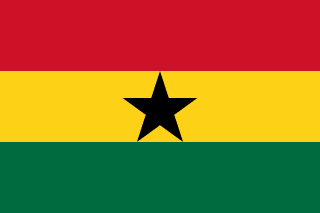
Flag of Ghana

Ghana

Republic of Ghana

Background
Ghana is a multiethnic country rich in natural resources and is one of the most stable and democratic countries in West Africa. Ghana has been inhabited for at least several thousand years, but little is known about its early inhabitants. By the 12th century, the gold trade started to boom in Bono (Bonoman) state in what is today southern Ghana, and it became the genesis of the Akan people's power and wealth in the region. Beginning in the 15th century, the Portuguese, followed by other European powers, arrived and competed for trading rights. Numerous kingdoms and empires emerged in the area, among the most powerful were the Kingdom of Dagbon in the north and the Asante (Ashanti) Empire in the south. By the mid-18th century, Asante was a highly organized state with immense wealth; it provided enslaved people for the Atlantic slave trade, and in return received firearms that facilitated its territorial expansion. The Asante resisted increasing British influence in the coastal areas, engaging in a series of wars during the 19th century before ultimately falling under British control. Formed from the merger of the British colony of the Gold Coast and the Togoland trust territory, Ghana in 1957 became the first Sub-Saharan country in colonial Africa to gain its independence, with Kwame NKRUMAH as its first leader.Ghana endured a series of coups before Lt. Jerry RAWLINGS took power in 1981 and banned political parties. After approving a new constitution and restoring multiparty politics in 1992, RAWLINGS won presidential elections in 1992 and 1996 but was constitutionally prevented from running for a third term in 2000. John KUFUOR of the opposition New Patriotic Party (NPP) succeeded him and was reelected in 2004. John Atta MILLS of the National Democratic Congress won the 2008 presidential election and took over as head of state. MILLS died in 2012 and was constitutionally succeeded by his vice president, John Dramani MAHAMA, who subsequently won the 2012 presidential election. In 2016, Nana Addo Dankwa AKUFO-ADDO of the NPP defeated MAHAMA, marking the third time that Ghana’s presidency had changed parties since the return to democracy. AKUFO-ADDO was reelected in 2020. In recent years, Ghana has taken an active role in promoting regional stability and is highly integrated in international affairs.
Location
Western Africa, bordering the Gulf of Guinea, between Cote d'Ivoire and Togo
Geographic coordinates
8 00 N, 2 00 W
Map references
Africa
Area
total: 238,533 sq km
land: 227,533 sq km
water: 11,000 sq km
Area - comparative
slightly smaller than Oregon
Land boundaries
total: 2,420 km
border countries: Burkina Faso 602 km; Cote d'Ivoire 720 km; Togo 1098 km
Coastline
539 km
Maritime claims
territorial sea: 12 nm
contiguous zone: 24 nm
exclusive economic zone: 200 nm
continental shelf: 200 nm
Climate
tropical; warm and comparatively dry along southeast coast; hot and humid in southwest; hot and dry in north
Terrain
mostly low plains with dissected plateau in south-central area
Elevation
highest point: Mount Afadjato 885 m
lowest point: Atlantic Ocean 0 m
mean elevation: 190 m
Natural resources
gold, timber, industrial diamonds, bauxite, manganese, fish, rubber, hydropower, petroleum, silver, salt, limestone
Land use
agricultural land: 55.4% (2023 est.)
agricultural land: arable land: arable land: 20.7% (2023 est.)
agricultural land: permanent crops: permanent crops: 11.9% (2023 est.)
agricultural land: permanent pasture: permanent pasture: 22.8% (2023 est.)
forest: 30.7% (2023 est.)
other: 13.9% (2023 est.)
Irrigated land
360 sq km (2013)
Major rivers (by length in km)
Volta river mouth (shared with Burkina Faso [s]) - 1,600 kmnote: [s] after country name indicates river source; [m] after country name indicates river mouth
Major watersheds (area sq km)
Atlantic Ocean drainage: Volta (410,991 sq km)
Population distribution
population is concentrated in the southern half of the country, with the highest concentrations on or near the Atlantic coast, as shown in this population distribution map
Natural hazards
dry, dusty, northeastern harmattan winds from January to March; droughts
Geography - note
Lake Volta is the world's largest artificial lake (manmade reservoir) by surface area (8,482 sq km; 3,275 sq mi); the lake was created after the Akosombo Dam was completed in 1965
Population
total: 35,336,133 (2025 est.)
male: 17,278,776
female: 18,057,357
Nationality
noun: Ghanaian(s)
adjective: Ghanaian
Ethnic groups
Akan 45.7%, Mole-Dagbani 18.5%, Ewe 12.8%, Ga-Dangme 7.1%, Gurma 6.4%, Guan 3.2%, Grusi 2.7%, Mande 2%, other 1.6% (2021 est.)
Languages
Asante 16%, Ewe 14%, Fante 11.6%, Boron (Brong) 4.9%, Dagomba 4.4%, Dangme 4.2%, Dagarte (Dagaba) 3.9%, Kokomba 3.5%, Akyem 3.2%, Ga 3.1%, other 31.2% (2010 est.)
Religions
Christian 71.3% (Pentecostal/Charismatic 31.6%, Protestant 17.4%, Catholic 10%, other 12.3%), Muslim 19.9%, traditionalist 3.2%, other 4.5%, none 1.1% (2021 est.)
Age structure
0-14 years: 37.4% (male 6,527,386/female 6,400,245)
15-64 years: 58.2% (male 9,690,498/female 10,444,197)
65 years and over: 4.4% (2024 est.) (male 684,189/female 842,577)
Dependency ratios
total dependency ratio: 70.8 (2025 est.)
youth dependency ratio: 63.2 (2025 est.)
elderly dependency ratio: 7.6 (2025 est.)
potential support ratio: 13.1 (2025 est.)
Median age
total: 21.6 years (2025 est.)
male: 20.6 years
female: 22.3 years
Population growth rate
2.12% (2025 est.)
Birth rate
27.09 births/1,000 population (2025 est.)
Death rate
5.73 deaths/1,000 population (2025 est.)
Net migration rate
-0.15 migrant(s)/1,000 population (2025 est.)
Population distribution
population is concentrated in the southern half of the country, with the highest concentrations on or near the Atlantic coast, as shown in this population distribution map
Urbanization
urban population: 59.2% of total population (2023)
rate of urbanization: 3.06% annual rate of change (2020-25 est.)
Major urban areas - population
3.768 million Kumasi, 2.660 million ACCRA (capital), 1.078 million Sekondi Takoradi (2023)
Sex ratio
at birth: 1.03 male(s)/female
0-14 years: 1.02 male(s)/female
15-64 years: 0.93 male(s)/female
65 years and over: 0.81 male(s)/female
total population: 0.96 male(s)/female (2024 est.)
Mother's mean age at first birth
22.1 years (2022 est.)
Maternal mortality ratio
234 deaths/100,000 live births (2023 est.)
Infant mortality rate
total: 30.5 deaths/1,000 live births (2025 est.)
male: 34.5 deaths/1,000 live births
female: 27.8 deaths/1,000 live births
Life expectancy at birth
total population: 70.1 years (2024 est.)
male: 68.4 years
female: 71.8 years
Total fertility rate
3.51 children born/woman (2025 est.)
Gross reproduction rate
1.73 (2025 est.)
Drinking water source
improved: urban: urban: 98.4% of population (2022 est.)
improved: rural: rural: 74.1% of population (2022 est.)
improved: total: total: 88.4% of population (2022 est.)
unimproved: urban: urban: 1.6% of population (2022 est.)
unimproved: rural: rural: 25.9% of population (2022 est.)
unimproved: total: total: 11.6% of population (2022 est.)
Health expenditure
Health expenditure (as % of GDP): 4.2% of GDP (2021)
Health expenditure (as % of national budget): 7.4% of national budget (2022 est.)
Physician density
0.27 physicians/1,000 population (2023)
Hospital bed density
0.7 beds/1,000 population (2015 est.)
Sanitation facility access
improved: urban: urban: 85.7% of population (2022 est.)
improved: rural: rural: 55.3% of population (2022 est.)
improved: total: total: 73.1% of population (2022 est.)
unimproved: urban: urban: 14.3% of population (2022 est.)
unimproved: rural: rural: 44.7% of population (2022 est.)
unimproved: total: total: 26.9% of population (2022 est.)
Obesity - adult prevalence rate
10.9% (2016)
Alcohol consumption per capita
total: 1.59 liters of pure alcohol (2019 est.)
beer: 0.53 liters of pure alcohol (2019 est.)
wine: 0.05 liters of pure alcohol (2019 est.)
spirits: 0.39 liters of pure alcohol (2019 est.)
other alcohols: 0.61 liters of pure alcohol (2019 est.)
Tobacco use
total: 2.8% (2025 est.)
male: 5.4% (2025 est.)
female: 0.3% (2025 est.)
Children under the age of 5 years underweight
12% (2022 est.)
Currently married women (ages 15-49)
53.4% (2022 est.)
Child marriage
women married by age 15: 3.3% (2022)
women married by age 18: 16.1% (2022)
men married by age 18: 2.4% (2022)
Education expenditure
Education expenditure (% GDP): 2.9% of GDP (2022 est.)
Education expenditure (% national budget): 13.2% national budget (2022 est.)
Literacy
total population: 76.5% (2021 est.)
male: 81.3% (2021 est.)
female: 72.1% (2021 est.)
School life expectancy (primary to tertiary education)
total: 12 years (2022 est.)
male: 12 years (2022 est.)
female: 12 years (2022 est.)
Environmental issues
drought in north; deforestation; overgrazing; soil erosion; poaching and habitat destruction; water pollution; inadequate potable water
International environmental agreements
party to: Biodiversity, Climate Change, Climate Change-Kyoto Protocol, Climate Change-Paris Agreement, Comprehensive Nuclear Test Ban, Desertification, Endangered Species, Environmental Modification, Hazardous Wastes, Law of the Sea, Marine Dumping-London Protocol, Nuclear Test Ban, Ozone Layer Protection, Ship Pollution, Tropical Timber 2006, Wetlands, Whaling
signed, but not ratified: Marine Life Conservation
Climate
tropical; warm and comparatively dry along southeast coast; hot and humid in southwest; hot and dry in north
Land use
agricultural land: 55.4% (2023 est.)
agricultural land: arable land: arable land: 20.7% (2023 est.)
agricultural land: permanent crops: permanent crops: 11.9% (2023 est.)
agricultural land: permanent pasture: permanent pasture: 22.8% (2023 est.)
forest: 30.7% (2023 est.)
other: 13.9% (2023 est.)
Urbanization
urban population: 59.2% of total population (2023)
rate of urbanization: 3.06% annual rate of change (2020-25 est.)
Carbon dioxide emissions
total emissions: 20.822 million metric tonnes of CO2 (2023 est.)
from coal and metallurgical coke: 107,000 metric tonnes of CO2 (2023 est.)
from petroleum and other liquids: 13.349 million metric tonnes of CO2 (2023 est.)
from consumed natural gas: 7.366 million metric tonnes of CO2 (2023 est.)
Particulate matter emissions
43.4 micrograms per cubic meter (2019 est.)
Methane emissions
energy: 164.9 kt (2022-2024 est.)
agriculture: 166.7 kt (2019-2021 est.)
waste: 134 kt (2019-2021 est.)
other: 28.1 kt (2019-2021 est.)
Waste and recycling
municipal solid waste generated annually: 3.538 million tons (2024 est.)
percent of municipal solid waste recycled: 13.3% (2022 est.)
Total water withdrawal
municipal: 299.6 million cubic meters (2022 est.)
industrial: 95 million cubic meters (2022 est.)
agricultural: 1.07 billion cubic meters (2022 est.)
Total renewable water resources
56.2 billion cubic meters (2022 est.)
Country name
conventional long form: Republic of Ghana
conventional short form: Ghana
former: Gold Coast
etymology: named for a tribal chieftain who ruled a large part of the region prior to the 13th century, even though his territory was northwest of modern-day Ghana; the former name, Gold Coast, came from the gold that Portuguese explorers discovered in the region in the late 15th century
Government type
presidential republic
Capital
name: Accra
geographic coordinates: 5 33 N, 0 13 W
time difference: UTC 0 (5 hours ahead of Washington, DC, during Standard Time)
etymology: the name derives from the Akan word nkran, meaning "ant," and may refer to the nickname local forest dwellers gave to the Nigerian tribes who settled in the area in the 16th century
Administrative divisions
16 regions; Ahafo, Ashanti, Bono, Bono East, Central, Eastern, Greater Accra, North East, Northern, Oti, Savannah, Upper East, Upper West, Volta, Western, Western North
Legal system
mixed system of English common law and customary law
Constitution
history: several previous; latest drafted 31 March 1992, approved and promulgated 28 April 1992, entered into force 7 January 1993
amendment process: proposed by Parliament; consideration requires prior referral to the Council of State, a body of prominent citizens who advise the president of the republic; passage of amendments to "entrenched" constitutional articles (including those on national sovereignty, fundamental rights and freedoms, the structure and authorities of the branches of government, and amendment procedures) requires approval in a referendum by at least 40% participation of eligible voters and at least 75% of votes cast, followed by at least two-thirds majority vote in Parliament, and assent of the president; amendments to non-entrenched articles do not require referenda
International law organization participation
has not submitted an ICJ jurisdiction declaration; accepts ICCt jurisdiction
Citizenship
citizenship by birth: no
citizenship by descent only: at least one parent or grandparent must be a citizen of Ghana
dual citizenship recognized: yes
residency requirement for naturalization: 5 years
Suffrage
18 years of age; universal
Executive branch
chief of state: President John Dramani MAHAMA (since 7 January 2025)
head of government: President John Dramani MAHAMA (since 7 January 2025)
cabinet: Council of Ministers; nominated by the president, approved by Parliament
election/appointment process: president and vice president directly elected on the same ballot by absolute-majority popular vote in 2 rounds, if needed, for a 4-year term (eligible for a second term); the president is both chief of state and head of government
most recent election date: 7 December 2024
election results: 2024: John Dramani MAHAMA elected president in the first round; percent of vote- John Dramani MAHAMA (NDC) 56.5%, Mahamudu BAWUMIA (NPC) 41%, other 2.5% 2020: Nana Addo Dankwa AKUFO-ADDO reelected president in the first round; percent of vote - Nana Addo Dankwa AKUFO-ADDO (NPP) 51.3%, John Dramani MAHAMA (NDC) 47.4%, other 1.3% (2020)
expected date of next election: 7 December 2028
Legislative branch
legislature name: Parliament
legislative structure: unicameral
number of seats: 276 (all directly elected)
electoral system: plurality/majority
scope of elections: full renewal
term in office: 4 years
most recent election date: 12/7/2024
parties elected and seats per party: National Democratic Congress (NDC) (183); New Patriotic Party (NPP) (88); Other (4)
percentage of women in chamber: 14.5%
expected date of next election: December 2028
Judicial branch
highest court(s): Supreme Court (consists of the chief justice and 13 justices)
judge selection and term of office: chief justice appointed by the president in consultation with the Council of State (a small advisory body of prominent citizens) and with the approval of Parliament; other justices appointed by the president on the advice of the Judicial Council (an 18-member independent body of judicial, military and police officials, and presidential nominees) and on the advice of the Council of State; justices can retire at age 60, with compulsory retirement at age 70
subordinate courts: Court of Appeal; High Court; Circuit Court; District Court; regional tribunals
Political parties
All Peoples Congress or APC Convention People's Party or CPP Ghana Freedom Party or GFP Ghana Union Movement or GUM Great Consolidated Popular Party or GCPP Liberal Party of Ghana or LPG National Democratic Congress or NDC National Democratic Party or NDP New Patriotic Party or NPP People's National Convention or PNC Progressive People's Party or PPP United Front Party or UFP United Progressive Party or UPP
Diplomatic representation in the US
chief of mission: Ambassador Victor Emmanuel SMITH (since 19 September 2025)
chancery: 3512 International Drive NW, Washington, DC 20008
telephone: [1] (202) 686-4520
FAX: [1] (202) 686-4527
email address and website: info.washington@mfa.gov.ghhttps://washington.mfa.gov.gh/
consulate(s) general: New York
Diplomatic representation from the US
chief of mission: Ambassador (vacant); Chargé d’Affaires Rolf OLSON (since 29 May 2025)
embassy: No. 24, Fourth Circular Road, Cantonments, Accra, P.O. Box 2288, Accra
mailing address: 2020 Accra Place, Washington DC 20521-2020
telephone: [233] (0) 30-274-1000
email address and website: ACSAccra@state.govhttps://gh.usembassy.gov/
International organization participation
ACP, AfDB, ATMIS, AU, C, ECOWAS, EITI (compliant country), FAO, G-24, G-77, IAEA, IBRD, ICAO, ICC (national committees), ICCt, ICRM, IDA, IFAD, IFC, IFRCS, ILO, IMF, IMO, IMSO, Interpol, IOC, IOM, IPU, ISO, ITSO, ITU, ITUC (NGOs), MIGA, MINURSO, MONUSCO, NAM, OAS (observer), OIF, OPCW, UN, UNAMID, UNCTAD, UNESCO, UNHCR, UNHRC, UNIDO, UNIFIL, UNISFA, UNMIL, UNMISS, UNOCI, UNOOSA, UNSOM, UNWTO, UPU, WCO, WFTU (NGOs), WHO, WIPO, WMO, WTO
Independence
6 March 1957 (from the UK)
National holiday
Independence Day, 6 March (1957)
Flag
description: three equal horizontal bands of red (top), yellow, and green, with a large five-pointed black star centered in the yellow bandmeaning: red stands for the blood shed for independence, yellow for the country's mineral wealth, and green for its forests and natural wealth; the black star is said to be the lodestar of African freedomhistory: uses the colors of the Pan-African movement
National symbol(s)
black star, golden eagle
National color(s)
red, yellow, green, black
National anthem(s)
title: "God Bless Our Homeland Ghana"
lyrics/music: unknown/Philip GBEHO
history: music adopted 1957, lyrics adopted 1966; the lyrics were changed twice, in 1960 when a republic was declared and after a 1966 coup
National heritage
total World Heritage Sites: 2 (both cultural)
selected World Heritage Site locales: Forts and Castles, Volta, Greater Accra, Central and Western Regions; Asante Traditional Buildings
Economic overview
West African lower-middle income economy; major gold, oil and cocoa exporter; macroeconomic challenges following nearly four decades of sustained growth; recent progress in debt restructuring, fiscal reforms, financial stability, and curbing runaway inflation under 2023-26 IMF credit facility program
Real GDP (purchasing power parity)
Real GDP (purchasing power parity) 2024: $243.124 billion (2024 est.)
Real GDP (purchasing power parity) 2023: $230.046 billion (2023 est.)
Real GDP (purchasing power parity) 2022: $223.043 billion (2022 est.)
Real GDP growth rate
Real GDP growth rate 2024: 5.7% (2024 est.)
Real GDP growth rate 2023: 3.1% (2023 est.)
Real GDP growth rate 2022: 3.8% (2022 est.)
Real GDP per capita
Real GDP per capita 2024: $7,100 (2024 est.)
Real GDP per capita 2023: $6,800 (2023 est.)
Real GDP per capita 2022: $6,700 (2022 est.)
GDP (official exchange rate)
$82.825 billion (2024 est.)
Inflation rate (consumer prices)
Inflation rate (consumer prices) 2024: 22.8% (2024 est.)
Inflation rate (consumer prices) 2023: 38.1% (2023 est.)
Inflation rate (consumer prices) 2022: 31.3% (2022 est.)
GDP - composition, by sector of origin
agriculture: 20.7% (2024 est.)
industry: 28.8% (2024 est.)
services: 43.9% (2024 est.)
GDP - composition, by end use
household consumption: 84.1% (2024 est.)
government consumption: 4.8% (2024 est.)
investment in fixed capital: 9.8% (2024 est.)
investment in inventories: 0.2% (2024 est.)
exports of goods and services: 35.3% (2024 est.)
imports of goods and services: -34.1% (2024 est.)
Agricultural products
cassava, yams, plantains, maize, oil palm fruit, taro, rice, oranges, pineapples, cocoa beans (2023)
Industries
mining, lumbering, light manufacturing, aluminum smelting, food processing, cement, small commercial ship building, petroleum
Industrial production growth rate
7.1% (2024 est.)
Labor force
13.928 million (2024 est.)
Unemployment rate
Unemployment rate 2024: 3.1% (2024 est.)
Unemployment rate 2023: 3.1% (2023 est.)
Unemployment rate 2022: 3.1% (2022 est.)
Youth unemployment rate (ages 15-24)
total: 5.4% (2024 est.)
male: 5.5% (2024 est.)
female: 5.3% (2024 est.)
Population below poverty line
23.4% (2016 est.)
Gini Index coefficient - distribution of family income
Gini Index coefficient - distribution of family income 2016: 43.5 (2016 est.)
Average household expenditures
on food: 39.1% of household expenditures (2023 est.)
on alcohol and tobacco: 0.4% of household expenditures (2023 est.)
Household income or consumption by percentage share
lowest 10%: 1.6% (2016 est.)
highest 10%: 32.2% (2016 est.)
Remittances
Remittances 2023: 3% of GDP (2023 est.)
Remittances 2022: 2.8% of GDP (2022 est.)
Remittances 2021: 2.4% of GDP (2021 est.)
Budget
revenues: $11.684 billion (2022 est.)
expenditures: $19.102 billion (2022 est.)
Public debt
Public debt 2016: 73.4% of GDP (2016 est.)
Taxes and other revenues
12.3% (of GDP) (2022 est.)
Current account balance
Current account balance 2023: $1.407 billion (2023 est.)
Current account balance 2022: -$1.741 billion (2022 est.)
Current account balance 2021: -$2.541 billion (2021 est.)
Exports
Exports 2023: $25.365 billion (2023 est.)
Exports 2022: $25.52 billion (2022 est.)
Exports 2021: $23.901 billion (2021 est.)
Exports - partners
Switzerland 24%, UAE 18%, India 8%, South Africa 7%, China 7% (2023)
Exports - commodities
gold, crude petroleum, cocoa beans, manganese ore, cocoa paste (2023)
Imports
Imports 2023: $26.024 billion (2023 est.)
Imports 2022: $26.329 billion (2022 est.)
Imports 2021: $25.967 billion (2021 est.)
Imports - partners
China 30%, Netherlands 8%, India 5%, USA 5%, Russia 5% (2023)
Imports - commodities
refined petroleum, cars, plastics, plastic products, footwear (2023)
Reserves of foreign exchange and gold
Reserves of foreign exchange and gold 2023: $3.624 billion (2023 est.)
Reserves of foreign exchange and gold 2022: $5.205 billion (2022 est.)
Reserves of foreign exchange and gold 2021: $9.917 billion (2021 est.)
Debt - external
Debt - external 2023: $29.241 billion (2023 est.)
Exchange rates
Currency: cedis (GHC) per US dollar -
Exchange rates 2023: 11.02 (2023 est.)
Exchange rates 2022: 8.272 (2022 est.)
Exchange rates 2021: 5.806 (2021 est.)
Exchange rates 2020: 5.596 (2020 est.)
Exchange rates 2019: 5.217 (2019 est.)
Electricity access
electrification - total population: 85.1% (2022 est.)
electrification - urban areas: 95%
electrification - rural areas: 71.6%
Electricity
installed generating capacity: 5.519 million kW (2023 est.)
consumption: 19.534 billion kWh (2023 est.)
exports: 2 billion kWh (2023 est.)
imports: 48.449 million kWh (2023 est.)
transmission/distribution losses: 2.796 billion kWh (2023 est.)
Electricity generation sources
fossil fuels: 61.5% of total installed capacity (2023 est.)
solar: 0.6% of total installed capacity (2023 est.)
hydroelectricity: 37.8% of total installed capacity (2023 est.)
biomass and waste: 0.1% of total installed capacity (2023 est.)
Coal
consumption: 51,000 metric tons (2023 est.)
exports: 21 metric tons (2023 est.)
imports: 52,000 metric tons (2023 est.)
Petroleum
total petroleum production: 176,000 bbl/day (2023 est.)
refined petroleum consumption: 96,000 bbl/day (2023 est.)
crude oil estimated reserves: 660 million barrels (2021 est.)
Natural gas
production: 3.116 billion cubic meters (2023 est.)
consumption: 3.755 billion cubic meters (2023 est.)
imports: 639.204 million cubic meters (2023 est.)
proven reserves: 22.653 billion cubic meters (2021 est.)
Energy consumption per capita
Total energy consumption per capita 2023: 10.493 million Btu/person (2023 est.)
Telephones - fixed lines
total subscriptions: 269,000 (2024 est.)
subscriptions per 100 inhabitants: (2024 est.) less than 1
Telephones - mobile cellular
total subscriptions: 39.1 million (2024 est.)
subscriptions per 100 inhabitants: 114 (2024 est.)
Broadcast media
state-owned TV station, 2 state-owned radio networks; several privately owned TV stations and a large number of privately owned radio stations; transmissions of multiple international broadcasters are accessible; several cable and satellite TV subscription services are obtainable
Internet country code
.gh
Internet users
percent of population: 70% (2023 est.)
Broadband - fixed subscriptions
total: 223,000 (2023 est.)
subscriptions per 100 inhabitants: 1 (2023 est.)
Civil aircraft registration country code prefix
9G
Airports
11 (2025)
Heliports
7 (2025)
Railways
total: 947 km (2022)
narrow gauge: 947 km (2022) 1.067-m gauge
Merchant marine
total: 52 (2023)
by type: general cargo 8, oil tanker 3, other 41
Ports
total ports: 4 (2024)
large: 0
medium: 1
small: 1
very small: 2
ports with oil terminals: 3
key ports: Saltpond, Sekondi, Takoradi, Tema
Military and security forces
Ghana Armed Forces (GAF): Army, Air Force, Ghana NavyMinistry of Interior: Ghana Police Service (2025)
Military expenditures
Military Expenditures 2024: 0.4% of GDP (2024 est.)
Military Expenditures 2023: 0.4% of GDP (2023 est.)
Military Expenditures 2022: 0.4% of GDP (2022 est.)
Military Expenditures 2021: 0.5% of GDP (2021 est.)
Military Expenditures 2020: 0.4% of GDP (2020 est.)
Military and security service personnel strengths
estimated 15-20,000 active Armed Forces (2025)
Military equipment inventories and acquisitions
the military's inventory is a mix of older (mostly Soviet-era) and some newer armaments from such suppliers as China, Japan, Jordan, Türkiye, the UK, and the US; the government has committed to an increase in funding for equipment acquisitions, including armor, mechanized, and special forces capabilities for the Army, light attack aircraft for the Air Force, and more modern coastal patrol vessels for the Navy (2025)
Military service age and obligation
18-27 years of age for voluntary military service; no conscription (2025)
Military deployments
875 Lebanon (UNIFIL); 725 (plus about 275 police) South Sudan (UNMISS); 670 Sudan (UNISFA) (2025)
Military - note
the military’s primary missions are border defense, assisting with internal security, peacekeeping, and protecting the country’s territorial waters, particularly its offshore oil and gas infrastructure; it has benefited from cooperation with foreign partners, such as the UK and the US, and experience gained from participation in multiple international peacekeeping missions in recent years, Ghana has expanded the Army and reinforced its presence in the northern part of the country to shore up porous borders, interdict smuggling routes, and counter threats from the terrorist organization Jama’at Nasr al-Islam wal Muslimin (JNIM), a coalition of al-Qa'ida linked militant groups which has a considerable presence in Burkina Faso and has conducted attacks in Cote d'Ivoire and Togo; Ghana has also made efforts to increase the Navy's capabilities to protect its maritime claims and counter threats such as piracy and illegal fishing (2025)
Space agency/agencies
Ghana Space Science and Technology Institute (GSSTI; established 2011) (2025)
Space program overview
has nascent space program focused on Earth observation, space science education, and telecommunications; seeks to exploit remote sensing (RS) technology for agriculture, natural-resource management, weather forecasting, and national security; relies on foreign imagery for analysis but seeks to develop its own RS satellite capabilities; has established cooperative relationships with China, Japan, and a number of regional states, particularly South Africa; working with Egypt, Kenya, Nigeria, Sudan, and Uganda on a satellite to monitor climate changes in the African continent; member of the African Space Agency; partner in the Square Kilometer Array radio telescope (2025)
Key space-program milestones
2017 - first satellite (GhanaSat-1), a technology demonstration/remote sensing nanosatellite built by a Gabonese university with assistance from Japan and released from the International Space Station; established Ghana Radio Astronomy Observatory2024 - released a national space policy
Refugees and internally displaced persons
refugees: 17,334 (2024 est.)
IDPs: 4,937 (2024 est.)