FactbookCompare 0
← Back to all countries
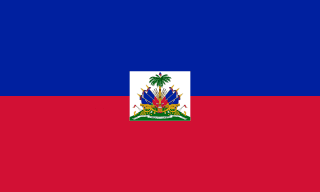
Flag of Haiti

Haiti

Republic of Haiti

Background
The native Taino -- who inhabited the island of Hispaniola when Christopher COLUMBUS first landed in 1492 -- were virtually wiped out by Spanish settlers within 25 years. In the early 17th century, the French established a presence on Hispaniola. In 1697, Spain ceded to the French the western third of the island, which later became Haiti. The French colony, based on forestry and sugar-related industries, became one of the wealthiest in the Caribbean but relied heavily on the forced labor of enslaved Africans and environmentally degrading practices. In the late 18th century, Toussaint L'OUVERTURE led a revolution of Haiti's nearly half a million slaves that ended France's rule on the island. After a prolonged struggle, and under the leadership of Jean-Jacques DESSALINES, Haiti became the first country in the world led by former slaves after declaring its independence in 1804, but it was forced to pay an indemnity of 100 million francs (equivalent to $22 billion USD in March 2023) to France for more than a century and was shunned by other countries for nearly 40 years. In 1862, the US officially recognized Haiti, but foreign economic influence and internal political instability induced the US to occupy Haiti from 1915 to 1934.Francois "Papa Doc" DUVALIER and then his son Jean-Claude "Baby Doc" DUVALIER led repressive and corrupt regimes that ruled Haiti in 1957-1971 and 1971-1986, respectively. Jean-Bertrand ARISTIDE was Haiti's first democratically elected president in 1991 and was elected a second time in 2000, but coups interrupted his first term after only a few months and ended his second term in 2004. President Jovenel MOÏSE was assassinated in 2021, leading the country further into an extra-constitutional governance structure and contributing to the country’s growing fragility. The Government of Haiti then installed Ariel HENRY -- whom President MOÏSE had nominated shortly before his death -- as prime minister. On 29 February 2024, a significant escalation of gang violence occurred on the 20th anniversary of ARISTIDE's second overthrow, after the announcement that HENRY would not hold elections until August 2025. HENRY’s return from an overseas trip was diverted to Puerto Rico when the airport closed due to gang violence. With control of much of the capital, Port-au-Prince, gang leaders called for the ouster of HENRY’S government. By mid-March, Haiti’s continued violence, HENRY’S inability to return to the country, and increasing pressure from the international community led HENRY to pledge to resign. On 25 April 2024, HENRY formally submitted his resignation as a nine-member Transitional Presidential Council assumed control, tasked with returning stability to the country and preparing elections. Since January 2023, Haiti has had no sitting elected officials.The country has long been plagued by natural disasters. In 2010, a major 7.0 magnitude earthquake struck Haiti with an epicenter about 25 km (15 mi) west of the capital, Port-au-Prince. An estimated 300,000 people were killed, and some 1.5 million left homeless. The earthquake was assessed as the worst in this region in 200 years. A 7.2 magnitude earthquake hit Haiti’s southern peninsula in 2021, causing well over 2,000 deaths; an estimated 500,000 required emergency humanitarian aid. Haiti is the poorest country in the Western Hemisphere, as well as one of the most unequal in wealth distribution.
Location
Caribbean, western one-third of the island of Hispaniola, between the Caribbean Sea and the North Atlantic Ocean, west of the Dominican Republic
Geographic coordinates
19 00 N, 72 25 W
Map references
Central America and the Caribbean
Area
total: 27,750 sq km
land: 27,560 sq km
water: 190 sq km
Area - comparative
slightly smaller than Maryland
Land boundaries
total: 376 km
border countries: Dominican Republic 376 km
Coastline
1,771 km
Maritime claims
territorial sea: 12 nm
contiguous zone: 24 nm
exclusive economic zone: 200 nm
continental shelf: to depth of exploitation
Climate
tropical; semiarid where mountains in east cut off trade winds
Terrain
mostly rough and mountainous
Elevation
highest point: Pic la Selle 2,674 m
lowest point: Caribbean Sea 0 m
mean elevation: 470 m
Natural resources
bauxite, copper, calcium carbonate, gold, marble, hydropower, arable land
Land use
agricultural land: 65.1% (2023 est.)
agricultural land: arable land: arable land: 36.5% (2023 est.)
agricultural land: permanent crops: permanent crops: 10.9% (2023 est.)
agricultural land: permanent pasture: permanent pasture: 17.8% (2023 est.)
forest: 13.4% (2023 est.)
other: 21.5% (2023 est.)
Irrigated land
800 sq km (2013)
Population distribution
fairly even distribution; largest concentrations located near coastal areas
Natural hazards
lies in the middle of the hurricane belt and subject to severe storms from June to October; occasional flooding and earthquakes; periodic droughts
Geography - note
shares island of Hispaniola with Dominican Republic (western one-third is Haiti, eastern two-thirds is the Dominican Republic); it is the most mountainous nation in the Caribbean
Population
total: 11,898,812 (2025 est.)
male: 5,863,438
female: 6,035,374
Nationality
noun: Haitian(s)
adjective: Haitian
Ethnic groups
Black 95%, mixed and White 5%
Languages
Languages: French (official), Creole (official)
major-language sample(s): The World Factbook, une source indispensable d'informations de base. (French)The World Factbook, sous endispansab pou enfomasyon debaz. (Haitian Creole)The World Factbook, the indispensable source for basic information.
Religions
Catholic 55%, Protestant 29%, Vodou 2.1%, other 4.6%, none 10% (2018 est.)
Age structure
0-14 years: 30.5% (male 1,790,061/female 1,794,210)
15-64 years: 65.3% (male 3,787,782/female 3,887,791)
65 years and over: 4.2% (2024 est.) (male 214,600/female 279,499)
Dependency ratios
total dependency ratio: 52.3 (2025 est.)
youth dependency ratio: 45.8 (2025 est.)
elderly dependency ratio: 6.5 (2025 est.)
potential support ratio: 15.4 (2025 est.)
Median age
total: 25.3 years (2025 est.)
male: 24.7 years
female: 25.3 years
Population growth rate
1.22% (2025 est.)
Birth rate
20.76 births/1,000 population (2025 est.)
Death rate
7 deaths/1,000 population (2025 est.)
Net migration rate
-1.54 migrant(s)/1,000 population (2025 est.)
Population distribution
fairly even distribution; largest concentrations located near coastal areas
Urbanization
urban population: 59.7% of total population (2023)
rate of urbanization: 2.47% annual rate of change (2020-25 est.)
Major urban areas - population
2.987 million PORT-AU-PRINCE (capital) (2023)
Sex ratio
at birth: 1.01 male(s)/female
0-14 years: 1 male(s)/female
15-64 years: 0.97 male(s)/female
65 years and over: 0.77 male(s)/female
total population: 0.97 male(s)/female (2024 est.)
Mother's mean age at first birth
22.4 years (2016/7 est.)
Maternal mortality ratio
328 deaths/100,000 live births (2023 est.)
Infant mortality rate
total: 35 deaths/1,000 live births (2025 est.)
male: 40.2 deaths/1,000 live births
female: 33.5 deaths/1,000 live births
Life expectancy at birth
total population: 65.6 years (2024 est.)
male: 63.8 years
female: 67.4 years
Total fertility rate
2.39 children born/woman (2025 est.)
Gross reproduction rate
1.19 (2025 est.)
Drinking water source
improved: urban: urban: 84.6% of population (2022 est.)
improved: rural: rural: 42.8% of population (2022 est.)
improved: total: total: 67.4% of population (2022 est.)
unimproved: urban: urban: 15.4% of population (2022 est.)
unimproved: rural: rural: 57.2% of population (2022 est.)
unimproved: total: total: 32.6% of population (2022 est.)
Health expenditure
Health expenditure (as % of GDP): 3.5% of GDP (2021)
Health expenditure (as % of national budget): 4.1% of national budget (2022 est.)
Physician density
0.29 physicians/1,000 population (2022)
Hospital bed density
4.8 beds/1,000 population (2021 est.)
Sanitation facility access
improved: urban: urban: 82.9% of population (2022 est.)
improved: rural: rural: 42.6% of population (2022 est.)
improved: total: total: 66.3% of population (2022 est.)
unimproved: urban: urban: 17.1% of population (2022 est.)
unimproved: rural: rural: 57.4% of population (2022 est.)
unimproved: total: total: 33.7% of population (2022 est.)
Obesity - adult prevalence rate
22.7% (2016)
Alcohol consumption per capita
total: 2.85 liters of pure alcohol (2019 est.)
beer: 0.55 liters of pure alcohol (2019 est.)
wine: 0.03 liters of pure alcohol (2019 est.)
spirits: 2.26 liters of pure alcohol (2019 est.)
other alcohols: 0 liters of pure alcohol (2019 est.)
Tobacco use
total: 7.1% (2025 est.)
male: 12.4% (2025 est.)
female: 2.1% (2025 est.)
Children under the age of 5 years underweight
10.7% (2023 est.)
Currently married women (ages 15-49)
53.6% (2017 est.)
Child marriage
women married by age 15: 2.1% (2017)
women married by age 18: 14.9% (2017)
men married by age 18: 1.6% (2017)
Education expenditure
Education expenditure (% GDP): 1% of GDP (2023 est.)
Education expenditure (% national budget): 13.2% national budget (2025 est.)
Literacy
total population: 68% (2017 est.)
male: 72.9% (2017 est.)
female: 63.9% (2017 est.)
Environmental issues
deforestation (trees cleared for agriculture and used as fuel); soil erosion; inadequate potable water and lack of sanitation; natural disasters
International environmental agreements
party to: Biodiversity, Climate Change, Climate Change-Kyoto Protocol, Climate Change-Paris Agreement, Desertification, Hazardous Wastes, Law of the Sea, Marine Dumping-London Convention, Marine Life Conservation, Ozone Layer Protection
signed, but not ratified: Nuclear Test Ban
Climate
tropical; semiarid where mountains in east cut off trade winds
Land use
agricultural land: 65.1% (2023 est.)
agricultural land: arable land: arable land: 36.5% (2023 est.)
agricultural land: permanent crops: permanent crops: 10.9% (2023 est.)
agricultural land: permanent pasture: permanent pasture: 17.8% (2023 est.)
forest: 13.4% (2023 est.)
other: 21.5% (2023 est.)
Urbanization
urban population: 59.7% of total population (2023)
rate of urbanization: 2.47% annual rate of change (2020-25 est.)
Carbon dioxide emissions
total emissions: 2.854 million metric tonnes of CO2 (2023 est.)
from petroleum and other liquids: 2.848 million metric tonnes of CO2 (2023 est.)
from consumed natural gas: 6,000 metric tonnes of CO2 (2023 est.)
Particulate matter emissions
9.8 micrograms per cubic meter (2019 est.)
Waste and recycling
municipal solid waste generated annually: 2.31 million tons (2024 est.)
percent of municipal solid waste recycled: 9.1% (2022 est.)
Total water withdrawal
municipal: 190 million cubic meters (2022 est.)
industrial: 51 million cubic meters (2022 est.)
agricultural: 1.209 billion cubic meters (2022 est.)
Total renewable water resources
14.022 billion cubic meters (2022 est.)
Country name
conventional long form: Republic of Haiti
conventional short form: Haiti
local long form: République d'Haïti (French)/Repiblik d Ayiti (Haitian Creole)
local short form: Haïti (French)/ Ayiti (Haitian Creole)
etymology: derived from the Arawak name Ayti, meaning "Land of Mountains," that was originally applied to the entire island of Hispaniola
Government type
semi-presidential republic
Capital
name: Port-au-Prince
geographic coordinates: 18 32 N, 72 20 W
time difference: UTC-5 (same time as Washington, DC, during Standard Time)
daylight saving time: +1hr, begins second Sunday in March; ends first Sunday in November
etymology: the name means "the port of the prince" and probably came from a ship called The Prince that anchored in the bay in the early 18th century
Administrative divisions
10 departments (départements, singular - département); Artibonite, Centre, Grand'Anse, Nippes, Nord, Nord-Est, Nord-Ouest, Ouest, Sud, Sud-Est
Legal system
civil law system strongly influenced by Napoleonic Code
Constitution
history: many previous; latest adopted 10 March 1987, with substantial revisions in June 2012
amendment process: proposed by the executive branch or by either the Senate or the Chamber of Deputies; consideration of proposed amendments requires support by at least two-thirds majority of both houses; passage requires at least two-thirds majority of the membership present and at least two-thirds majority of the votes cast; approved amendments enter into force after installation of the next president of the republic; constitutional articles on the democratic and republican form of government cannot be amended
International law organization participation
accepts compulsory ICJ jurisdiction; non-party state to the ICCt
Citizenship
citizenship by birth: no
citizenship by descent only: at least one parent must be a native-born citizen of Haiti
dual citizenship recognized: yes
residency requirement for naturalization: 5 years
Suffrage
18 years of age; universal
Executive branch
chief of state: President (vacant)
head of government: Prime Minister Alix Didier FILS-AIMÉ (since 10 November 2024)
cabinet: Cabinet chosen by the prime minister in consultation with the president; parliament must ratify the Cabinet and prime minister's governing policy
election/appointment process: president directly elected by absolute-majority popular vote in 2 rounds, if needed, for a 5-year term (eligible for a single non-consecutive term)
most recent election date: 20 November 2016
election results: 2016: Jovenel MOÏSE elected president in first round; percent of vote - Jovenel MOÏSE (PHTK) 55.6%, Jude CELESTIN (LAPEH) 19.6%, Jean-Charles MOÏSE (PPD) 11%, Maryse NARCISSE (FL) 9%; other 4.8%2011: Michel MARTELLY elected president in second round; percent of vote in second round - Michel MARTELLY (Peasant's Response) 68%, Mirlande MANIGAT (RDNP) 32%
expected date of next election: 30 August 2026
Legislative branch
legislature name: National Assembly (Assemblée nationale)
legislative structure: bicameral
Legislative branch - lower chamber
chamber name: Chamber of Deputies (Chambre des Députés)
number of seats: 119 (all directly elected)
electoral system: plurality/majority
scope of elections: full renewal
term in office: 4 years
most recent election date: 8/9/2015 to 10/25/2015
parties elected and seats per party: Haitian Tet Kale Party (PHTK) (9); Konvansyon Inite Demokratik (KID) (7); Ayiti an aksyon (AAA) (6); Fanmi Lavalas (6); Patriotic Unity Party (Inite Patriyotik) (4); People's Struggle Party (OPL) (7); Other (24)
percentage of women in chamber: 0%
expected date of next election: August 2026
Legislative branch - upper chamber
chamber name: Senate (Sénat)
number of seats: 30 (all directly elected)
electoral system: plurality/majority
scope of elections: partial renewal
term in office: 6 years
most recent election date: 11/20/2016 to 1/29/2017
parties elected and seats per party: Haitian Tet Kale Party (PHTK) (9); Truth (Vérité) (3); Konvansyon Inite Demokratik (KID) (2); Bouclier (2); Ayiti an aksyon (AAA) (2); Other (10)
expected date of next election: August 2026
Judicial branch
highest court(s): Supreme Court or Cour de cassation (consists of 12 judges)
judge selection and term of office: judges appointed by the president from candidate lists submitted by the Senate of the National Assembly
subordinate courts: Courts of Appeal; Courts of First Instance; magistrate's courts; land, labor, and children's courts
Political parties
Alternative League for Haitian Progress and Emancipation (Ligue Alternative pour le Progrès et l’Emancipation Haïtienne) or LAPEHChristian Movement for a New Haiti or MCNH or MochrenhaChristian National Movement for the Reconstruction of Haiti or UNCRHCombat of Peasant Workers to Liberate Haiti (Konbit Travaye Peyizan Pou Libere Ayiti) or Kontra Pep La Convention for Democratic Unity or KIDCooperative Action to Rebuild Haiti or KONBADecember 16 Platform or Platfom 16 DesanmDemocratic Alliance Party or ALYANS (coalition includes KID and PPRH)Democratic Centers' National Council or CONACEDDemocratic and Popular Sector (Secteur Démocratique et Populaire) or SDPDemocratic Unity Convention (Konvansyon Inite Demokratik) or KIDDessalinian Patriotic and Popular Movement or MOPODEffort and Solidarity to Create an Alternative for the People or ESKAMPFanmi Lavalas or FLForward (En Avant)Fusion of Haitian Social Democrats (Fusion Des Sociaux-Démocrates Haïtiens) or FHSDG18 Policy Platform (Plateforme Politique G18)Haiti in Action (Ayiti An Aksyon Haiti's Action) or AAAHaitian Tet Kale Party (Parti Haitien Tet Kale) or PHTKIndependent Movement for National Reconciliation or MIRNLavni Organization or LAVNILod DemokratikLove Haiti (Renmen Ayiti) or RAMTV AyitiNational Consortium of Haitian Political Parties (Consortium National des Partis Politiques Haitiens) or CNPPH National Shield Network (Reseau Bouclier National)Organization of the People's Struggle (Oganizasyon Pep Kap Lite) or OPLPatriotic Unity (Inite Patriyotik) or InitePlatform Pitit Desalin (Politik Pitit Dessalines) or PPDPolitical Party for Us All or Bridge (Pont) or Pou Nou ToutPopular Patriotic Dessalinien Movement (Mouvement Patriotique Populaire Dessalinien) or MOPODRally of Progressive National Democrats (Rassemblement des Démocrates Nationaux Progressistes) or RDNPRespe (Respect)Women and Families Political Parties (Defile Pati Politik Fanm Ak Fanmi)
Diplomatic representation in the US
chief of mission: Ambassador Lionel DELATOUR (since 11 June 2025)
chancery: 2311 Massachusetts Avenue NW, Washington, DC 20008
telephone: [1] (202) 332-4090
FAX: [1] (202) 745-7215
email address and website: amb.washington@diplomatie.hthttps://www.haiti.org/
consulate(s) general: Atlanta, Boston, Chicago, Miami, Orlando (FL), New York
Diplomatic representation from the US
chief of mission: Ambassador (vacant); Chargé d’Affaires Henry T. WOOSTER (since 12 June 2025)
embassy: Tabarre 41, Route de Tabarre, Port-au-Prince
mailing address: 3400 Port-au-Prince Place, Washington, DC 20521-3400
telephone: [011] (509) 2229-8000
FAX: [011] (509) 2229-8027
email address and website: acspap@state.govhttps://ht.usembassy.gov/
International organization participation
ACP, ACS, AOSIS, Caricom, CD, CDB, CELAC, FAO, G-77, IADB, IAEA, IBRD, ICAO, ICC (NGOs), ICRM, IDA, IFAD, IFC, IFRCS, ILO, IMF, IMO, Interpol, IOC, IOM, IPU, ITSO, ITU, ITUC (NGOs), LAES, MIGA, NAM, OAS, OIF, OPANAL, OPCW, PCA, Petrocaribe, UN, UNCTAD, UNESCO, UNIDO, Union Latina, UNWTO, UPU, WCO, WFTU (NGOs), WHO, WIPO, WMO, WTO
Independence
1 January 1804 (from France)
National holiday
Independence Day, 1 January (1804)
Flag
description: two equal horizontal bands of blue (top) and red; a centered white rectangle bears the coat of arms, which has a palm tree flanked by flags and two cannons above a scroll with the motto L'UNION FAIT LA FORCE (Union Makes Strength)meaning: the colors are taken from the French flag and represent the union of ethnic groups
National symbol(s)
Hispaniolan trogon (bird), hibiscus flower
National color(s)
blue, red
National anthem(s)
title: "La Dessalinienne" (The Dessalines Song)
lyrics/music: Justin LHERISSON/Nicolas GEFFRARD
history: adopted 1904; named for Jean-Jacques DESSALINES, founder of Haiti
National heritage
total World Heritage Sites: 1 (cultural)
selected World Heritage Site locales: National History Park – Citadel, Sans Souci, Ramiers
Economic overview
small Caribbean island economy and OECS-member state; extreme poverty and inflation; enormous income inequality; ongoing civil unrest due to recent presidential assassination; US preferential market access; very open to foreign direct investment
Real GDP (purchasing power parity)
Real GDP (purchasing power parity) 2024: $32.971 billion (2024 est.)
Real GDP (purchasing power parity) 2023: $34.406 billion (2023 est.)
Real GDP (purchasing power parity) 2022: $35.059 billion (2022 est.)
Real GDP growth rate
Real GDP growth rate 2024: -4.2% (2024 est.)
Real GDP growth rate 2023: -1.9% (2023 est.)
Real GDP growth rate 2022: -1.7% (2022 est.)
Real GDP per capita
Real GDP per capita 2024: $2,800 (2024 est.)
Real GDP per capita 2023: $3,000 (2023 est.)
Real GDP per capita 2022: $3,000 (2022 est.)
GDP (official exchange rate)
$25.224 billion (2024 est.)
Inflation rate (consumer prices)
Inflation rate (consumer prices) 2024: 26.9% (2024 est.)
Inflation rate (consumer prices) 2023: 36.8% (2023 est.)
Inflation rate (consumer prices) 2022: 34% (2022 est.)
GDP - composition, by sector of origin
agriculture: 15.9% (2024 est.)
industry: 33.4% (2024 est.)
services: 48.3% (2024 est.)
GDP - composition, by end use
household consumption: 99.8% (2024 est.)
government consumption: 5.7% (2024 est.)
investment in fixed capital: 9.9% (2024 est.)
investment in inventories: 0% (2024 est.)
exports of goods and services: 3.4% (2024 est.)
imports of goods and services: -18.8% (2024 est.)
Agricultural products
sugarcane, cassava, plantains, bananas, mangoes/guavas, avocados, maize, tropical fruits, rice, vegetables (2023)
Industries
textiles, sugar refining, flour milling, cement, light assembly using imported parts
Industrial production growth rate
-4.7% (2024 est.)
Labor force
5.281 million (2024 est.)
Unemployment rate
Unemployment rate 2024: 15.1% (2024 est.)
Unemployment rate 2023: 14.6% (2023 est.)
Unemployment rate 2022: 14.7% (2022 est.)
Youth unemployment rate (ages 15-24)
total: 37.5% (2024 est.)
male: 30% (2024 est.)
female: 47.1% (2024 est.)
Remittances
Remittances 2023: 18.9% of GDP (2023 est.)
Remittances 2022: 18.8% of GDP (2022 est.)
Remittances 2021: 19.1% of GDP (2021 est.)
Budget
revenues: $1.179 billion (2020 est.)
expenditures: $1.527 billion (2020 est.)
Public debt
Public debt 2016: 33.9% of GDP (2016 est.)
Current account balance
Current account balance 2023: -$682.57 million (2023 est.)
Current account balance 2022: -$491.954 million (2022 est.)
Current account balance 2021: $87.656 million (2021 est.)
Exports
Exports 2023: $1.095 billion (2023 est.)
Exports 2022: $1.355 billion (2022 est.)
Exports 2021: $1.272 billion (2021 est.)
Exports - partners
USA 82%, Canada 4%, Mexico 2%, France 2%, India 2% (2023)
Exports - commodities
garments, essential oils, scrap iron, industrial acids/oils/alcohols, bedding (2023)
Imports
Imports 2023: $5.303 billion (2023 est.)
Imports 2022: $5.451 billion (2022 est.)
Imports 2021: $5.048 billion (2021 est.)
Imports - partners
USA 31%, Dominican Republic 23%, China 14%, Indonesia 4%, India 3% (2023)
Imports - commodities
refined petroleum, rice, garments, cotton fabric, plastic products (2023)
Reserves of foreign exchange and gold
Reserves of foreign exchange and gold 2024: $2.718 billion (2024 est.)
Reserves of foreign exchange and gold 2023: $2.586 billion (2023 est.)
Reserves of foreign exchange and gold 2022: $2.173 billion (2022 est.)
Debt - external
Debt - external 2023: $1.865 billion (2023 est.)
Exchange rates
Currency: gourdes (HTG) per US dollar -
Exchange rates 2024: 131.811 (2024 est.)
Exchange rates 2023: 141.036 (2023 est.)
Exchange rates 2022: 115.631 (2022 est.)
Exchange rates 2021: 89.227 (2021 est.)
Exchange rates 2020: 93.51 (2020 est.)
Electricity access
electrification - total population: 49.3% (2022 est.)
electrification - urban areas: 83%
electrification - rural areas: 1.2% (2019 est.)
Electricity
installed generating capacity: 472,000 kW (2023 est.)
consumption: 861 million kWh (2023 est.)
transmission/distribution losses: 152 million kWh (2023 est.)
Electricity generation sources
fossil fuels: 81.3% of total installed capacity (2023 est.)
solar: 0.4% of total installed capacity (2023 est.)
hydroelectricity: 18.3% of total installed capacity (2023 est.)
Coal
imports: 5.7 metric tons (2022 est.)
Petroleum
refined petroleum consumption: 19,000 bbl/day (2023 est.)
Natural gas
consumption: 3.2 million cubic meters (2023 est.)
imports: 3.2 million cubic meters (2023 est.)
Energy consumption per capita
Total energy consumption per capita 2023: 3.486 million Btu/person (2023 est.)
Telephones - fixed lines
total subscriptions: 1,360 (2022 est.)
subscriptions per 100 inhabitants: (2022 est.) less than 1
Telephones - mobile cellular
total subscriptions: 7.5 million (2022 est.)
subscriptions per 100 inhabitants: 65 (2022 est.)
Broadcast media
398 legal broadcasting stations, including about 60 community radio stations; 105 TV stations, including 36 in Port-au-Prince, 41 others in the provinces, and more than 40 radio-television stations; large number of stations operate irregularly or flout regulations; VOA Creole Service broadcasts daily on 30 affiliate stations (2019)
Internet country code
.ht
Internet users
percent of population: 39% (2019 est.)
Broadband - fixed subscriptions
total: 35,000 (2022 est.)
subscriptions per 100 inhabitants: (2022 est.) less than 1
Civil aircraft registration country code prefix
HH
Airports
17 (2025)
Heliports
2 (2025)
Merchant marine
total: 4 (2023)
by type: general cargo 3, other 1
Ports
total ports: 5 (2024)
large: 0
medium: 1
small: 0
very small: 4
ports with oil terminals: 1
key ports: Cap Haitien, Jacmel, Miragoane, Petit Goave, Port au Prince
Military and security forces
the Haitian Armed Forces (FAdH): ArmyMinistry of Justice and Public Security: Haitian National Police (Police Nationale d'Haïti or PNH) (2025)
Military and security service personnel strengths
estimates vary; up to 2,000 trained military personnel (the force is planned to eventually have around 5,000 personnel); estimates for the National Police range from a low of 9,000 to a high of about 13,000 (2025)
Military equipment inventories and acquisitions
in recent years, Canada, Taiwan, UAE, and the US have provided some equipment to the Haitian security forces, including vehicles (2025)
Military service age and obligation
men and women 18-25 may volunteer for the FAdH (2023)
Military - note
Haiti's military was disbanded in 1995 after it participated in multiple coups and was accused of other political interference and human rights violations; the military was reinstated by former President MOISE in 2017 after the UN ended its peacekeeping operation in Haiti; the reconstituted military established an Army command in 2018 and has received some training assistance from Argentina, Colombia, Ecuador, France, and Mexico; the military’s stated mission is to assist with natural disaster relief, border security, and combating transnational crime; in 2023, Prime Minister HENRY called upon the military to assist the National Police (PNH) in combating armed gangs, which have overwhelmed the PNH, killed hundreds of Haitians, and seized control of swaths of territory, including much of the capital Port-au-Prince, since the assassination of President MOISE in 2021in 2023, the UN Security Council approved the deployment of a Kenya-led multinational security support mission (MSS) to help bring gang violence under control; the first contingent of MSS personnel from the Kenya National Police Service arrived in mid-2024; other countries pledging forces included the Bahamas, Bangladesh, Barbados, Benin, Chad, and Jamaica; the mission is slated to have a total of 2,500 personnel (2025)
Terrorist group(s)
Gran Grif; Viv Ansanm
Refugees and internally displaced persons
refugees: 5 (2024 est.)
IDPs: 1,041,229 (2024 est.)
Trafficking in persons
tier rating: Special Case; for more details, go to: https://www.state.gov/reports/2025-trafficking-in-persons-report/haiti/
Illicit drugs
USG identification: major illicit drug-producing and/or drug-transit country (2025)