FactbookCompare 0
← Back to all countries
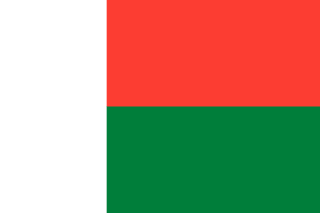
Flag of Madagascar

Madagascar

Republic of Madagascar

Background
Madagascar was one of the last major habitable landmasses on earth to be settled by humans. While there is some evidence of human presence on the island in the millennia B.C., large-scale settlement began between A.D. 350 and 550 with settlers from present-day Indonesia. The island attracted Arab and Persian traders as early as the 7th century, and migrants from Africa arrived around A.D. 1000. Madagascar was a pirate stronghold during the late 17th and early 18th centuries and served as a slave trading center into the 19th century. From the 16th to the late 19th century, a native Merina Kingdom dominated much of Madagascar. The French conquered the island in 1896 and made it a colony; independence was regained in 1960. Free presidential and National Assembly elections were held in 1992-93, ending 17 years of single-party rule. In 1997, in the second presidential race, Didier RATSIRAKA, the leader during the 1970s and 1980s, returned to the presidency. The 2001 presidential election was contested between the followers of RATSIRAKA and Marc RAVALOMANANA, nearly causing half the country to secede. In 2002, the High Constitutional Court announced RAVALOMANANA the winner. He won a second term in 2006 but, following protests in 2009, handed over power to the military, which then conferred the presidency on the mayor of Antananarivo, Andry RAJOELINA, in what amounted to a coup d'etat. After a lengthy mediation process, Madagascar held UN-supported presidential and parliamentary elections in 2013. Former de facto finance minister Hery RAJAONARIMAMPIANINA won in a runoff and was inaugurated in 2014. In 2019, RAJOELINA was declared the winner against RAVALOMANANA. In 2023, RAJOELINA won another term in an election that most of the opposition boycotted, including RAJAONARIMAMPIANINA and RAVALOMANANA, who claimed it was rigged in favor of RAJOELINA. International observers, however, saw no evidence of systemic fraud, leading the international community to accept the election results.
Location
Southern Africa, island in the Indian Ocean, east of Mozambique
Geographic coordinates
20 00 S, 47 00 E
Map references
Africa
Area
total: 587,041 sq km
land: 581,540 sq km
water: 5,501 sq km
Area - comparative
almost four times the size of Georgia; slightly less than twice the size of Arizona
Land boundaries
total: 0 km
Coastline
4,828 km
Maritime claims
territorial sea: 12 nm
contiguous zone: 24 nm
exclusive economic zone: 200 nm
continental shelf: 200 nm or 100 nm from the 2,500-m isobath
Climate
tropical along coast, temperate inland, arid in south
Terrain
narrow coastal plain, high plateau and mountains in center
Elevation
highest point: Maromokotro 2,876 m
lowest point: Indian Ocean 0 m
mean elevation: 615 m
Natural resources
graphite, chromite, coal, bauxite, rare earth elements, salt, quartz, tar sands, semiprecious stones, mica, fish, hydropower
Land use
agricultural land: 70.3% (2023 est.)
agricultural land: arable land: arable land: 5.2% (2023 est.)
agricultural land: permanent crops: permanent crops: 1% (2023 est.)
agricultural land: permanent pasture: permanent pasture: 64.1% (2023 est.)
forest: 17.5% (2023 est.)
other: 12.2% (2023 est.)
Irrigated land
10,860 sq km (2012)
Population distribution
most of population lives on the eastern half of the island; significant clustering is found in the central highlands and eastern coastline, as shown in this population distribution map
Natural hazards
periodic cyclones; drought; and locust infestation volcanism: Madagascar's volcanoes have not erupted in recorded history
Geography - note
world's fourth-largest island; strategic location along Mozambique Channel; despite Madagascar’s close proximity to the African continent, ocean currents isolate the island, resulting in high rates of endemic plant and animal species; approximately 90% of the flora and fauna on the island are found nowhere else
Population
total: 31,345,040 (2025 est.)
male: 15,647,362
female: 15,697,678
Nationality
noun: Malagasy (singular and plural)
adjective: Malagasy
Ethnic groups
Malayo-Indonesian (Merina and related Betsileo), Cotiers (mixed African, Malayo-Indonesian, and Arab ancestry - Betsimisaraka, Tsimihety, Antaisaka, Sakalava), French, Indian, Creole, Comoran
Languages
Malagasy (official) 99.9%, French (official) 23.6%, English 8.2%, other 0.6% (2018 est.)
Religions
Church of Jesus Christ in Madagascar/Malagasy Lutheran Church/Anglican Church 34%, Roman Catholic 32.3%, other Christian 8.1%, traditional/Animist 1.7%, Muslim 1.4%, other 0.6%, none 21.9% (2021 est.)
Age structure
0-14 years: 37% (male 5,507,847/female 5,400,551)
15-64 years: 59.1% (male 8,720,012/female 8,673,880)
65 years and over: 3.9% (2024 est.) (male 532,642/female 617,782)
Dependency ratios
total dependency ratio: 73.4 (2025 est.)
youth dependency ratio: 66.9 (2025 est.)
elderly dependency ratio: 6.5 (2025 est.)
potential support ratio: 15.3 (2025 est.)
Median age
total: 20.5 years (2025 est.)
male: 21.1 years
female: 21.5 years
Population growth rate
2.15% (2025 est.)
Birth rate
27.54 births/1,000 population (2025 est.)
Death rate
5.95 deaths/1,000 population (2025 est.)
Net migration rate
-0.08 migrant(s)/1,000 population (2025 est.)
Population distribution
most of population lives on the eastern half of the island; significant clustering is found in the central highlands and eastern coastline, as shown in this population distribution map
Urbanization
urban population: 40.6% of total population (2023)
rate of urbanization: 4.26% annual rate of change (2020-25 est.)
Major urban areas - population
3.872 million ANTANANARIVO (capital) (2023)
Sex ratio
at birth: 1.03 male(s)/female
0-14 years: 1.02 male(s)/female
15-64 years: 1.01 male(s)/female
65 years and over: 0.86 male(s)/female
total population: 1.01 male(s)/female (2024 est.)
Mother's mean age at first birth
19.5 years (2021 est.)
Maternal mortality ratio
445 deaths/100,000 live births (2023 est.)
Infant mortality rate
total: 38.4 deaths/1,000 live births (2025 est.)
male: 40.9 deaths/1,000 live births
female: 34 deaths/1,000 live births
Life expectancy at birth
total population: 68.8 years (2024 est.)
male: 67.3 years
female: 70.3 years
Total fertility rate
3.47 children born/woman (2025 est.)
Gross reproduction rate
1.71 (2025 est.)
Drinking water source
improved: urban: urban: 79.8% of population (2022 est.)
improved: rural: rural: 36% of population (2022 est.)
improved: total: total: 53.5% of population (2022 est.)
unimproved: urban: urban: 20.2% of population (2022 est.)
unimproved: rural: rural: 64% of population (2022 est.)
unimproved: total: total: 46.5% of population (2022 est.)
Health expenditure
Health expenditure (as % of GDP): 3.5% of GDP (2021)
Health expenditure (as % of national budget): 5.7% of national budget (2022 est.)
Physician density
0.17 physicians/1,000 population (2022)
Sanitation facility access
improved: urban: urban: 53.9% of population (2022 est.)
improved: rural: rural: 25.2% of population (2022 est.)
improved: total: total: 36.7% of population (2022 est.)
unimproved: urban: urban: 46.1% of population (2022 est.)
unimproved: rural: rural: 74.8% of population (2022 est.)
unimproved: total: total: 63.3% of population (2022 est.)
Obesity - adult prevalence rate
5.3% (2016)
Alcohol consumption per capita
total: 0.89 liters of pure alcohol (2019 est.)
beer: 0.5 liters of pure alcohol (2019 est.)
wine: 0.07 liters of pure alcohol (2019 est.)
spirits: 0.32 liters of pure alcohol (2019 est.)
other alcohols: 0 liters of pure alcohol (2019 est.)
Tobacco use
total: 24.1% (2025 est.)
male: 40.2% (2025 est.)
female: 8.2% (2025 est.)
Children under the age of 5 years underweight
22.6% (2021 est.)
Currently married women (ages 15-49)
62.3% (2021 est.)
Child marriage
women married by age 15: 12.7% (2021)
women married by age 18: 38.8% (2021)
men married by age 18: 11.2% (2021)
Education expenditure
Education expenditure (% GDP): 3% of GDP (2023 est.)
Education expenditure (% national budget): 18% national budget (2019 est.)
Literacy
total population: 74.7% (2021 est.)
male: 77.9% (2021 est.)
female: 71.8% (2021 est.)
School life expectancy (primary to tertiary education)
total: 9 years (2019 est.)
male: 9 years (2019 est.)
female: 9 years (2019 est.)
Environmental issues
erosion and soil degradation from deforestation and overgrazing; desertification; agricultural fires; water pollution from raw sewage and other organic wastes; wildlife preservation
International environmental agreements
party to: Biodiversity, Climate Change, Climate Change-Kyoto Protocol, Climate Change-Paris Agreement, Comprehensive Nuclear Test Ban, Desertification, Endangered Species, Hazardous Wastes, Law of the Sea, Marine Dumping-London Protocol, Marine Life Conservation, Nuclear Test Ban, Ozone Layer Protection, Ship Pollution, Tropical Timber 2006, Wetlands
signed, but not ratified: none of the selected agreements
Climate
tropical along coast, temperate inland, arid in south
Land use
agricultural land: 70.3% (2023 est.)
agricultural land: arable land: arable land: 5.2% (2023 est.)
agricultural land: permanent crops: permanent crops: 1% (2023 est.)
agricultural land: permanent pasture: permanent pasture: 64.1% (2023 est.)
forest: 17.5% (2023 est.)
other: 12.2% (2023 est.)
Urbanization
urban population: 40.6% of total population (2023)
rate of urbanization: 4.26% annual rate of change (2020-25 est.)
Carbon dioxide emissions
total emissions: 3.936 million metric tonnes of CO2 (2023 est.)
from coal and metallurgical coke: 1.057 million metric tonnes of CO2 (2023 est.)
from petroleum and other liquids: 2.879 million metric tonnes of CO2 (2023 est.)
Particulate matter emissions
16.7 micrograms per cubic meter (2019 est.)
Waste and recycling
municipal solid waste generated annually: 3.769 million tons (2024 est.)
percent of municipal solid waste recycled: 9.2% (2022 est.)
Total water withdrawal
municipal: 395 million cubic meters (2022 est.)
industrial: 161.9 million cubic meters (2022 est.)
agricultural: 13 billion cubic meters (2022 est.)
Total renewable water resources
337 billion cubic meters (2022 est.)
Country name
conventional long form: Republic of Madagascar
conventional short form: Madagascar
local long form: République de Madagascar/Repoblikan'i Madagasikara
local short form: Madagascar/Madagasikara
former: Malagasy Republic
etymology: a variant of the name was first used by 13th-century Venetian explorer Marco POLO when he confused the island with the Somali port of Mogadishu; the transliteration was later adopted as the official name
Government type
semi-presidential republic
Capital
name: Antananarivo
geographic coordinates: 18 55 S, 47 31 E
time difference: UTC+3 (8 hours ahead of Washington, DC, during Standard Time)
etymology: the name means "City of the Thousand," from the Malagasy an- (a prefix denoting a place name), tanana (town), and arivo (thousand); in the 17th century, King ADRIANJAKA named the original fortress after the 1,000 soldiers stationed there
Administrative divisions
6 provinces (faritany); Antananarivo, Antsiranana, Fianarantsoa, Mahajanga, Toamasina, Toliara
Legal system
civil law system based on the old French civil code and customary law in matters of marriage, family, and obligation
Constitution
history: previous 1992; latest passed by referendum 17 November 2010, promulgated 11 December 2010
amendment process: proposed by the president of the republic in consultation with the cabinet or supported by a least two thirds of both the Senate and National Assembly membership; passage requires at least three-fourths approval of both the Senate and National Assembly and approval in a referendum; constitutional articles, including the form and powers of government, the sovereignty of the state, and the autonomy of Madagascar’s collectivities, cannot be amended
International law organization participation
accepts compulsory ICJ jurisdiction with reservations; accepts ICCt jurisdiction
Citizenship
citizenship by birth: no
citizenship by descent only: the father must be a citizen of Madagascar; in the case of a child born out of wedlock, the mother must be a citizen
dual citizenship recognized: no
residency requirement for naturalization: unknown
Suffrage
18 years of age; universal
Executive branch
chief of state: Michael RANDRIANIRINA (Col.)
head of government: Prime Minister Herintsalama RAJAONARIVELO (since 22 October 2025)
cabinet: Council of Ministers appointed by the prime minister
election/appointment process: president directly elected by absolute-majority popular vote in 2 rounds, if needed, for a 5-year term (eligible for a second term); prime minister nominated by the National Assembly, appointed by the president
most recent election date: 16 November 2023
election results: 2023: Andry RAJOELINA reelected president in first round; percent of vote - Andry RAJOELINA (TGV) 59.0%, Siteny Thierry RANDRIANASOLONIAIKO 14.4%, Marc RAVALOMANANA (TIM) 12.1%, other 14.5%
expected date of next election: November 2028
Legislative branch
legislative structure: bicameral
Legislative branch - lower chamber
chamber name: National Assembly (Antenimierampirenena)
number of seats: 163 (all directly elected)
electoral system: mixed system
scope of elections: full renewal
term in office: 5 years
most recent election date: 12/11/2020
parties elected and seats per party: Isika Rehetra Miaraka Amin’i Andry Rajoelina (IRMAR) (84); Firaisankina (22); Independents (50); Other (7)
percentage of women in chamber: 14.1%
expected date of next election: May 2029
Legislative branch - upper chamber
chamber name: Senate (Antenimierandoholona)
number of seats: 18 (12 indirectly elected; 6 appointed)
term in office: 5 years
most recent election date: 5/29/2024
parties elected and seats per party: IRMAR (10); MALAGASY MIARA-MIAINGA (2)
percentage of women in chamber: 11.1%
expected date of next election: 31 December 2026
Judicial branch
highest court(s): Supreme Court or Cour Suprême (consists of 11 members; addresses judicial administration issues only); High Constitutional Court or Haute Cour Constitutionnelle (consists of 9 members); High Court of Justice (consists of 11 members; addresses cases brought against the president of Madagascar and senior officials for high treason, grave violations of the Constitution, or breach of duties incompatible with the exercise of the presidential mandate)
judge selection and term of office: Supreme Court heads elected by the president and judiciary officials to serve 3-year, single renewable terms; High Constitutional Court members appointed - 3 each by the president, by both legislative bodies, and by the Council of Magistrates; members serve single, 7-year terms; High Court of Justice members include: first president of the Supreme Court; 2 presidents from the Court of Cassation; 2 presidents from the Court of Appeal; 2 deputies from the National Assembly; 2 senators from the Senate; 2 members from the High Council for the Defense of Democracy and the State of law
subordinate courts: Courts of Appeal; Court of Cassation; Courts of First Instance; military courts; traditional courts (dina); Trade Court
Political parties
Group of Young Malagasy Patriots (Groupe des Jeunes Malgaches Patriotes) or GJMPI Love Madagascar (Tiako I Madagasikara) or TIMIsika Rehetra Miaraka amin'i Andry Rajoelina coalition or IRDMalagasy Aware (Malagasy Tonga Saina) or MTSMalagasy Tia Tanindrazana or MATITA or ANGADYMovement for Democracy in Madagascar (Mouvement pour la Démocratie à Madagascar) or MDMRally for Democratic Socialism (Rassemblement pour Socialisme Démocratique - Nouveau) or RPSD VaovaoYoung Malagasies Determined (Tanora Malagasy Vonona) or TGV
Diplomatic representation in the US
chief of mission: Ambassador Lantosoa RAKOTOMALALA (since 13 January 2025)
chancery: 2374 Massachusetts Avenue NW, Washington, DC 20008
telephone: [1] (202) 265-5525
FAX: [1] (202) 265-3034
email address and website: madagascar.embassy.dc@gmail.comhttps://us-madagascar-embassy.org/
Diplomatic representation from the US
chief of mission: Ambassador Claire PIERANGELO (since 2 May 2022)
embassy: Lot 207A, Andranoro, Antehiroka, 105 Antananarivo - Madagascar
mailing address: 2040 Antananarivo Place, Washington DC 20521-2040
telephone: [261] 33-44-320-00
FAX: [261] 33-44-320-35
email address and website: antanACS@state.govhttps://mg.usembassy.gov/
International organization participation
ACP, AfDB, AU, CD, COMESA, EITI (candidate country), FAO, G-77, IAEA, IBRD, ICAO, ICC (NGOs), ICCt, ICRM, IDA, IFAD, IFC, IFRCS, ILO, IMF, IMO, InOC, Interpol, IOC, IOM, IPU, ISO (correspondent), ITSO, ITU, ITUC (NGOs), MIGA, NAM, OIF, OPCW, PCA, SADC, UN, UNCTAD, UNESCO, UNHCR, UNIDO, UNWTO, UPU, WCO, WFTU (NGOs), WHO, WIPO, WMO, WTO
Independence
26 June 1960 (from France)
National holiday
Independence Day, 26 June (1960)
Flag
description: two equal horizontal bands of red (top) and green, with a vertical white band on the left sidemeaning: red stands for sovereignty, green for hope, and white for purity
National symbol(s)
traveller's palm (ravenala), zebu
National color(s)
red, green, white
National anthem(s)
title: "Ry Tanindraza nay malala o" (O Our Beloved Fatherland)
lyrics/music: Pasteur RAHAJASON/Norbert RAHARISOA
history: adopted 1959
National heritage
total World Heritage Sites: 3 (1 cultural, 2 natural)
selected World Heritage Site locales: Tsingy de Bemaraha Strict Nature Reserve (n); Ambohimanga Royal Hill (c); Atsinanana Rainforests (n)
Economic overview
low-income East African island economy; natural resource rich; extreme poverty; return of political stability has helped growth; sharp tax revenue drop due to COVID-19; leading vanilla producer; environmentally fragile
Real GDP (purchasing power parity)
Real GDP (purchasing power parity) 2024: $52.968 billion (2024 est.)
Real GDP (purchasing power parity) 2023: $50.833 billion (2023 est.)
Real GDP (purchasing power parity) 2022: $48.782 billion (2022 est.)
Real GDP growth rate
Real GDP growth rate 2024: 4.2% (2024 est.)
Real GDP growth rate 2023: 4.2% (2023 est.)
Real GDP growth rate 2022: 4.2% (2022 est.)
Real GDP per capita
Real GDP per capita 2024: $1,700 (2024 est.)
Real GDP per capita 2023: $1,600 (2023 est.)
Real GDP per capita 2022: $1,600 (2022 est.)
GDP (official exchange rate)
$17.421 billion (2024 est.)
Inflation rate (consumer prices)
Inflation rate (consumer prices) 2023: 9.9% (2023 est.)
Inflation rate (consumer prices) 2022: 8.2% (2022 est.)
Inflation rate (consumer prices) 2021: 5.8% (2021 est.)
GDP - composition, by sector of origin
agriculture: 22.5% (2024 est.)
industry: 22.8% (2024 est.)
services: 46.4% (2024 est.)
GDP - composition, by end use
household consumption: 69.8% (2024 est.)
government consumption: 15.3% (2024 est.)
investment in fixed capital: 22.6% (2024 est.)
investment in inventories: 0% (2024 est.)
exports of goods and services: 23.6% (2024 est.)
imports of goods and services: -31.3% (2024 est.)
Agricultural products
rice, sugarcane, cassava, sweet potatoes, milk, bananas, vegetables, mangoes/guavas, maize, potatoes (2023)
Industries
meat processing, seafood, soap, beer, leather, sugar, textiles, glassware, cement, automobile assembly plant, paper, petroleum, tourism, mining
Industrial production growth rate
3.7% (2024 est.)
Labor force
16.519 million (2024 est.)
Unemployment rate
Unemployment rate 2024: 3.1% (2024 est.)
Unemployment rate 2023: 3.1% (2023 est.)
Unemployment rate 2022: 3.2% (2022 est.)
Youth unemployment rate (ages 15-24)
total: 5.4% (2024 est.)
male: 5.3% (2024 est.)
female: 5.4% (2024 est.)
Remittances
Remittances 2023: 2.4% of GDP (2023 est.)
Remittances 2022: 2.5% of GDP (2022 est.)
Remittances 2021: 3.1% of GDP (2021 est.)
Budget
revenues: $2.066 billion (2023 est.)
expenditures: $2.876 billion (2023 est.)
Public debt
Public debt 2016: 38.4% of GDP (2016 est.)
Taxes and other revenues
9.6% (of GDP) (2023 est.)
Current account balance
Current account balance 2022: -$829.376 million (2022 est.)
Current account balance 2021: -$721.953 million (2021 est.)
Current account balance 2020: -$623.653 million (2020 est.)
Exports
Exports 2022: $4.689 billion (2022 est.)
Exports 2021: $3.362 billion (2021 est.)
Exports 2020: $2.589 billion (2020 est.)
Exports - partners
USA 16%, France 15%, Japan 8%, China 6%, S. Korea 6% (2023)
Exports - commodities
garments, nickel, vanilla, cloves, gold (2023)
Imports
Imports 2022: $6.041 billion (2022 est.)
Imports 2021: $4.769 billion (2021 est.)
Imports 2020: $3.718 billion (2020 est.)
Imports - partners
China 19%, Oman 13%, France 10%, India 8%, South Africa 5% (2023)
Imports - commodities
refined petroleum, rice, fabric, cotton fabric, wheat (2023)
Reserves of foreign exchange and gold
Reserves of foreign exchange and gold 2024: $2.785 billion (2024 est.)
Reserves of foreign exchange and gold 2023: $2.632 billion (2023 est.)
Reserves of foreign exchange and gold 2022: $2.16 billion (2022 est.)
Debt - external
Debt - external 2023: $3.548 billion (2023 est.)
Exchange rates
Currency: Malagasy ariary (MGA) per US dollar -
Exchange rates 2024: 4,525.425 (2024 est.)
Exchange rates 2023: 4,429.579 (2023 est.)
Exchange rates 2022: 4,096.116 (2022 est.)
Exchange rates 2021: 3,829.978 (2021 est.)
Exchange rates 2020: 3,787.754 (2020 est.)
Electricity access
electrification - total population: 36.1% (2022 est.)
electrification - urban areas: 71.6%
electrification - rural areas: 10.9%
Electricity
installed generating capacity: 759,000 kW (2023 est.)
consumption: 2.506 billion kWh (2023 est.)
transmission/distribution losses: 139 million kWh (2023 est.)
Electricity generation sources
fossil fuels: 64.8% of total installed capacity (2023 est.)
solar: 3.2% of total installed capacity (2023 est.)
hydroelectricity: 31.1% of total installed capacity (2023 est.)
biomass and waste: 0.9% of total installed capacity (2023 est.)
Coal
consumption: 472,000 metric tons (2023 est.)
imports: 472,000 metric tons (2023 est.)
proven reserves: 150 million metric tons (2023 est.)
Petroleum
refined petroleum consumption: 20,000 bbl/day (2023 est.)
Energy consumption per capita
Total energy consumption per capita 2023: 1.816 million Btu/person (2023 est.)
Telephones - fixed lines
total subscriptions: 3,000 (2023 est.)
subscriptions per 100 inhabitants: (2023 est.) less than 1
Telephones - mobile cellular
total subscriptions: 23.5 million (2023 est.)
subscriptions per 100 inhabitants: 76 (2023 est.)
Broadcast media
state-owned Radio Nationale Malagasy (RNM) and Television Malagasy (TVM) have an extensive national network reach; privately owned radio and TV broadcasters in cities and major towns; state-run radio dominates in rural areas; relays of 2 international broadcasters are available in Antananarivo (2019)
Internet country code
.mg
Internet users
percent of population: 20% (2023 est.)
Broadband - fixed subscriptions
total: 34,000 (2023 est.)
subscriptions per 100 inhabitants: (2023 est.) less than 1
Civil aircraft registration country code prefix
5R
Airports
93 (2025)
Railways
total: 836 km (2018)
narrow gauge: 836 km (2018) 1.000-m gauge
Merchant marine
total: 29 (2023)
by type: general cargo 16, oil tanker 2, other 11
Ports
total ports: 13 (2024)
large: 0
medium: 0
small: 2
very small: 11
ports with oil terminals: 5
key ports: Andoany, Antsiranana, Antsohim Bondrona, Iharana, Mahajanga, Maintirano, Manakara, Mananjary, Maroantsetra, Morondava, Toamasina, Tolanaro, Toliara
Military and security forces
Madagascar Armed Forces (aka Armed forces of the Republic of Madagascar); Malagasy Army, Naval Forces (or National Navy), Air Force; Malagasy National Gendarmerie (2025)
Military expenditures
Military Expenditures 2024: 0.7% of GDP (2024 est.)
Military Expenditures 2023: 0.7% of GDP (2023 est.)
Military Expenditures 2022: 0.7% of GDP (2022 est.)
Military Expenditures 2021: 0.7% of GDP (2021 est.)
Military Expenditures 2020: 0.7% of GDP (2020 est.)
Military and security service personnel strengths
estimated 13,000 Armed Forces; estimated 10,000 Gendarmerie (2025)
Military equipment inventories and acquisitions
the military's inventory consists mostly of older or secondhand armaments originating from countries such as France, South Africa, the former Soviet Union, the UAE, the UK, and the US (2025)
Military service age and obligation
18 years of age for voluntary military service for men and women; service obligation 18 months; conscription available in times of national emergency or war (2025)
Military - note
the military’s responsibilities include ensuring sovereignty and territorial integrity and protecting Madagascar’s maritime domain, particularly against piracy, drug trafficking, and smuggling; it also assists the Gendarmerie with maintaining law and order in rural areas, largely in areas affected by banditry, cattle rustling, and criminal groups; the military has a history of influence in domestic politics and seized control of the government in October 2025; security relationships have included France, India, and Russia; Madagascar's small Navy has traditionally looked to India for assistance with maritime security (2025)
Refugees and internally displaced persons
refugees: 1,256 (2024 est.)
IDPs: 9,868 (2024 est.)