FactbookCompare 0
← Back to all countries
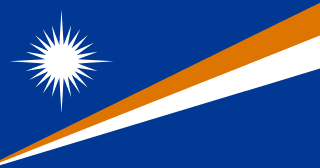
Flag of Marshall Islands

Marshall Islands

Republic of the Marshall Islands

Background
Humans arrived in the Marshall Islands in the first millennium B.C. and gradually created permanent settlements on the various atolls. The early inhabitants were skilled navigators who frequently traveled between atolls using stick charts to map the islands. Society became organized under two paramount chiefs, one each for the Ratak (Sunrise) Chain and the Ralik (Sunset) Chain. Spain formally claimed the islands in 1592. Germany established a supply station on Jaluit Atoll and bought the islands from Spain in 1884, although paramount chiefs continued to rule. Japan seized the Marshall Islands in 1914 and was granted a League of Nations Mandate to administer the islands in 1920. The US captured the islands in heavy fighting during World War II, and the islands came under US administration as part of the Trust Territory of the Pacific Islands (TTPI) in 1947. Between 1946 and 1958, the US resettled populations from Bikini and Enewetak Atolls and conducted 67 nuclear tests; people from Ailinginae, Rongelap, and Utrik Atolls were also evacuated because of nuclear fallout, and Bikini and Rongelap remain largely uninhabited. In 1979, the Marshall Islands drafted a constitution separate from the rest of the TTPI and declared independence under President Amata KABUA, a paramount chief. In 2000, Kessai NOTE became the first commoner elected president. In 2016, Hilda HEINE was the first woman elected president.
Location
Oceania, consists of 29 atolls and five isolated islands in the North Pacific Ocean, about halfway between Hawaii and Australia; the atolls and islands are situated in two, almost-parallel island chains - the Ratak (Sunrise) group and the Ralik (Sunset) group; the total number of islands and islets is about 1,225; 22 of the atolls and four of the islands are uninhabited
Geographic coordinates
9 00 N, 168 00 E
Map references
Oceania
Area
total: 181 sq km
land: 181 sq km
water: 0 sq km
Area - comparative
about the size of Washington, D.C.
Land boundaries
total: 0 km
Coastline
370.4 km
Maritime claims
territorial sea: 12 nm
contiguous zone: 24 nm
exclusive economic zone: 200 nm
Climate
tropical; hot and humid; wet season May to November; islands border typhoon belt
Terrain
low coral limestone and sand islands
Elevation
highest point: East-central Airik Island, Maloelap Atoll 14 m
lowest point: Pacific Ocean 0 m
mean elevation: 2 m
Natural resources
coconut products, marine products, deep seabed minerals
Land use
agricultural land: 38.9% (2023 est.)
agricultural land: arable land: arable land: 2.8% (2023 est.)
agricultural land: permanent crops: permanent crops: 36.1% (2023 est.)
agricultural land: permanent pasture: permanent pasture: 0% (2022 est.)
forest: 53.9% (2023 est.)
other: 7.2% (2023 est.)
Irrigated land
0 sq km (2022)
Population distribution
most people live in urban clusters on many of the country's islands; more than two thirds of the population lives on the atolls of Majuro and Ebeye
Natural hazards
infrequent typhoons
Geography - note
Kwajalein atoll surrounds the world's largest lagoon; the island city of Ebeye is the second largest settlement in the Marshall Islands, after the capital of Majuro, and one of the most densely populated locations in the Pacific
Population
total: 82,011 (2024 est.)
male: 41,581
female: 40,430
Nationality
noun: Marshallese (singular and plural)
adjective: Marshallese
Ethnic groups
Marshallese 95.6%, Filipino 1.1%, other 3.3% (2021 est.)
Languages
Languages: Marshallese (official) 98.2%, other languages 1.8% (1999)
major-language sample(s): Bok eo an Lalin kin Melele ko Rejimwe ej jikin ebōk melele ko raurōk. (Marshallese)The World Factbook, the indispensable source for basic information.
Religions
Protestant 79.3% (United Church of Christ 47.9%, Assembly of God 14.1%, Full Gospel 5%, Bukot Nan Jesus 3%, Salvation Army 2.3%, Reformed Congressional Church 2.2%, Seventh Day Adventist 1.7%, New Beginning Church 1.4%, other Protestant 1.6%), Roman Catholic 9.3%, Church of Jesus Christ 5.7%, Jehovah's Witness 1.3%, other 3.3%, none 1.1% (2021 est.)
Age structure
0-14 years: 30% (male 12,538/female 12,072)
15-64 years: 64.3% (male 26,750/female 25,944)
65 years and over: 5.7% (2024 est.) (male 2,293/female 2,414)
Dependency ratios
total dependency ratio: 55.6 (2024 est.)
youth dependency ratio: 46.7 (2024 est.)
elderly dependency ratio: 8.9 (2024 est.)
potential support ratio: 11.2 (2024 est.)
Median age
total: 25.9 years (2025 est.)
male: 25.4 years
female: 25.6 years
Population growth rate
1.22% (2025 est.)
Birth rate
20.81 births/1,000 population (2025 est.)
Death rate
4.37 deaths/1,000 population (2025 est.)
Net migration rate
-4.2 migrant(s)/1,000 population (2025 est.)
Population distribution
most people live in urban clusters on many of the country's islands; more than two thirds of the population lives on the atolls of Majuro and Ebeye
Urbanization
urban population: 78.9% of total population (2023)
rate of urbanization: 0.61% annual rate of change (2020-25 est.)
Major urban areas - population
31,000 MAJURO (capital) (2018)
Sex ratio
at birth: 1.05 male(s)/female
0-14 years: 1.04 male(s)/female
15-64 years: 1.03 male(s)/female
65 years and over: 0.95 male(s)/female
total population: 1.03 male(s)/female (2024 est.)
Maternal mortality ratio
155 deaths/100,000 live births (2023 est.)
Infant mortality rate
total: 20.1 deaths/1,000 live births (2025 est.)
male: 24 deaths/1,000 live births
female: 17.1 deaths/1,000 live births
Life expectancy at birth
total population: 75.2 years (2024 est.)
male: 73 years
female: 77.5 years
Total fertility rate
2.62 children born/woman (2025 est.)
Gross reproduction rate
1.28 (2025 est.)
Drinking water source
improved: urban: urban: 84.5% of population (2022 est.)
improved: rural: rural: 87.2% of population (2022 est.)
improved: total: total: 85.1% of population (2022 est.)
unimproved: urban: urban: 15.5% of population (2022 est.)
unimproved: rural: rural: 12.8% of population (2022 est.)
unimproved: total: total: 14.9% of population (2022 est.)
Health expenditure
Health expenditure (as % of GDP): 12.5% of GDP (2021)
Health expenditure (as % of national budget): 6.7% of national budget (2022 est.)
Physician density
0.47 physicians/1,000 population (2012)
Sanitation facility access
improved: urban: urban: 92.8% of population (2022 est.)
improved: rural: rural: 70.4% of population (2022 est.)
improved: total: total: 88% of population (2022 est.)
unimproved: urban: urban: 7.2% of population (2022 est.)
unimproved: rural: rural: 29.6% of population (2022 est.)
unimproved: total: total: 12% of population (2022 est.)
Obesity - adult prevalence rate
52.9% (2016)
Tobacco use
total: 30.9% (2025 est.)
male: 52.9% (2025 est.)
female: 8.5% (2025 est.)
Children under the age of 5 years underweight
11.9% (2017 est.)
Currently married women (ages 15-49)
68.3% (2022 est.)
Education expenditure
Education expenditure (% GDP): 7.7% of GDP (2022 est.)
Education expenditure (% national budget): 11.3% national budget (2022 est.)
Literacy
total population: 95.8% (2021 est.)
male: 95.7% (2021 est.)
female: 96.4% (2021 est.)
School life expectancy (primary to tertiary education)
total: 14 years (2022 est.)
male: 14 years (2022 est.)
female: 15 years (2022 est.)
Environmental issues
inadequate potable water; pollution of Majuro lagoon from household waste and discharges from fishing vessels; sea-level rise
International environmental agreements
party to: Biodiversity, Climate Change, Climate Change-Kyoto Protocol, Climate Change-Paris Agreement, Comprehensive Nuclear Test Ban, Desertification, Hazardous Wastes, Law of the Sea, Marine Dumping-London Protocol, Ozone Layer Protection, Ship Pollution, Wetlands, Whaling
signed, but not ratified: none of the selected agreements
Climate
tropical; hot and humid; wet season May to November; islands border typhoon belt
Land use
agricultural land: 38.9% (2023 est.)
agricultural land: arable land: arable land: 2.8% (2023 est.)
agricultural land: permanent crops: permanent crops: 36.1% (2023 est.)
agricultural land: permanent pasture: permanent pasture: 0% (2022 est.)
forest: 53.9% (2023 est.)
other: 7.2% (2023 est.)
Urbanization
urban population: 78.9% of total population (2023)
rate of urbanization: 0.61% annual rate of change (2020-25 est.)
Carbon dioxide emissions
293,700 metric tonnes of CO2 (2017 est.)
Particulate matter emissions
7.2 micrograms per cubic meter (2019 est.)
Waste and recycling
municipal solid waste generated annually: 8,600 tons (2024 est.)
percent of municipal solid waste recycled: 39.7% (2022 est.)
Country name
conventional long form: Republic of the Marshall Islands
conventional short form: Marshall Islands
local long form: Republic of the Marshall Islands
local short form: Marshall Islands
former: Trust Territory of the Pacific Islands, Marshall Islands District
abbreviation: RMI
etymology: named after British Captain John MARSHALL, who charted many of the islands in 1788
Government type
mixed presidential-parliamentary system in free association with the US
Capital
name: Majuro
geographic coordinates: 7 06 N, 171 23 E
time difference: UTC+12 (17 hours ahead of Washington, DC, during Standard Time)
etymology: Majuro means "two openings" or "two eyes" and refers to the two major passages through the atoll into the Majuro lagoon
Administrative divisions
24 municipalities; Ailinglaplap, Ailuk, Arno, Aur, Bikini & Kili, Ebon, Enewetak & Ujelang, Jabat, Jaluit, Kwajalein, Lae, Lib, Likiep, Majuro, Maloelap, Mejit, Mili, Namorik, Namu, Rongelap, Ujae, Utrik, Wotho, Wotje
Legal system
mixed system of US and English common law, customary law, and local statutes
Constitution
history: effective 1 May 1979
amendment process: proposed by the National Parliament or by a constitutional convention; passage by Parliament requires at least two-thirds majority vote of the total membership in each of two readings and approval by a majority of votes in a referendum; amendments submitted by a constitutional convention require approval of at least two thirds of votes in a referendum
International law organization participation
accepts compulsory ICJ jurisdiction with reservations; accepts ICCt jurisdiction
Citizenship
citizenship by birth: no
citizenship by descent only: at least one parent must be a citizen of the Marshall Islands
dual citizenship recognized: no
residency requirement for naturalization: 5 years
Suffrage
18 years of age; universal
Executive branch
chief of state: President Hilda C. HEINE (since 3 January 2023)
head of government: President Hilda C. HEINE (since 3 January 2023)
cabinet: Cabinet nominated by the president from among members of the Nitijela, appointed by Nitijela speaker
election/appointment process: president indirectly elected by the Nitijela from among its members for a 4-year term (no term limits)
most recent election date: 2 January 2023
election results: 2023: Hilda C. HEINE elected president; National Parliament vote - Hilda C. HEINE (independent) 17, David KABUA (independent) 162020: David KABUA elected president; National Parliament vote - David KABUA (independent) 20, Hilda C. HEINE (independent) 12
expected date of next election: 2027
Legislative branch
legislature name: Parliament (Nitijela)
legislative structure: unicameral
number of seats: 33 (all directly elected)
electoral system: plurality/majority
scope of elections: full renewal
term in office: 4 years
most recent election date: 11/20/2023
percentage of women in chamber: 12.1%
expected date of next election: November 2027
Judicial branch
highest court(s): Supreme Court (consists of the chief justice and 2 associate justices)
judge selection and term of office: judges appointed by the Cabinet on the recommendation of the Judicial Service Commission (consists of the chief justice of the High Court, the attorney general and a private citizen selected by the Cabinet) and upon approval of the Nitijela; the current chief justice, appointed in 2013, serves for 10 years; Marshallese citizens appointed as justices serve until retirement at age 72
subordinate courts: High Court; District Courts; Traditional Rights Court; Community Courts
Political parties
traditionally there have been no formally organized political parties; what has existed more closely resembles factions or interest groups because they do not have party headquarters, formal platforms, or party structures
Diplomatic representation in the US
chief of mission: Ambassador Charles Rudolph PAUL (since 27 February 2024)
chancery: 2433 Massachusetts Avenue NW, Washington, DC 20008
telephone: [1] (202) 234-5414
FAX: [1] (202) 232-3236
email address and website: info@rmiembassyus.org
consulate(s) general: Honolulu, Springdale (AR)
Diplomatic representation from the US
chief of mission: Ambassador Laura M. STONE (since 12 July 2024)
embassy: Mejen Weto, Ocean Side, Majuro
mailing address: 4380 Majuro Place, Washington DC 20521-4380
telephone: [692] 247-4011
FAX: [692] 247-4012
email address and website: MAJConsular@state.govhttps://mh.usembassy.gov/
International organization participation
ACP, ADB, AOSIS, FAO, G-77, IAEA, IBRD, ICAO, ICCt, IDA, IFAD, IFC, ILO, IMF, IMO, IMSO, Interpol, IOC, IOM, ITU, OPCW, PIF, Sparteca, SPC, UN, UNCTAD, UNESCO, UNHRC, WHO
Independence
21 October 1986 (from the US-administered UN trusteeship)
National holiday
Constitution Day, 1 May (1979)
Flag
description: blue with an orange stripe and a white stripe radiating from the lower-left corner to the upper-right corner; a white star with four large rays and 20 small rays appears on the left side above the two stripesmeaning: blue stands for the Pacific Ocean, orange for the Ralik Chain (or sunset and courage), and white for the Ratak Chain (or sunrise and peace); the star symbolizes the Christian cross, with a small ray for each electoral district and a larger ray for the principal cultural centers of Majuro, Jaluit, Wotje, and Ebeye; the diagonal stripes can also be interpreted as representing the equator, with the star showing the archipelago's position
National symbol(s)
a 24-rayed star
National color(s)
blue, white, orange
National anthem(s)
title: "Forever Marshall Islands"
lyrics/music: Amata KABUA
history: adopted 1981; words and music written by the first president of the Marshall Islands
National heritage
total World Heritage Sites: 1 (cultural)
selected World Heritage Site locales: Bikini Atoll Nuclear Test Site
Economic overview
upper middle-income Pacific island economy; US aid reliance; large public sector; coconut oil production as diesel fuel substitute; growing offshore banking locale; fishing rights seller; import-dependent
Real GDP (purchasing power parity)
Real GDP (purchasing power parity) 2024: $270.809 million (2024 est.)
Real GDP (purchasing power parity) 2023: $263.507 million (2023 est.)
Real GDP (purchasing power parity) 2022: $274.3 million (2022 est.)
Real GDP growth rate
Real GDP growth rate 2024: 2.8% (2024 est.)
Real GDP growth rate 2023: -3.9% (2023 est.)
Real GDP growth rate 2022: -1.1% (2022 est.)
Real GDP per capita
Real GDP per capita 2024: $7,200 (2024 est.)
Real GDP per capita 2023: $6,800 (2023 est.)
Real GDP per capita 2022: $6,800 (2022 est.)
GDP (official exchange rate)
$280.358 million (2024 est.)
Inflation rate (consumer prices)
Inflation rate (consumer prices) 2022: 6.2% (2022 est.)
Inflation rate (consumer prices) 2021: 2.6% (2021 est.)
Inflation rate (consumer prices) 2020: -0.7% (2020 est.)
GDP - composition, by sector of origin
agriculture: 19.5% (2023 est.)
industry: 11.1% (2023 est.)
services: 70.5% (2023 est.)
GDP - composition, by end use
household consumption: 70.7% (2023 est.)
government consumption: 53.5% (2023 est.)
investment in fixed capital: 20.2% (2023 est.)
investment in inventories: -0.5% (2023 est.)
exports of goods and services: 38.9% (2023 est.)
imports of goods and services: -71.2% (2023 est.)
Agricultural products
coconuts (2023)
Industries
copra, tuna processing, tourism, craft items (from seashells, wood, and pearls)
Industrial production growth rate
-2.8% (2023 est.)
Population below poverty line
7.2% (2019 est.)
Gini Index coefficient - distribution of family income
Gini Index coefficient - distribution of family income 2019: 35.5 (2019 est.)
Household income or consumption by percentage share
lowest 10%: 2.8% (2019 est.)
highest 10%: 27.5% (2019 est.)
Remittances
Remittances 2023: 13.3% of GDP (2023 est.)
Remittances 2022: 13.6% of GDP (2022 est.)
Remittances 2021: 13.3% of GDP (2021 est.)
Budget
revenues: $171.267 million (2020 est.)
expenditures: $159.095 million (2020 est.)
Public debt
Public debt 2019: 41.6% of GDP (2019 est.)
Taxes and other revenues
17.2% (of GDP) (2020 est.)
Current account balance
Current account balance 2021: $76.263 million (2021 est.)
Current account balance 2020: $90.281 million (2020 est.)
Current account balance 2019: $86.133 million (2019 est.)
Exports
Exports 2021: $130.016 million (2021 est.)
Exports 2020: $88.042 million (2020 est.)
Exports 2019: $91.394 million (2019 est.)
Exports - partners
UK 16%, Germany 13%, Denmark 10%, Ghana 9%, Cyprus 9% (2023)
Exports - commodities
ships, refined petroleum, fish, natural gas, stone processing machines (2023)
Imports
Imports 2021: $206.025 million (2021 est.)
Imports 2020: $132.845 million (2020 est.)
Imports 2019: $129.682 million (2019 est.)
Imports - partners
China 47%, Japan 15%, Germany 5%, Brazil 4%, Cyprus 4% (2023)
Imports - commodities
ships, refined petroleum, additive manufacturing machines, iron structures, crude petroleum (2023)
Exchange rates
the US dollar is used
Electricity access
electrification - total population: 100% (2022 est.)
electrification - urban areas: 96.1%
electrification - rural areas: 100%
Telephones - fixed lines
total subscriptions: 2,000 (2014 est.)
subscriptions per 100 inhabitants: 5 (2022 est.)
Telephones - mobile cellular
total subscriptions: 16,000 (2021 est.)
subscriptions per 100 inhabitants: 38 (2021 est.)
Broadcast media
no TV broadcast station; a cable network is available on Majuro with programming via videotape replay and satellite relays; 4 radio broadcast stations; US Armed Forces Radio and Television Service (AFRTS) provides satellite radio and TV service to Kwajalein Atoll (2019)
Internet country code
.mh
Internet users
percent of population: 66% (2023 est.)
Broadband - fixed subscriptions
total: 1,000 (2022 est.)
subscriptions per 100 inhabitants: 2 (2022 est.)
Civil aircraft registration country code prefix
V7
Airports
33 (2025)
Merchant marine
total: 4,180 (2023)
by type: bulk carrier 1,939, container ship 277, general cargo 66, oil tanker 1039, other 859
Ports
total ports: 3 (2024)
large: 0
medium: 0
small: 0
very small: 3
ports with oil terminals: 2
key ports: Enitwetak Island, Kwajalein, Majuro Atoll
Military and security forces
Marshall Islands Police Department (includes a Sea Patrol Division)
Military - note
defense is the responsibility of the US; in 1982, the Marshall Islands signed a Compact of Free Association (COFA) with the US, which granted the Marshall Islands financial assistance and access to many US domestic programs in exchange for exclusive US military access and defense responsibilities; the COFA entered into force in 1986; the Marshall Islands hosts a US Army missile test site the Marshall Islands has a "shiprider" agreement with the US, which allows local maritime law enforcement officers to embark on US Coast Guard (USCG) and US Navy (USN) vessels, including to board and search vessels suspected of violating laws or regulations within its designated exclusive economic zone (EEZ) or on the high seas; "shiprider" agreements also enable USCG personnel and USN vessels with embarked USCG law enforcement personnel to work with host nations to protect critical regional resources (2025)
Refugees and internally displaced persons
IDPs: 35 (2024 est.)