FactbookCompare 0
← Back to all countries
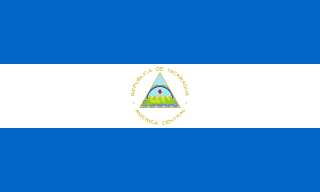
Flag of Nicaragua

Nicaragua

Republic of Nicaragua

Background
The Pacific coast of Nicaragua was settled as a Spanish colony in the early 16th century. Independence from Spain was declared in 1821, and the country became an independent republic in 1838. Britain occupied the Caribbean Coast in the first half of the 19th century, but gradually ceded control of the region in subsequent decades. By 1978, violent opposition to governmental manipulation and corruption resulted in a short-lived civil war that brought a civil-military coalition to power in 1979, spearheaded by Marxist Sandinista guerrillas led by Daniel ORTEGA Saavedra. Nicaraguan aid to leftist rebels in El Salvador prompted the US to sponsor anti-Sandinista Contra guerrillas through much of the 1980s. After losing free and fair elections in 1990, 1996, and 2001, ORTEGA was elected president in 2006, 2011, 2016, and most recently in 2021. Municipal, regional, and national-level elections since 2008 have been marred by widespread irregularities. Democratic institutions have lost their independence under the ORTEGA regime as the president has assumed full control over all branches of government, as well as cracking down on a nationwide pro-democracy protest movement in 2018 and shuttering over 3,300 civil society organizations between 2018 and 2024. In the lead-up to the 2021 presidential election, authorities arrested over 40 individuals linked to the opposition, including presidential candidates, private sector leaders, NGO workers, human rights defenders, and journalists. Only five lesser-known presidential candidates from mostly small parties allied to ORTEGA's Sandinistas were allowed to run against ORTEGA. He then awarded the Sandinistas control of all 153 of Nicaraguan municipalities in the 2022 municipal elections, consolidating one-party rule.
Location
Central America, bordering both the Caribbean Sea and the North Pacific Ocean, between Costa Rica and Honduras
Geographic coordinates
13 00 N, 85 00 W
Map references
Central America and the Caribbean
Area
total: 130,370 sq km
land: 119,990 sq km
water: 10,380 sq km
Area - comparative
slightly larger than Pennsylvania; slightly smaller than New York State
Land boundaries
total: 1,253 km
border countries: Costa Rica 313 km; Honduras 940 km
Coastline
910 km
Maritime claims
territorial sea: 12 nm
contiguous zone: 24 nm
continental shelf: natural prolongation
Climate
tropical in lowlands, cooler in highlands
Terrain
extensive Atlantic coastal plains rising to central interior mountains; narrow Pacific coastal plain interrupted by volcanoes
Elevation
highest point: Mogoton 2,085 m
lowest point: Pacific Ocean 0 m
mean elevation: 298 m
Natural resources
gold, silver, copper, tungsten, lead, zinc, timber, fish
Land use
agricultural land: 42.3% (2023 est.)
agricultural land: arable land: arable land: 12.5% (2023 est.)
agricultural land: permanent crops: permanent crops: 2.5% (2023 est.)
agricultural land: permanent pasture: permanent pasture: 27.4% (2023 est.)
forest: 40.1% (2023 est.)
other: 17.6% (2023 est.)
Irrigated land
1,990 sq km (2012)
Major lakes (area sq km)
fresh water lake(s): Lago de Nicaragua - 8,150 sq km; Lago de Managua - 1,040 sq km
Population distribution
the overwhelming majority of the population resides in the western half of the country, with much of the urban growth centered in the capital city of Managua; coastal areas also show large population clusters
Natural hazards
destructive earthquakes; volcanoes; landslides; extremely susceptible to hurricanes volcanism: significant volcanic activity; Cerro Negro (728 m) is one of Nicaragua's most active volcanoes; its lava flows and ash have been known to cause significant damage to farmland and buildings; other historically active volcanoes include Concepcion, Cosiguina, Las Pilas, Masaya, Momotombo, San Cristobal, and Telica
Geography - note
largest country in Central America; contains the largest freshwater body in Central America, Lago de Nicaragua
Population
total: 6,739,380 (2025 est.)
male: 3,304,133
female: 3,435,247
Nationality
noun: Nicaraguan(s)
adjective: Nicaraguan
Ethnic groups
Mestizo (mixed Indigenous and White) 69%, White 17%, Black 9%, Indigenous 5%
Languages
Languages: Spanish (official) 99.5%, Indigenous 0.3%, Portuguese 0.1%, other 0.1% (2020 est.)
major-language sample(s): La Libreta Informativa del Mundo, la fuente indispensable de información básica. (Spanish)The World Factbook, the indispensable source for basic information.
Religions
Roman Catholic 44.9%, Protestant 38.7% (Evangelical 38.2, Adventist 0.5%), other 1.2%, (includes Jehovah's Witness and Church of Jesus Christ), believer but not belonging to a church 1%, agnostic or atheist 0.4%, none 13.7%, unspecified 0.2% (2020 est.)
Age structure
0-14 years: 25.1% (male 855,256/female 818,714)
15-64 years: 68.9% (male 2,240,297/female 2,360,244)
65 years and over: 6% (2024 est.) (male 178,347/female 224,090)
Dependency ratios
total dependency ratio: 44.6 (2025 est.)
youth dependency ratio: 35.6 (2025 est.)
elderly dependency ratio: 9 (2025 est.)
potential support ratio: 11.1 (2025 est.)
Median age
total: 29.5 years (2025 est.)
male: 28.1 years
female: 29.9 years
Population growth rate
0.92% (2025 est.)
Birth rate
16.07 births/1,000 population (2025 est.)
Death rate
5.14 deaths/1,000 population (2025 est.)
Net migration rate
-1.76 migrant(s)/1,000 population (2025 est.)
Population distribution
the overwhelming majority of the population resides in the western half of the country, with much of the urban growth centered in the capital city of Managua; coastal areas also show large population clusters
Urbanization
urban population: 59.8% of total population (2023)
rate of urbanization: 1.45% annual rate of change (2020-25 est.)
Major urban areas - population
1.095 million MANAGUA (capital) (2023)
Sex ratio
at birth: 1.05 male(s)/female
0-14 years: 1.04 male(s)/female
15-64 years: 0.95 male(s)/female
65 years and over: 0.8 male(s)/female
total population: 0.96 male(s)/female (2024 est.)
Mother's mean age at first birth
19.2 years (2011/12 est.)
Maternal mortality ratio
60 deaths/100,000 live births (2023 est.)
Infant mortality rate
total: 14.1 deaths/1,000 live births (2025 est.)
male: 15.9 deaths/1,000 live births
female: 12.8 deaths/1,000 live births
Life expectancy at birth
total population: 74.7 years (2024 est.)
male: 73.2 years
female: 76.4 years
Total fertility rate
1.82 children born/woman (2025 est.)
Gross reproduction rate
0.89 (2025 est.)
Health expenditure
Health expenditure (as % of GDP): 9.7% of GDP (2021)
Health expenditure (as % of national budget): 17.8% of national budget (2022 est.)
Physician density
0.68 physicians/1,000 population (2018)
Hospital bed density
0.9 beds/1,000 population (2021 est.)
Sanitation facility access
unimproved: rural: rural: 33.5% of population
Obesity - adult prevalence rate
23.7% (2016)
Alcohol consumption per capita
total: 3.69 liters of pure alcohol (2019 est.)
beer: 1.57 liters of pure alcohol (2019 est.)
wine: 0.02 liters of pure alcohol (2019 est.)
spirits: 2.1 liters of pure alcohol (2019 est.)
other alcohols: 0 liters of pure alcohol (2019 est.)
Currently married women (ages 15-49)
56% (2023 est.)
Education expenditure
Education expenditure (% GDP): 2.9% of GDP (2023 est.)
Education expenditure (% national budget): 11% national budget (2024 est.)
School life expectancy (primary to tertiary education)
total: 12 years (2023 est.)
male: 12 years (2023 est.)
female: 12 years (2023 est.)
Environmental issues
deforestation; soil erosion; water pollution; drought
International environmental agreements
party to: Biodiversity, Climate Change, Climate Change-Kyoto Protocol, Climate Change-Paris Agreement, Comprehensive Nuclear Test Ban, Desertification, Endangered Species, Environmental Modification, Hazardous Wastes, Law of the Sea, Nuclear Test Ban, Ozone Layer Protection, Ship Pollution, Wetlands, Whaling
signed, but not ratified: none of the selected agreements
Climate
tropical in lowlands, cooler in highlands
Land use
agricultural land: 42.3% (2023 est.)
agricultural land: arable land: arable land: 12.5% (2023 est.)
agricultural land: permanent crops: permanent crops: 2.5% (2023 est.)
agricultural land: permanent pasture: permanent pasture: 27.4% (2023 est.)
forest: 40.1% (2023 est.)
other: 17.6% (2023 est.)
Urbanization
urban population: 59.8% of total population (2023)
rate of urbanization: 1.45% annual rate of change (2020-25 est.)
Carbon dioxide emissions
total emissions: 3.806 million metric tonnes of CO2 (2023 est.)
from coal and metallurgical coke: 2 metric tonnes of CO2 (2023 est.)
from petroleum and other liquids: 3.806 million metric tonnes of CO2 (2023 est.)
Particulate matter emissions
16.3 micrograms per cubic meter (2019 est.)
Waste and recycling
municipal solid waste generated annually: 1.529 million tons (2024 est.)
percent of municipal solid waste recycled: 15% (2022 est.)
Total water withdrawal
municipal: 190 million cubic meters (2022 est.)
industrial: 620,000 cubic meters (2022 est.)
agricultural: 1.084 billion cubic meters (2022 est.)
Total renewable water resources
164.52 billion cubic meters (2022 est.)
Geoparks
total global geoparks and regional networks: 1
global geoparks and regional networks: Rio Coco (2023)
Country name
conventional long form: Republic of Nicaragua
conventional short form: Nicaragua
local long form: República de Nicaragua
local short form: Nicaragua
etymology: 16th-century Spanish explorer Gil GONZALEZ Davila is said to have combined the name of a local chieftain, Nicarao, with the Spanish word agua (water), referring to the two large lakes in the west of the country (Lake Managua and Lake Nicaragua)
Government type
presidential republic
Capital
name: Managua
geographic coordinates: 12 08 N, 86 15 W
time difference: UTC-6 (1 hour behind Washington, DC, during Standard Time)
etymology: the name comes from Lake Managua, whose name is composed of the Guaraní words ama (rain) and nagua (spirit) and refers to a local deity
Administrative divisions
15 departments (departamentos, singular - departamento) and 2 autonomous regions* (regiones autonomistas, singular - region autonoma); Boaco, Carazo, Chinandega, Chontales, Costa Caribe Norte*, Costa Caribe Sur*, Estelí, Granada, Jinotega, Leon, Madriz, Managua, Masaya, Matagalpa, Nueva Segovia, Rio San Juan, Rivas
Legal system
civil law system; Supreme Court may review administrative acts
Constitution
history: several previous; latest adopted 19 November 1986, effective 9 January 1987
amendment process: proposed by the president of the republic or assent of at least half of the National Assembly membership; passage requires approval by 60% of the membership of the next elected Assembly and promulgation by the president of the republic
International law organization participation
accepts compulsory ICJ jurisdiction with reservations; non-party state to the ICCt
Citizenship
citizenship by birth: yes
citizenship by descent only: yes
dual citizenship recognized: no, except in cases where bilateral agreements exist
residency requirement for naturalization: 4 years
Suffrage
16 years of age; universal
Executive branch
chief of state: President Jose Daniel ORTEGA Saavedra (since 10 January 2007)
head of government: President Jose Daniel ORTEGA Saavedra (since 10 January 2007)
cabinet: Council of Ministers appointed by the president
election/appointment process: president and vice president directly elected on the same ballot by qualified plurality vote for a 6-year term (no term limits)
most recent election date: 7 November 2021
election results: 2021: Jose Daniel ORTEGA Saavedra reelected president for a fourth consecutive term; percent of vote - Jose Daniel ORTEGA Saavedra (FSLN) 75.9%, Walter ESPINOZA (PLC) 14.3%, Guillermo OSORNO (CCN) 3.3%, Marcelo MONTIEL (ALN) 3.1%, other 3.4%2016: Jose Daniel ORTEGA Saavedra reelected president for a third consecutive term; percent of vote - Jose Daniel ORTEGA Saavedra (FSLN) 72.4%, Maximino RODRIGUEZ (PLC) 15%, Jose del Carmen ALVARADO (PLI) 4.5%, Saturnino CERRATO Hodgson (ALN) 4.3%, other 3.7%
expected date of next election: 1 November 2026
Legislative branch
legislature name: National Assembly (Asamblea Nacional)
legislative structure: unicameral
number of seats: 91 (all directly elected)
electoral system: proportional representation
scope of elections: full renewal
term in office: 5 years
most recent election date: 11/7/2021
parties elected and seats per party: Sandinista National Liberation Front (FSLN) (75); Liberal and Constitutionalist Party (PLC) (9); Other (6)
percentage of women in chamber: 54.9%
expected date of next election: November 2026
Judicial branch
highest court(s): Supreme Court or Corte Suprema de Justicia (consists of 16 judges organized into administrative, civil, criminal, and constitutional chambers)
judge selection and term of office: Supreme Court judges elected by the National Assembly to serve 5-year staggered terms
subordinate courts: Appeals Court; first instance civil, criminal, and labor courts; military courts are independent of the Supreme Court
Political parties
Alliance for the Republic or APREAlternative for Change or AC (operates in a political alliance with the FSLN)Autonomous Liberal Party or PALCaribbean Unity Movement or PAMUCChristian Unity Party or PUC (operates in a political alliance with the FSLN)Independent Liberal Party or PLILiberal Constitutionalist Party or PLCMoskitia Indigenous Progressive Movement or MOSKITIA PAWANKA (operates in a political alliance with the FSLN) Multiethnic Indigenous Party or PIM (operates in a political alliance with the FSLN)Nationalist Liberal Party or PLN (operates in a political alliance with the FSLN)Nicaraguan Liberal Alliance or ALNNicaraguan Party of the Christian Path or CCNNicaraguan Resistance Party or PRN (operates in a political alliance with the FSLN)Sandinista National Liberation Front or FSLNSons of Mother Earth or YATAMAThe New Sons of Mother Earth Movement or MYATAMARAN (operates in a political alliance with the FSLN)
Diplomatic representation in the US
chief of mission: Ambassador (vacant); Chargé d'Affaires Sammia Alicia HODGSON MCKENZIE (since 3 June 2025)
chancery: 1627 New Hampshire Avenue NW, Washington, DC 20009
telephone: [1] (202) 939-6570
FAX: [1] (202) 939-6545
email address and website: mperalta@cancilleria.gob.niUnited States of America | ConsuladoDeNicaragua.com
consulate(s) general: Houston, Los Angeles, Miami, New York, San Francisco
Diplomatic representation from the US
chief of mission: Ambassador (vacant); Chargé d’Affaires Elias BAUMANN (since December 2025)
embassy: Kilometer 5.5 Carretera Sur, Managua
mailing address: 3240 Managua Place, Washington DC 20521-3240
telephone: [505] 2252-7100,
FAX: [505] 2252-7250
email address and website: ACS.Managua@state.govhttps://ni.usembassy.gov/
International organization participation
ACS, BCIE, CACM, CD, CELAC, FAO, G-77, IADB, IAEA, IBRD, ICAO, ICRM, IDA, IFAD, IFC, IFRCS, ILO, IMF, IMO, Interpol, IOC, IOM, IPU, ISO (correspondent), ITSO, ITU, ITUC (NGOs), LAES, LAIA (observer), MIGA, NAM, OAS, OPANAL, OPCW, PCA, Petrocaribe, SICA, UN, UNCTAD, UNESCO, UNHCR, UNIDO, Union Latina, UNOOSA, UNWTO, UPU, WCO, WHO, WIPO, WMO, WTO
Independence
15 September 1821 (from Spain)
National holiday
Independence Day, 15 September (1821)
Flag
description: three equal horizontal bands of blue (top), white, and blue, with the national coat of arms centered in the white band; the coat of arms has a triangle with the words REPUBLICA DE NICARAGUA in an arc over it and AMERICA CENTRAL in an arc underneathmeaning: blue stands for the Pacific Ocean and the Caribbean Sea, and white for the land between the two bodies of waterhistory: the banner is based on the former blue-white-blue flag of the Federal Republic of Central America
National symbol(s)
turquoise-browed motmot (bird)
National color(s)
blue, white
National anthem(s)
title: "Salve a ti, Nicaragua" (Hail to Thee, Nicaragua)
lyrics/music: Salomon Ibarra MAYORGA/traditional, arranged by Luis Abraham DELGADILLO
history: music was approved in 1918 and the lyrics in 1939
National heritage
total World Heritage Sites: 2 (both cultural)
selected World Heritage Site locales: Ruins of León Viejo; León Cathedral
Economic overview
low-income Central American economy; until 2018, nearly 20 years of sustained GDP growth; recent struggles due to COVID-19, political instability, and hurricanes; significant remittances; increasing poverty and food scarcity since 2005; sanctions limit investment
Real GDP (purchasing power parity)
Real GDP (purchasing power parity) 2024: $52.989 billion (2024 est.)
Real GDP (purchasing power parity) 2023: $51.153 billion (2023 est.)
Real GDP (purchasing power parity) 2022: $48.985 billion (2022 est.)
Real GDP growth rate
Real GDP growth rate 2024: 3.6% (2024 est.)
Real GDP growth rate 2023: 4.4% (2023 est.)
Real GDP growth rate 2022: 3.6% (2022 est.)
Real GDP per capita
Real GDP per capita 2024: $7,700 (2024 est.)
Real GDP per capita 2023: $7,500 (2023 est.)
Real GDP per capita 2022: $7,300 (2022 est.)
GDP (official exchange rate)
$19.694 billion (2024 est.)
Inflation rate (consumer prices)
Inflation rate (consumer prices) 2024: 4.6% (2024 est.)
Inflation rate (consumer prices) 2023: 8.4% (2023 est.)
Inflation rate (consumer prices) 2022: 10.5% (2022 est.)
GDP - composition, by sector of origin
agriculture: 14.4% (2024 est.)
industry: 27.6% (2024 est.)
services: 46.8% (2024 est.)
GDP - composition, by end use
household consumption: 80.6% (2024 est.)
government consumption: 12.3% (2024 est.)
investment in fixed capital: 22.9% (2024 est.)
investment in inventories: 1.8% (2024 est.)
exports of goods and services: 40.5% (2024 est.)
imports of goods and services: -58.1% (2024 est.)
Agricultural products
sugarcane, milk, rice, oil palm fruit, maize, plantains, cassava, groundnuts, beans, chicken (2023)
Industries
food processing, chemicals, machinery and metal products, knit and woven apparel, petroleum refining and distribution, beverages, footwear, wood, electric wire harness manufacturing, mining
Industrial production growth rate
3.6% (2024 est.)
Labor force
3.225 million (2024 est.)
Unemployment rate
Unemployment rate 2024: 4.6% (2024 est.)
Unemployment rate 2023: 4.8% (2023 est.)
Unemployment rate 2022: 5% (2022 est.)
Youth unemployment rate (ages 15-24)
total: 9% (2024 est.)
male: 7.8% (2024 est.)
female: 12% (2024 est.)
Population below poverty line
24.9% (2016 est.)
Remittances
Remittances 2024: 26.6% of GDP (2024 est.)
Remittances 2023: 26.2% of GDP (2023 est.)
Remittances 2022: 20.6% of GDP (2022 est.)
Budget
revenues: $3.856 billion (2023 est.)
expenditures: $3.382 billion (2023 est.)
Public debt
Public debt 2017: 33.3% of GDP (2017 est.)
Taxes and other revenues
19.9% (of GDP) (2023 est.)
Current account balance
Current account balance 2024: $817.618 million (2024 est.)
Current account balance 2023: $1.465 billion (2023 est.)
Current account balance 2022: -$459.6 million (2022 est.)
Exports
Exports 2024: $8.135 billion (2024 est.)
Exports 2023: $8.248 billion (2023 est.)
Exports 2022: $7.87 billion (2022 est.)
Exports - partners
USA 51%, Mexico 12%, El Salvador 6%, Canada 6%, Switzerland 4% (2023)
Exports - commodities
garments, gold, insulated wire, coffee, beef (2023)
Imports
Imports 2024: $11.437 billion (2024 est.)
Imports 2023: $10.519 billion (2023 est.)
Imports 2022: $10.213 billion (2022 est.)
Imports - partners
USA 24%, China 13%, Mexico 9%, Honduras 9%, Guatemala 8% (2023)
Imports - commodities
garments, refined petroleum, crude petroleum, plastic products, fabric (2023)
Reserves of foreign exchange and gold
Reserves of foreign exchange and gold 2024: $6.105 billion (2024 est.)
Reserves of foreign exchange and gold 2023: $5.447 billion (2023 est.)
Reserves of foreign exchange and gold 2022: $4.404 billion (2022 est.)
Debt - external
Debt - external 2023: $6.753 billion (2023 est.)
Exchange rates
Currency: cordobas (NIO) per US dollar -
Exchange rates 2024: 36.624 (2024 est.)
Exchange rates 2023: 36.441 (2023 est.)
Exchange rates 2022: 35.874 (2022 est.)
Exchange rates 2021: 35.171 (2021 est.)
Exchange rates 2020: 34.342 (2020 est.)
Electricity access
electrification - total population: 86.5% (2022 est.)
electrification - urban areas: 100%
electrification - rural areas: 66.3%
Electricity
installed generating capacity: 1.849 million kW (2023 est.)
consumption: 4.654 billion kWh (2023 est.)
imports: 1.125 billion kWh (2023 est.)
transmission/distribution losses: 839 million kWh (2023 est.)
Electricity generation sources
fossil fuels: 35.5% of total installed capacity (2023 est.)
solar: 0.6% of total installed capacity (2023 est.)
wind: 12.9% of total installed capacity (2023 est.)
hydroelectricity: 14.9% of total installed capacity (2023 est.)
geothermal: 15.7% of total installed capacity (2023 est.)
biomass and waste: 20.4% of total installed capacity (2023 est.)
Coal
imports: 22 metric tons (2023 est.)
Petroleum
total petroleum production: 200 bbl/day (2023 est.)
refined petroleum consumption: 28,000 bbl/day (2023 est.)
Energy consumption per capita
Total energy consumption per capita 2023: 10.66 million Btu/person (2023 est.)
Telephones - fixed lines
total subscriptions: 234,000 (2023 est.)
subscriptions per 100 inhabitants: 3 (2023 est.)
Telephones - mobile cellular
total subscriptions: 7.33 million (2024 est.)
subscriptions per 100 inhabitants: 106 (2024 est.)
Broadcast media
multiple terrestrial TV stations, supplemented by cable TV in most urban areas; nearly all are state-owned or affiliated; more than 300 radio stations, both state-affiliated and privately owned (2019)
Internet country code
.ni
Internet users
percent of population: 58% (2023 est.)
Broadband - fixed subscriptions
total: 371,000 (2023 est.)
subscriptions per 100 inhabitants: 5 (2023 est.)
Civil aircraft registration country code prefix
YN
Airports
39 (2025)
Merchant marine
total: 5 (2023)
by type: general cargo 1, oil tanker 1, other 3
Ports
total ports: 5 (2024)
large: 0
medium: 0
small: 2
very small: 3
ports with oil terminals: 4
key ports: Bluefields, Corinto, El Bluff, Puerto Cabezas, Puerto Sandino
Military and security forces
Armed Forces of Nicaragua (formal name is Army of Nicaragua or Ejercito de Nicaragua, EN): Land Force; Naval Force; Air Force (2025)
Military expenditures
Military Expenditures 2024: 0.5% of GDP (2024 est.)
Military Expenditures 2023: 0.6% of GDP (2023 est.)
Military Expenditures 2022: 0.6% of GDP (2022 est.)
Military Expenditures 2021: 0.6% of GDP (2021 est.)
Military Expenditures 2020: 0.6% of GDP (2020 est.)
Military and security service personnel strengths
approximately 12,000 active Armed Forces (2025)
Military equipment inventories and acquisitions
the military's air and ground force inventories include mostly secondhand Russian or Soviet-era equipment (2025)
Military service age and obligation
18-30 years of age for voluntary military service (16-20 for cadets); no conscription; tour of duty 18-36 months (2025)
Military - note
the military is responsible for defending Nicaragua’s independence, sovereignty, and territory; it also has some domestic security responsibilities, including border security, assisting the police, protecting natural resources, and providing disaster relief and humanitarian assistance; Nicaragua has defense ties with Cuba, Venezuela, and Russia; Russia has provided training support and equipment; in 2025, Nicaragua signed an agreement of “mutual protection” with Russiathe modern Army of Nicaragua was created in 1979 as the Sandinista Popular Army (1979-1984); prior to 1979, the military was known as the National Guard, which was organized and trained by the US in the 1920s and 1930s; the first commander of the National Guard, Anastasio SOMOZA GARCIA, seized power in 1937 and ran the country as a military dictator until his assassination in 1956; his sons ran the country either directly or through figureheads until the Sandinistas came to power in 1979; the defeated National Guard was disbanded by the Sandinistas (2025)
Space agency/agencies
National Secretariat for Extraterrestrial Space Affairs, The Moon and Other Celestial Bodies (Secretaría Nacional para Asuntos del Espacio Ultraterrestre, la Luna y otros Cuerpos Celestes, established 2021; operates under the military’s control) (2025)
Space program overview
stated mission is to promote the development of space activities with the aim of broadening the country’s capacities in education, industry, science, and technology; has cooperated with China and Russia; is a signatory of the convention establishing the Latin American and Caribbean Space Agency (2025)
Key space-program milestones
1994 - joined UN Committee on the Peaceful Uses of Outer Space2017 - Russia opened a satellite navigation system monitoring station in Nicaragua2021 - signed convention establishing the Latin American and Caribbean Space Agency2024 - joined the China-led International Lunar Research Station project, which aims to establish a permanent base on the Moon by the 2030s
Refugees and internally displaced persons
IDPs: 89 (2024 est.)
Trafficking in persons
tier rating: Tier 3 — Nicaragua does not fully meet the minimum standards for the elimination of trafficking and is not making significant efforts to do so, therefore, Nicaragua remained on Tier 3; for more details, go to: https://www.state.gov/reports/2025-trafficking-in-persons-report/nicaragua/
Illicit drugs
USG identification: major illicit drug-producing and/or drug-transit country (2025)