FactbookCompare 0
← Back to all countries
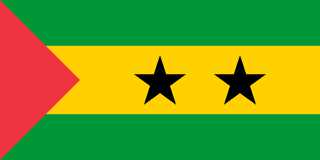
Flag of São Tomé and Príncipe

São Tomé and Príncipe

Democratic Republic of São Tomé and Príncipe

Background
Portugal discovered and colonized the uninhabited Sao Tome and Principe islands in the late 15th century, setting up a sugar-based economy that gave way to coffee and cocoa in the 19th century -- all grown with African slave labor, a form of which lingered into the 20th century. While independence was achieved in 1975, democratic reforms were not instituted until the late 1980s. The country held its first free elections in 1991, but frequent internal wrangling among the various political parties precipitated repeated changes in leadership and failed, non-violent coup attempts in 1995, 1998, 2003, and 2009. In 2012, three opposition parties combined in a no-confidence vote to bring down the majority government of former Prime Minister Patrice TROVOADA, but legislative elections returned him to the office two years later. President Evaristo CARVALHO, of the same political party as TROVOADA, was elected in 2016, marking a rare instance in which the same party held the positions of president and prime minister. TROVOADA resigned in 2018 and was replaced by Jorge BOM JESUS. Carlos Vila NOVA was elected president in 2021. TROVOADA began his fourth stint as prime minister in 2022, after his party's victory in legislative elections.
Location
Central Africa, islands in the Gulf of Guinea, just north of the Equator, west of Gabon
Geographic coordinates
1 00 N, 7 00 E
Map references
Africa
Area
total: 964 sq km
land: 964 sq km
water: 0 sq km
Area - comparative
more than five times the size of Washington, D.C.
Land boundaries
total: 0 km
Coastline
209 km
Maritime claims
territorial sea: 12 nm
exclusive economic zone: 200 nm
Climate
tropical; hot, humid; one rainy season (October to May)
Terrain
volcanic, mountainous
Elevation
highest point: Pico de Sao Tome 2,024 m
lowest point: Atlantic Ocean 0 m
Natural resources
fish, hydropower
Land use
agricultural land: 44.8% (2023 est.)
agricultural land: arable land: arable land: 4.2% (2023 est.)
agricultural land: permanent crops: permanent crops: 39.6% (2023 est.)
agricultural land: permanent pasture: permanent pasture: 1% (2023 est.)
forest: 57.5% (2023 est.)
other: 0% (2023 est.)
Irrigated land
100 sq km (2012)
Population distribution
Sao Tome, the capital city, has roughly a quarter of the nation's population; Santo Antonio is the largest town on Principe; the northern areas of both islands have the highest population densities, as shown in this population distribution map
Natural hazards
flooding
Geography - note
the second-smallest African country (after the Seychelles); the two main islands form part of a chain of extinct volcanoes, and both are mountainous
Population
total: 223,561 (2024 est.)
male: 111,553
female: 112,008
Nationality
noun: Sao Tomean(s)
adjective: Sao Tomean
Ethnic groups
Mestico, Angolares (descendants of Angolan slaves), Forros (descendants of freed slaves), Servicais (contract laborers from Angola, Mozambique, and Cabo Verde), Tongas (children of servicais born on the islands), Europeans (primarily Portuguese), Asians (mostly Chinese)
Languages
Portuguese 98.4% (official), Forro 36.2%, Cabo Verdian 8.5%, French 6.8%, Angolar 6.6%, English 4.9%, Lunguie 1%, other (including sign language) 2.4%; other Portuguese-based Creoles are also spoken (2012 est.)
Religions
Catholic 55.7%, Adventist 4.1%, Assembly of God 3.4%, New Apostolic 2.9%, Mana 2.3%, Universal Kingdom of God 2%, Jehovah's Witness 1.2%, other 6.2%, none 21.2%, unspecified 1% (2012 est.)
Age structure
0-14 years: 36.4% (male 41,337/female 40,106)
15-64 years: 60.3% (male 67,101/female 67,775)
65 years and over: 3.2% (2024 est.) (male 3,115/female 4,127)
Dependency ratios
total dependency ratio: 65.8 (2024 est.)
youth dependency ratio: 60.4 (2024 est.)
elderly dependency ratio: 5.4 (2024 est.)
potential support ratio: 18.6 (2024 est.)
Median age
total: 21.2 years (2025 est.)
male: 20.4 years
female: 21.2 years
Population growth rate
1.39% (2025 est.)
Birth rate
25.87 births/1,000 population (2025 est.)
Death rate
5.84 deaths/1,000 population (2025 est.)
Net migration rate
-6.15 migrant(s)/1,000 population (2025 est.)
Population distribution
Sao Tome, the capital city, has roughly a quarter of the nation's population; Santo Antonio is the largest town on Principe; the northern areas of both islands have the highest population densities, as shown in this population distribution map
Urbanization
urban population: 76.4% of total population (2023)
rate of urbanization: 2.96% annual rate of change (2020-25 est.)
Major urban areas - population
80,000 SAO TOME (capital) (2018)
Sex ratio
at birth: 1.03 male(s)/female
0-14 years: 1.03 male(s)/female
15-64 years: 0.99 male(s)/female
65 years and over: 0.75 male(s)/female
total population: 1 male(s)/female (2024 est.)
Mother's mean age at first birth
19.4 years (2008/09 est.)
Maternal mortality ratio
75 deaths/100,000 live births (2023 est.)
Infant mortality rate
total: 41.7 deaths/1,000 live births (2025 est.)
male: 46.1 deaths/1,000 live births
female: 39 deaths/1,000 live births
Life expectancy at birth
total population: 67.7 years (2024 est.)
male: 66 years
female: 69.4 years
Total fertility rate
3.18 children born/woman (2025 est.)
Gross reproduction rate
1.57 (2025 est.)
Drinking water source
improved: urban: urban: 79.3% of population (2022 est.)
improved: rural: rural: 71.1% of population (2022 est.)
improved: total: total: 77.3% of population (2022 est.)
unimproved: urban: urban: 20.7% of population (2022 est.)
unimproved: rural: rural: 28.9% of population (2022 est.)
unimproved: total: total: 22.7% of population (2022 est.)
Health expenditure
Health expenditure (as % of GDP): 7.8% of GDP (2021)
Health expenditure (as % of national budget): 14.9% of national budget (2022 est.)
Physician density
0.46 physicians/1,000 population (2022)
Hospital bed density
2.9 beds/1,000 population (2019 est.)
Sanitation facility access
improved: urban: urban: 56.8% of population (2022 est.)
improved: rural: rural: 43.2% of population (2022 est.)
improved: total: total: 53.5% of population (2022 est.)
unimproved: urban: urban: 43.2% of population (2022 est.)
unimproved: rural: rural: 56.8% of population (2022 est.)
unimproved: total: total: 46.5% of population (2022 est.)
Obesity - adult prevalence rate
12.4% (2016)
Alcohol consumption per capita
total: 4.23 liters of pure alcohol (2019 est.)
beer: 0.42 liters of pure alcohol (2019 est.)
wine: 3.58 liters of pure alcohol (2019 est.)
spirits: 0.23 liters of pure alcohol (2019 est.)
other alcohols: 0 liters of pure alcohol (2019 est.)
Tobacco use
total: 7.3% (2025 est.)
male: 13.1% (2025 est.)
female: 1.7% (2025 est.)
Children under the age of 5 years underweight
5.4% (2019 est.)
Currently married women (ages 15-49)
53.1% (2019 est.)
Child marriage
women married by age 15: 5.4% (2019)
women married by age 18: 28% (2019)
men married by age 18: 3.1% (2019)
Education expenditure
Education expenditure (% GDP): 5% of GDP (2023 est.)
Education expenditure (% national budget): 18.1% national budget (2024 est.)
Literacy
total population: 87.4% (2019 est.)
male: 92.5% (2019 est.)
female: 82.8% (2019 est.)
School life expectancy (primary to tertiary education)
total: 13 years (2021 est.)
male: 13 years (2021 est.)
female: 13 years (2021 est.)
Environmental issues
deforestation and illegal logging; soil erosion and exhaustion; inadequate sewage treatment in cities; biodiversity
International environmental agreements
party to: Biodiversity, Climate Change, Climate Change-Kyoto Protocol, Climate Change-Paris Agreement, Desertification, Endangered Species, Environmental Modification, Hazardous Wastes, Law of the Sea, Ozone Layer Protection, Ship Pollution, Wetlands, Whaling
signed, but not ratified: Comprehensive Nuclear Test Ban
Climate
tropical; hot, humid; one rainy season (October to May)
Land use
agricultural land: 44.8% (2023 est.)
agricultural land: arable land: arable land: 4.2% (2023 est.)
agricultural land: permanent crops: permanent crops: 39.6% (2023 est.)
agricultural land: permanent pasture: permanent pasture: 1% (2023 est.)
forest: 57.5% (2023 est.)
other: 0% (2023 est.)
Urbanization
urban population: 76.4% of total population (2023)
rate of urbanization: 2.96% annual rate of change (2020-25 est.)
Carbon dioxide emissions
total emissions: 146,000 metric tonnes of CO2 (2023 est.)
from petroleum and other liquids: 146,000 metric tonnes of CO2 (2023 est.)
Particulate matter emissions
29 micrograms per cubic meter (2019 est.)
Waste and recycling
municipal solid waste generated annually: 25,600 tons (2024 est.)
percent of municipal solid waste recycled: 16.9% (2022 est.)
Total water withdrawal
municipal: 14.7 million cubic meters (2022 est.)
industrial: 600,000 cubic meters (2022 est.)
agricultural: 25.6 million cubic meters (2022 est.)
Total renewable water resources
2.18 billion cubic meters (2022)
Country name
conventional long form: Democratic Republic of Sao Tome and Principe
conventional short form: Sao Tome and Principe
local long form: Republica Democratica de Sao Tome e Principe
local short form: Sao Tome e Principe
etymology: Sao Tome was named after Saint THOMAS the Apostle by the Portuguese who discovered the island on 21 December 1470 (or 1471), the saint's feast day; Principe is a shortening of the original Portuguese name of "Ilha do Principe" (Isle of the Prince), referring to Prince ALPHONSO of Portugal
Government type
semi-presidential republic
Capital
name: Sao Tome
geographic coordinates: 0 20 N, 6 44 E
time difference: UTC 0 (5 hours ahead of Washington, DC, during Standard Time)
etymology: named after Saint THOMAS the Apostle by the Portuguese, who discovered the island on 21 December 1470 (or 1471), the saint's feast day
Administrative divisions
6 districts (distritos, singular - distrito), 1 autonomous region* (regiao autonoma); Agua Grande, Cantagalo, Caue, Lemba, Lobata, Me-Zochi, Principe*
Legal system
mixed system of civil law based on the Portuguese model and customary law
Constitution
history: approved 5 November 1975
amendment process: proposed by the National Assembly; passage requires two-thirds majority vote by the Assembly; the Assembly can propose to the president of the republic that an amendment be submitted to a referendum
International law organization participation
has not submitted an ICJ jurisdiction declaration; non-party state to the ICCt
Citizenship
citizenship by birth: no
citizenship by descent only: at least one parent must be a citizen of Sao Tome and Principe
dual citizenship recognized: no
residency requirement for naturalization: 5 years
Suffrage
18 years of age; universal
Executive branch
chief of state: President Carlos Manuel VILA NOVA (since 2 October 2021)
head of government: Prime Minister Américo d'Oliveira DOS RAMOS (since 12 January 2025)
cabinet: Council of Ministers proposed by the prime minister, appointed by the president
election/appointment process: president directly elected by absolute-majority popular vote in 2 rounds, if needed, for a 5-year term (eligible for a second term); prime minister chosen by the National Assembly and approved by the president
most recent election date: 18 July 2021, with a runoff on 5 September 2021
election results: 2021: Carlos Manuel VILA NOVA elected president in the second round; percent of vote in the first round - Carlos Manuel VILA NOVA (IDA) 39.5%; Guilherme POSSER DA COSTA (MLSTP-PSD) 20.8%; Delfim NEVES (PCD-GR) 16.9%; Abel BOM JESUS (independent) 3.6%; Maria DAS NEVES (independent) 3.3%; other 15.9%; percent of the vote in second round - Carlos Manuel VILA NOVA 57.5%, Guilherme POSSER DA COSTA 42.5%2016: Evaristo CARVALHO elected president; percent of vote - Evaristo CARVALHO (ADI) 49.8%, Manuel Pinto DA COSTA (independent) 24.8%, Maria DAS NEVES (MLSTP-PSD) 24.1%
expected date of next election: 2026
Legislative branch
legislature name: National Assembly (Assembleia Nacional)
legislative structure: unicameral
number of seats: 55 (all directly elected)
electoral system: proportional representation
scope of elections: full renewal
term in office: 4 years
most recent election date: 9/25/2022
parties elected and seats per party: Independent Democratic Alliance (ADI) (30); Sao Tome and Principe Liberation Movement/Social Democratic Party (MLSTP - PSD) (18); Movement of Independent Citizens - Socialist Party (MCI - PS) - National Unity Party (PUN) (5); Other (2)
percentage of women in chamber: 14.5%
expected date of next election: September 2026
Judicial branch
highest court(s): Supreme Court or Supremo Tribunal Justica (consists of 5 judges); Constitutional Court or Tribunal Constitucional (consists of 5 judges, 3 of whom are from the Supreme Court)
judge selection and term of office: Supreme Court judges appointed by the National Assembly; judge tenure NA; Constitutional Court judges nominated by the president and elected by the National Assembly for 5-year terms
subordinate courts: Court of First Instance; Audit Court
Political parties
BASTA Movement Independent Democratic Action or ADI Movement for the Liberation of Sao Tome and Principe-Social Democratic Party or MLSTP-PSD Movement of Independent Citizens of São Tomé and Príncipe - Socialist Party or MCI-PS National Unity Party or PUN
Diplomatic representation in the US
chief of mission: Ambassador (vacant)
chancery: 122 East 42nd Street, Suite 1604New York, NY 101168
telephone: [1] (212) 317-0533
FAX: [1] (212) 317-0580
email address and website: stp1@attglobal.netSao Tome and Principe Permanent Mission to the United Nations
Diplomatic representation from the US
embassy: the US does not have an embassy in Sao Tome and Principe; the US Ambassador to Angola is accredited to Sao Tome and Principe
mailing address: 2290 Sao Tome Place, Washington DC 20521-2290
International organization participation
ACP, AfDB, AOSIS, AU, CD, CEMAC, CPLP, EITI (candidate country), FAO, G-77, IBRD, ICAO, ICRM, IDA, IFAD, IFC, IFRCS, ILO, IMF, IMO, Interpol, IOC, IOM (observer), IPU, ITU, ITUC (NGOs), MIGA, NAM, OIF, OPCW, PCA, UN, UNCTAD, UNESCO, UNIDO, Union Latina, UNWTO, UPU, WCO, WHO, WIPO, WMO, WTO (observer)
Independence
12 July 1975 (from Portugal)
National holiday
Independence Day, 12 July (1975)
Flag
description: three horizontal bands of green (top), yellow (double-width), and green with two five-pointed black stars in the center of the yellow band and a red isosceles triangle based on the left sidemeaning: green stands for the country's rich vegetation, red for the struggle for independence, and yellow for cocoa, one of the country's main agricultural products; the two stars symbolize the main islandshistory: uses the colors of the Pan-African movement
National symbol(s)
palm tree
National color(s)
green, yellow, red, black
National anthem(s)
title: "Independencia total" (Total Independence)
lyrics/music: Alda Neves DA GRACA do Espirito Santo/Manuel dos Santos Barreto de Sousa e ALMEIDA
history: adopted 1975
Economic overview
lower middle-income Central African island economy; falling cocoa production due to drought and mismanagement; joint oil venture with Nigeria; government owns 90% of land; high debt, partly from fuel subsidies; tourism gutted by COVID-19
Real GDP (purchasing power parity)
Real GDP (purchasing power parity) 2024: $1.291 billion (2024 est.)
Real GDP (purchasing power parity) 2023: $1.279 billion (2023 est.)
Real GDP (purchasing power parity) 2022: $1.275 billion (2022 est.)
Real GDP growth rate
Real GDP growth rate 2024: 0.9% (2024 est.)
Real GDP growth rate 2023: 0.4% (2023 est.)
Real GDP growth rate 2022: 0.2% (2022 est.)
Real GDP per capita
Real GDP per capita 2024: $5,500 (2024 est.)
Real GDP per capita 2023: $5,500 (2023 est.)
Real GDP per capita 2022: $5,600 (2022 est.)
GDP (official exchange rate)
$764.274 million (2024 est.)
Inflation rate (consumer prices)
Inflation rate (consumer prices) 2024: 14.4% (2024 est.)
Inflation rate (consumer prices) 2023: 21.3% (2023 est.)
Inflation rate (consumer prices) 2022: 18% (2022 est.)
GDP - composition, by sector of origin
agriculture: 12.8% (2024 est.)
industry: 2.9% (2024 est.)
services: 76.6% (2024 est.)
GDP - composition, by end use
household consumption: 81.4% (2017 est.)
government consumption: 17.6% (2017 est.)
investment in fixed capital: 33.4% (2017 est.)
investment in inventories: 0% (2017 est.)
exports of goods and services: 7.9% (2017 est.)
imports of goods and services: -40.4% (2017 est.)
Agricultural products
plantains, oil palm fruit, taro, bananas, fruits, cocoa beans, yams, coconuts, cassava, vegetables (2023)
Industries
light construction, textiles, soap, beer, fish processing, timber
Industrial production growth rate
3.2% (2024 est.)
Labor force
34,500 (2024 est.)
Unemployment rate
Unemployment rate 2024: 9.2% (2024 est.)
Unemployment rate 2023: 9.1% (2023 est.)
Unemployment rate 2022: 9% (2022 est.)
Youth unemployment rate (ages 15-24)
total: 8.6% (2024 est.)
male: 8% (2024 est.)
female: 9.2% (2024 est.)
Population below poverty line
55.5% (2017 est.)
Gini Index coefficient - distribution of family income
Gini Index coefficient - distribution of family income 2017: 40.7 (2017 est.)
Household income or consumption by percentage share
lowest 10%: 2.6% (2017 est.)
highest 10%: 32.8% (2017 est.)
Remittances
Remittances 2023: 1.5% of GDP (2023 est.)
Remittances 2022: 1.9% of GDP (2022 est.)
Remittances 2021: 2% of GDP (2021 est.)
Budget
revenues: $128.767 million (2022 est.)
expenditures: $165.95 million (2022 est.)
Public debt
Public debt 2016: 93.1% of GDP (2016 est.)
Current account balance
Current account balance 2022: -$79.437 million (2022 est.)
Current account balance 2021: -$95.248 million (2021 est.)
Current account balance 2020: -$59.595 million (2020 est.)
Exports
Exports 2022: $96.977 million (2022 est.)
Exports 2021: $75.256 million (2021 est.)
Exports 2020: $49.337 million (2020 est.)
Exports - partners
Pakistan 54%, Germany 11%, Netherlands 7%, France 5%, UAE 3% (2023)
Exports - commodities
crude petroleum, cocoa beans, vehicle parts/accessories, palm oil, aircraft parts (2023)
Imports
Imports 2022: $219.322 million (2022 est.)
Imports 2021: $201.145 million (2021 est.)
Imports 2020: $160.097 million (2020 est.)
Imports - partners
Portugal 35%, Angola 13%, Gabon 11%, Japan 8%, China 6% (2023)
Imports - commodities
ships, refined petroleum, rice, electric generating sets, cars (2023)
Reserves of foreign exchange and gold
Reserves of foreign exchange and gold 2023: $46.247 million (2023 est.)
Reserves of foreign exchange and gold 2022: $64.476 million (2022 est.)
Reserves of foreign exchange and gold 2021: $75.017 million (2021 est.)
Debt - external
Debt - external 2023: $327.248 million (2023 est.)
Exchange rates
Currency: dobras (STD) per US dollar -
Exchange rates 2023: 22.658 (2023 est.)
Exchange rates 2022: 23.29 (2022 est.)
Exchange rates 2021: 20.71 (2021 est.)
Exchange rates 2020: 21.507 (2020 est.)
Exchange rates 2019: 21.885 (2019 est.)
Electricity access
electrification - total population: 78% (2022 est.)
electrification - urban areas: 80%
electrification - rural areas: 73.7%
Electricity
installed generating capacity: 29,000 kW (2023 est.)
consumption: 47.05 million kWh (2023 est.)
transmission/distribution losses: 40.95 million kWh (2023 est.)
Electricity generation sources
fossil fuels: 93.2% of total installed capacity (2023 est.)
hydroelectricity: 6.8% of total installed capacity (2023 est.)
Petroleum
refined petroleum consumption: 1,000 bbl/day (2023 est.)
Energy consumption per capita
Total energy consumption per capita 2023: 8.875 million Btu/person (2023 est.)
Telephones - fixed lines
total subscriptions: 2,000 (2023 est.)
subscriptions per 100 inhabitants: 1 (2023 est.)
Telephones - mobile cellular
total subscriptions: 152,000 (2023 est.)
subscriptions per 100 inhabitants: 87 (2022 est.)
Broadcast media
1 state-owned TV station; 2 state-owned radio stations; 7 independent local radio stations; transmissions of multiple international broadcasters are available
Internet country code
.st
Internet users
percent of population: 62% (2023 est.)
Broadband - fixed subscriptions
total: 6,000 (2023 est.)
subscriptions per 100 inhabitants: 3 (2023 est.)
Civil aircraft registration country code prefix
S9
Airports
2 (2025)
Merchant marine
total: 25 (2023)
by type: general cargo 15, oil tanker 4, other 6
Ports
total ports: 2 (2024)
large: 0
medium: 0
small: 0
very small: 2
ports with oil terminals: 0
key ports: Santo Antonio, Sao Tome
Military and security forces
Armed Forces of Sao Tome and Principe (Forcas Armadas de Sao Tome e Principe, FASTP): Army, Coast Guard of Sao Tome e Principe (Guarda Costeira de Sao Tome e Principe, GCSTP), Presidential Guard, National Guard (2025)
Military and security service personnel strengths
approximately 500 active Armed Forces (2023)
Military equipment inventories and acquisitions
the FASTP is lightly armed and has a small inventory of mostly older weapons and equipment (2023)
Military service age and obligation
limited information; 18 is the minimum age for compulsory military service (reportedly not enforced) and 17 years of age (with parental permission) for voluntary service (2024)
Military - note
the FASTP is one of the smallest militaries in Africa and consists of only a few companies of ground troops and some small patrol boats (2024)