FactbookCompare 0
← Back to all countries
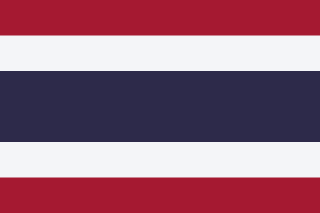
Flag of Thailand

Thailand

Kingdom of Thailand

Background
Two unified Thai kingdoms emerged in the mid-13th century. The Sukhothai Kingdom, located in the south-central plains, gained its independence from the Khmer Empire to the east. By the late 13th century, Sukhothai’s territory extended into present-day Burma and Laos. Sukhothai lasted until the mid-15th century. The Thai Lan Na Kingdom was established in the north with its capital at Chang Mai; the Burmese conquered Lan Na in the 16th century. The Ayutthaya Kingdom (14th-18th centuries) succeeded the Sukhothai and would become known as the Siamese Kingdom. During the Ayutthaya period, the Thai/Siamese peoples consolidated their hold on what is present-day central and north-central Thailand. Following a military defeat at the hands of the Burmese in 1767, the Siamese Kingdom rose to new heights under the military ruler TAKSIN, who defeated the Burmese occupiers and expanded the kingdom’s territory into modern-day northern Thailand (formerly the Lan Na Kingdom), Cambodia, Laos, and the Malay Peninsula. In the mid-1800s, Western pressure led to Siam signing trade treaties that reduced the country’s sovereignty and independence. In the 1890s and 1900s, the British and French forced the kingdom to cede Cambodian, Laotian, and Malay territories that had been under Siamese control. Following a bloodless revolution in 1932 that led to the establishment of a constitutional monarchy, Thailand's political history was marked by a series of mostly bloodless coups with power concentrated among military and bureaucratic elites. Periods of civilian rule were unstable. The Cold War era saw a communist insurgency and the rise of strongman leaders. Thailand became a US treaty ally in 1954 after sending troops to Korea and later fighting alongside the US in Vietnam. In the 21st century, Thailand has experienced additional turmoil, including a military coup in 2006 that ousted then Prime Minister THAKSIN Chinnawat and large-scale street protests led by competing political factions in 2008-2010. In 2011, THAKSIN's youngest sister, YINGLAK Chinnawat, led the Puea Thai Party to an electoral win and assumed control of the government. In 2014, after months of major anti-government protests in Bangkok, the Constitutional Court removed YINGLAK from office, and the Army, led by Gen. PRAYUT Chan-ocha, then staged a coup against the caretaker government. The military-affiliated National Council for Peace and Order (NCPO) ruled the country under PRAYUT for more than four years, drafting a new constitution that allowed the military to appoint the entire 250-member Senate and required a joint meeting of the House and Senate to select the prime minister -- which effectively gave the military a veto on the selection. King PHUMIPHON Adunyadet passed away in 2016 after 70 years on the throne; his only son, WACHIRALONGKON (aka King RAMA X), formally ascended the throne in 2019. The same year, a long-delayed election allowed PRAYUT to continue his premiership, although the results were disputed and widely viewed as skewed in favor of the party aligned with the military. The country again experienced major anti-government protests in 2020. The reformist Move Forward Party won the most seats in the 2023 election but was unable to form a government, and Srettha THRAVISIN from the Pheu Thai Party replaced PRAYUT as prime minister after forming a coalition of moderate and conservative parties.
Location
Southeastern Asia, bordering the Andaman Sea and the Gulf of Thailand, southeast of Burma
Geographic coordinates
15 00 N, 100 00 E
Map references
Southeast Asia
Area
total: 513,120 sq km
land: 510,890 sq km
water: 2,230 sq km
Area - comparative
about three times the size of Florida; slightly more than twice the size of Wyoming
Land boundaries
total: 5,673 km
border countries: Burma 2,416 km; Cambodia 817 km; Laos 1,845 km; Malaysia 595 km
Coastline
3,219 km
Maritime claims
territorial sea: 12 nm
exclusive economic zone: 200 nm
continental shelf: 200-m depth or to the depth of exploitation
Climate
tropical; rainy, warm, cloudy southwest monsoon (mid-May to September); dry, cool northeast monsoon (November to mid-March); southern isthmus always hot and humid
Terrain
central plain; Khorat Plateau in the east; mountains elsewhere
Elevation
highest point: Doi Inthanon 2,565 m
lowest point: Gulf of Thailand 0 m
mean elevation: 287 m
Natural resources
tin, rubber, natural gas, tungsten, tantalum, timber, lead, fish, gypsum, lignite, fluorite, arable land
Land use
agricultural land: 43.8% (2023 est.)
agricultural land: arable land: arable land: 31% (2023 est.)
agricultural land: permanent crops: permanent crops: 11.2% (2023 est.)
agricultural land: permanent pasture: permanent pasture: 1.6% (2023 est.)
forest: 39% (2023 est.)
other: 17.2% (2023 est.)
Irrigated land
64,150 sq km (2012)
Major lakes (area sq km)
salt water lake(s): Thalesap Songkhla - 1,290 sq km
Major rivers (by length in km)
Mae Nam Khong (Mekong) (shared with China [s], Burma, Laos, Cambodia, and Vietnam [m]) - 4,350 km; Salween (shared with China [s] and Burma [m]) - 3,060 km; Mun - 1,162 kmnote: [s] after country name indicates river source; [m] after country name indicates river mouth
Major watersheds (area sq km)
Indian Ocean drainage: Salween (271,914 sq km)
Pacific Ocean drainage: Mekong (805,604 sq km)
Population distribution
highest population density is found in and around Bangkok; significant population clusters throughout large parts of the country, particularly north and northeast of Bangkok and in the extreme southern region of the country
Natural hazards
land subsidence in Bangkok area resulting from the depletion of the water table; droughts
Geography - note
controls only land route from Asia to Malaysia and Singapore
Population
total: 70,025,248 (2025 est.)
male: 34,101,016
female: 35,924,232
Nationality
noun: Thai (singular and plural)
adjective: Thai
Ethnic groups
Thai 97.5%, Burmese 1.3%, other 1.1%, unspecified <0.1% (2015 est.)
Languages
Languages: Thai (official) only 90.7%, Thai and other languages 6.4%, only other languages 2.9% (includes Malay, Burmese); English is a secondary language among the elite (2010 est.)
major-language sample(s): สารานุกรมโลก - แหล่งข้อมูลพื้นฐานที่สำคัญ (Thai)The World Factbook, the indispensable source for basic information.
Religions
Buddhist 92.5%, Muslim 5.4%, Christian 1.2%, other 0.9% (includes animist, Confucian, Hindu, Jewish, Sikh, and Taoist) (2021 est.)
Age structure
0-14 years: 15.8% (male 5,669,592/female 5,394,398)
15-64 years: 69% (male 23,681,528/female 24,597,535)
65 years and over: 15.1% (2024 est.) (male 4,714,191/female 5,863,754)
Dependency ratios
total dependency ratio: 45.9 (2025 est.)
youth dependency ratio: 22.9 (2025 est.)
elderly dependency ratio: 23.1 (2025 est.)
potential support ratio: 4.3 (2025 est.)
Median age
total: 41.9 years (2025 est.)
male: 40.2 years
female: 42.7 years
Population growth rate
0.13% (2025 est.)
Birth rate
9.82 births/1,000 population (2025 est.)
Death rate
8.08 deaths/1,000 population (2025 est.)
Net migration rate
-0.41 migrant(s)/1,000 population (2025 est.)
Population distribution
highest population density is found in and around Bangkok; significant population clusters throughout large parts of the country, particularly north and northeast of Bangkok and in the extreme southern region of the country
Urbanization
urban population: 53.6% of total population (2023)
rate of urbanization: 1.43% annual rate of change (2020-25 est.)
Major urban areas - population
11.070 million BANGKOK (capital), 1.454 Chon Buri, 1.359 million Samut Prakan, 1.213 million Chiang Mai, 1.005 million Songkla, 1.001 million Nothaburi (2023)
Sex ratio
at birth: 1.05 male(s)/female
0-14 years: 1.05 male(s)/female
15-64 years: 0.96 male(s)/female
65 years and over: 0.8 male(s)/female
total population: 0.95 male(s)/female (2024 est.)
Mother's mean age at first birth
23.3 years (2009 est.)
Maternal mortality ratio
34 deaths/100,000 live births (2023 est.)
Infant mortality rate
total: 6.2 deaths/1,000 live births (2025 est.)
male: 6.9 deaths/1,000 live births
female: 5.6 deaths/1,000 live births
Life expectancy at birth
total population: 78.2 years (2024 est.)
male: 75.2 years
female: 81.3 years
Total fertility rate
1.55 children born/woman (2025 est.)
Gross reproduction rate
0.75 (2025 est.)
Drinking water source
improved: urban: urban: 100% of population (2022 est.)
improved: rural: rural: 100% of population (2022 est.)
improved: total: total: 100% of population (2022 est.)
unimproved: urban: urban: 0% of population (2022 est.)
unimproved: rural: rural: 0% of population (2022 est.)
unimproved: total: total: 0% of population (2022 est.)
Health expenditure
Health expenditure (as % of GDP): 5.2% of GDP (2021)
Health expenditure (as % of national budget): 16.1% of national budget (2022 est.)
Physician density
0.54 physicians/1,000 population (2021)
Hospital bed density
2.3 beds/1,000 population (2021 est.)
Sanitation facility access
improved: urban: urban: 99.9% of population (2022 est.)
improved: rural: rural: 100% of population (2022 est.)
improved: total: total: 100% of population (2022 est.)
unimproved: urban: urban: 0.1% of population (2022 est.)
unimproved: rural: rural: 0% of population (2022 est.)
unimproved: total: total: 0% of population (2022 est.)
Obesity - adult prevalence rate
10% (2016)
Alcohol consumption per capita
total: 6.86 liters of pure alcohol (2019 est.)
beer: 1.85 liters of pure alcohol (2019 est.)
wine: 0.23 liters of pure alcohol (2019 est.)
spirits: 4.78 liters of pure alcohol (2019 est.)
other alcohols: 0 liters of pure alcohol (2019 est.)
Tobacco use
total: 18.1% (2025 est.)
male: 36.1% (2025 est.)
female: 1.6% (2025 est.)
Children under the age of 5 years underweight
6.7% (2022 est.)
Currently married women (ages 15-49)
52.4% (2022 est.)
Child marriage
women married by age 15: 5.5% (2022)
women married by age 18: 17% (2022)
men married by age 18: 5.8% (2022)
Education expenditure
Education expenditure (% GDP): 2.5% of GDP (2023 est.)
Education expenditure (% national budget): 12.6% national budget (2025 est.)
Literacy
total population: 91.1% (2022 est.)
male: 90.7% (2022 est.)
female: 91.5% (2022 est.)
School life expectancy (primary to tertiary education)
total: 16 years (2023 est.)
male: 16 years (2023 est.)
female: 16 years (2023 est.)
Environmental issues
air pollution from vehicle emissions; water pollution from organic and factory wastes; water scarcity; deforestation; soil erosion; illegal hunting; hazardous waste disposal
International environmental agreements
party to: Biodiversity, Climate Change, Climate Change-Kyoto Protocol, Climate Change-Paris Agreement, Comprehensive Nuclear Test Ban, Desertification, Endangered Species, Hazardous Wastes, Law of the Sea, Marine Life Conservation, Nuclear Test Ban, Ozone Layer Protection, Ship Pollution, Tropical Timber 2006, Wetlands
signed, but not ratified: none of the selected agreements
Climate
tropical; rainy, warm, cloudy southwest monsoon (mid-May to September); dry, cool northeast monsoon (November to mid-March); southern isthmus always hot and humid
Land use
agricultural land: 43.8% (2023 est.)
agricultural land: arable land: arable land: 31% (2023 est.)
agricultural land: permanent crops: permanent crops: 11.2% (2023 est.)
agricultural land: permanent pasture: permanent pasture: 1.6% (2023 est.)
forest: 39% (2023 est.)
other: 17.2% (2023 est.)
Urbanization
urban population: 53.6% of total population (2023)
rate of urbanization: 1.43% annual rate of change (2020-25 est.)
Carbon dioxide emissions
total emissions: 336.693 million metric tonnes of CO2 (2023 est.)
from coal and metallurgical coke: 79.928 million metric tonnes of CO2 (2023 est.)
from petroleum and other liquids: 160.931 million metric tonnes of CO2 (2023 est.)
from consumed natural gas: 95.834 million metric tonnes of CO2 (2023 est.)
Particulate matter emissions
26.3 micrograms per cubic meter (2019 est.)
Methane emissions
energy: 708.8 kt (2022-2024 est.)
agriculture: 2,109.9 kt (2019-2021 est.)
waste: 635.8 kt (2019-2021 est.)
other: 57.9 kt (2019-2021 est.)
Waste and recycling
municipal solid waste generated annually: 26.853 million tons (2024 est.)
percent of municipal solid waste recycled: 40% (2022 est.)
Total water withdrawal
municipal: 2.739 billion cubic meters (2022 est.)
industrial: 2.777 billion cubic meters (2022 est.)
agricultural: 51.79 billion cubic meters (2022 est.)
Total renewable water resources
438.61 billion cubic meters (2022 est.)
Geoparks
total global geoparks and regional networks: 2
global geoparks and regional networks: Khorat; Satun (2023)
Country name
conventional long form: Kingdom of Thailand
conventional short form: Thailand
local long form: Ratcha Anachak Thai
local short form: Prathet Thai
former: Siam
etymology: the name means "Land of the Thai," referring to the local population; the people's name comes from the Thai word tha, meaning "to be free;" the former name of Siam comes from the Sanskrit word syama, meaning "dark"
Government type
constitutional monarchy
Capital
name: Bangkok
geographic coordinates: 13 45 N, 100 31 E
time difference: UTC+7 (12 hours ahead of Washington, DC, during Standard Time)
etymology: the name is from the Thai words bang (region) and kok (olive trees); the city's full ceremonial name holds the world record for longest place name, Krungthepmahanakhon amonrattanakosin mahintharayutthaya mahadilokphop noppharatratchathaniburirom udomratchaniwetmahasathan amonphimanawatansathit sakkathattiyawitsanukamprasit, which means "City of angels, great city of immortals, magnificent city of the nine gems, seat of the king, city of royal palaces, home of gods incarnate, erected by Vishvakarman at Indra's behest"
Administrative divisions
76 provinces (changwat, singular and plural) and 1 municipality* (maha nakhon); Amnat Charoen, Ang Thong, Bueng Kan, Buri Ram, Chachoengsao, Chai Nat, Chaiyaphum, Chanthaburi, Chiang Mai, Chiang Rai, Chon Buri, Chumphon, Kalasin, Kamphaeng Phet, Kanchanaburi, Khon Kaen, Krabi, Krung Thep* (Bangkok), Lampang, Lamphun, Loei, Lop Buri, Mae Hong Son, Maha Sarakham, Mukdahan, Nakhon Nayok, Nakhon Pathom, Nakhon Phanom, Nakhon Ratchasima, Nakhon Sawan, Nakhon Si Thammarat, Nan, Narathiwat, Nong Bua Lamphu, Nong Khai, Nonthaburi, Pathum Thani, Pattani, Phangnga, Phatthalung, Phayao, Phetchabun, Phetchaburi, Phichit, Phitsanulok, Phra Nakhon Si Ayutthaya, Phrae, Phuket, Prachin Buri, Prachuap Khiri Khan, Ranong, Ratchaburi, Rayong, Roi Et, Sa Kaeo, Sakon Nakhon, Samut Prakan, Samut Sakhon, Samut Songkhram, Saraburi, Satun, Sing Buri, Si Sa Ket, Songkhla, Sukhothai, Suphan Buri, Surat Thani, Surin, Tak, Trang, Trat, Ubon Ratchathani, Udon Thani, Uthai Thani, Uttaradit, Yala, Yasothon
Legal system
civil law system with common law influences
Constitution
history: many previous; latest drafted and presented 29 March 2016, approved by referendum 7 August 2016, signed into law by the king on 6 April 2017
amendment process: amendments require a majority vote in a joint session of the House and Senate and further require at least one fifth of opposition House members and one third of the Senate vote in favor; a national referendum is additionally required for certain amendments; all amendments require signature by the king
International law organization participation
has not submitted an ICJ jurisdiction declaration; non-party state to the ICCt
Citizenship
citizenship by birth: no
citizenship by descent only: at least one parent must be a citizen of Thailand
dual citizenship recognized: no
residency requirement for naturalization: 5 years
Suffrage
18 years of age; universal and compulsory
Executive branch
chief of state: King WACHIRALONGKON; also spelled Vajiralongkorn (since 1 December 2016)
head of government: Prime Minister ANUTIN Charnvirakul (since 5 Sep 2025)
cabinet: Council of Ministers nominated by the prime minister, appointed by the king; a Privy Council advises the king
election/appointment process: the monarchy is hereditary; prime minister candidate approved by House of Representatives and appointed by the king
Legislative branch
legislature name: National Assembly (Rathhasapha)
legislative structure: bicameral
Legislative branch - lower chamber
chamber name: House of Representatives (Saphaphuthan Ratsadon)
number of seats: 500 (all directly elected)
electoral system: mixed system
scope of elections: full renewal
term in office: 4 years
most recent election date: 5/14/2023 (House of Representatives dissolved on 12 December 2025)
parties elected and seats per party: Move Forward (151); Pheu Thai (141); Bhumjaithai (71); Palang Pracharath (40); United Thai Nation (36); Democrat Party (25); Other (36)
percentage of women in chamber: 19.6%
expected date of next election: 8 February 2026
Legislative branch - upper chamber
chamber name: Senate (Wuthisapha)
number of seats: 200 (all indirectly elected)
scope of elections: full renewal
term in office: 5 years
most recent election date: 6/9/2024 to 6/26/2024
percentage of women in chamber: 22.5%
expected date of next election: June 2029
Judicial branch
highest court(s): Supreme Court of Justice (consists of the court president, 6 vice presidents, 60-70 judges, and organized into 10 divisions); Constitutional Court (consists of the court president and 8 judges); Supreme Administrative Court (number of judges determined by Judicial Commission of the Administrative Courts)
judge selection and term of office: Supreme Court judges selected by the Judicial Commission of the Courts of Justice and approved by the monarch; judge term determined by the monarch; Constitutional Court justices - 3 judges drawn from the Supreme Court, 2 judges drawn from the Administrative Court, and 4 judge candidates selected by the Selective Committee for Judges of the Constitutional Court, and confirmed by the Senate; judges appointed by the monarch serve single 9-year terms; Supreme Administrative Court judges selected by the Judicial Commission of the Administrative Courts and appointed by the monarch; judges serve for life
subordinate courts: courts of first instance and appeals courts within both the judicial and administrative systems; military courts
Political parties
Bhumjaithai Party or BJT (aka Phumchai Thai Party or PJT; aka Thai Pride Party) Chat Thai Phatthana Party (Thai Nation Development Party) or CTPDemocrat Party Move Forward Party or MFP (dissolved by order of the Constitutional Court, August 2024)Palang Pracharat Party (People's State Power Party) or PPRP Pheu (Puea) Thai Party (For Thais Party) or PTP Prachachat Party or PCC Prachathipat Party (Democrat Party) or DP Thai Sang Thai Party United Thai Nation (Ruam Thai Sang Chat) or UTN
Diplomatic representation in the US
chief of mission: Ambassador Dr. SURIYA Chindawongse (since 17 June 2024)
chancery: 1024 Wisconsin Avenue NW, Suite 401, Washington, DC 20007
telephone: [1] (202) 944-3600
FAX: [1] (202) 944-3611
email address and website: thai.wsn@thaiembdc.orghttps://washingtondc.thaiembassy.org/en/index
consulate(s) general: Chicago, Los Angeles, New York
Diplomatic representation from the US
chief of mission: Ambassador-designate Sean O'NEILL (since 16 December 2025)
embassy: 95 Wireless Road, Bangkok 10330
mailing address: 7200 Bangkok Place, Washington DC 20521-7200
telephone: [66] 2-205-4000
FAX: [66] 2-205-4103
email address and website: acsbkk@state.govhttps://th.usembassy.gov/
consulate(s) general: Chiang Mai
International organization participation
ADB, APEC, ARF, ASEAN, BIMSTEC, BIS, CD, CICA, CP, EAS, FAO, G-77, IAEA, IBRD, ICAO, ICC (national committees), ICRM, IDA, IFAD, IFC, IFRCS, IHO, ILO, IMF, IMO, IMSO, Interpol, IOC, IOM, IPU, ISO, ITSO, ITU, ITUC (NGOs), MIGA, NAM, OAS (observer), OIC (observer), OIF (observer), OPCW, OSCE (partner), PCA, PIF (partner), UN, UNAMID, UNCTAD, UNESCO, UNHCR, UNIDO, UNMOGIP, UNOOSA, UNOCI, UNWTO, UPU, WCO, WFTU (NGOs), WHO, WIPO, WMO, WTO
Independence
1238 (traditional founding date; never colonized)
National holiday
Birthday of King WACHIRALONGKON, 28 July (1952)
Flag
description: five horizontal bands of red (top), white, blue (double-width), white, and redmeaning: red stands for the nation and the blood of life, white for religion and the purity of Buddhism, and blue for the monarchy
National symbol(s)
garuda (mythical half-man, half-bird figure), elephant
National color(s)
red, white, blue
National coat of arms
in 1911, King Vajiravudh (Rama VI) of Thailand officially adopted the Garuda as the national coat of arms and emblem; this mythological half-man, half-bird figure from the Hindu and Buddhist traditions is considered the vahana (vehicle) of the god Vishnu (Narayana) and was a symbol of royalty in Thailand for centuries
National anthem(s)
title: "Phleng Sanlasoen Phra Barami" (A Salute to the Monarch)
lyrics/music: Narisara NUWATTIWONG and King VAJIRAVUDH/Pyotr SHCHUROVSKY
history: royal anthem, played in the presence of the royal family and during certain state ceremonies
National heritage
total World Heritage Sites: 8 (5 cultural, 3 natural)
selected World Heritage Site locales: Historic City of Ayutthaya (c); Historic Sukhothai and Associated Historic Towns (c); Thungyai-Huai Kha Khaeng Wildlife Sanctuaries (n); Ban Chiang Archaeological Site (c); Dong Phayayen-Khao Yai Forest Complex (n); Kaeng Krachan Forest Complex (n); The Ancient Town of Si Thep and its Associated Dvaravati Monuments (n); Phu Phrabat, a testimony to the Sīma stone tradition of the Dvaravati period (c)
Economic overview
upper middle-income Southeast Asian economy; substantial infrastructure; major electronics, food, and automobile parts exporter; globally used currency; extremely low unemployment; ongoing Thailand 4.0 economic development
Real GDP (purchasing power parity)
Real GDP (purchasing power parity) 2024: $1.558 trillion (2024 est.)
Real GDP (purchasing power parity) 2023: $1.519 trillion (2023 est.)
Real GDP (purchasing power parity) 2022: $1.489 trillion (2022 est.)
Real GDP growth rate
Real GDP growth rate 2024: 2.5% (2024 est.)
Real GDP growth rate 2023: 2% (2023 est.)
Real GDP growth rate 2022: 2.6% (2022 est.)
Real GDP per capita
Real GDP per capita 2024: $21,700 (2024 est.)
Real GDP per capita 2023: $21,200 (2023 est.)
Real GDP per capita 2022: $20,800 (2022 est.)
GDP (official exchange rate)
$526.411 billion (2024 est.)
Inflation rate (consumer prices)
Inflation rate (consumer prices) 2024: 1.4% (2024 est.)
Inflation rate (consumer prices) 2023: 8.5% (2023 est.)
Inflation rate (consumer prices) 2022: -1.6% (2022 est.)
GDP - composition, by sector of origin
agriculture: 8.7% (2024 est.)
industry: 32.1% (2024 est.)
services: 59.2% (2024 est.)
GDP - composition, by end use
household consumption: 58.2% (2024 est.)
government consumption: 16.7% (2024 est.)
investment in fixed capital: 22.2% (2024 est.)
investment in inventories: -0.6% (2024 est.)
exports of goods and services: 70.1% (2024 est.)
imports of goods and services: -66.7% (2024 est.)
Agricultural products
sugarcane, rice, cassava, oil palm fruit, maize, rubber, tropical fruits, chicken, mangoes/guavas, fruits (2023)
Industries
tourism, textiles and garments, agricultural processing, beverages, tobacco, cement, light manufacturing such as jewelry and electric appliances, computers and parts, integrated circuits, furniture, plastics, automobiles and automotive parts, agricultural machinery, air conditioning and refrigeration, ceramics, aluminum, chemical, environmental management, glass, granite and marble, leather, machinery and metal work, petrochemical, petroleum refining, pharmaceuticals, printing, pulp and paper, rubber, sugar, rice, fishing, cassava, world's second-largest tungsten producer and third-largest tin producer
Industrial production growth rate
0.9% (2024 est.)
Labor force
40.623 million (2024 est.)
Unemployment rate
Unemployment rate 2024: 0.7% (2024 est.)
Unemployment rate 2023: 0.8% (2023 est.)
Unemployment rate 2022: 1% (2022 est.)
Youth unemployment rate (ages 15-24)
total: 4.3% (2024 est.)
male: 3.1% (2024 est.)
female: 6% (2024 est.)
Population below poverty line
5.4% (2022 est.)
Gini Index coefficient - distribution of family income
Gini Index coefficient - distribution of family income 2023: 33.5 (2023 est.)
Average household expenditures
on food: 25.9% of household expenditures (2023 est.)
on alcohol and tobacco: 3% of household expenditures (2023 est.)
Household income or consumption by percentage share
lowest 10%: 3.4% (2023 est.)
highest 10%: 26.1% (2023 est.)
Remittances
Remittances 2024: 1.8% of GDP (2024 est.)
Remittances 2023: 1.9% of GDP (2023 est.)
Remittances 2022: 1.8% of GDP (2022 est.)
Budget
revenues: $102.84 billion (2023 est.)
expenditures: $114.521 billion (2023 est.)
Public debt
Public debt 2023: 61.1% of GDP (2023 est.)
Taxes and other revenues
15.4% (of GDP) (2023 est.)
Current account balance
Current account balance 2024: $11.089 billion (2024 est.)
Current account balance 2023: $7.412 billion (2023 est.)
Current account balance 2022: -$17.162 billion (2022 est.)
Exports
Exports 2024: $369.191 billion (2024 est.)
Exports 2023: $337.45 billion (2023 est.)
Exports 2022: $324.111 billion (2022 est.)
Exports - partners
USA 18%, China 13%, Japan 7%, Australia 4%, Singapore 4% (2023)
Exports - commodities
machine parts, integrated circuits, trucks, cars, broadcasting equipment (2023)
Imports
Imports 2024: $351.419 billion (2024 est.)
Imports 2023: $327.008 billion (2023 est.)
Imports 2022: $334.44 billion (2022 est.)
Imports - partners
China 26%, Japan 11%, USA 7%, UAE 6%, Taiwan 5% (2023)
Imports - commodities
crude petroleum, integrated circuits, natural gas, gold, vehicle parts/accessories (2023)
Reserves of foreign exchange and gold
Reserves of foreign exchange and gold 2024: $236.934 billion (2024 est.)
Reserves of foreign exchange and gold 2023: $224.47 billion (2023 est.)
Reserves of foreign exchange and gold 2022: $216.501 billion (2022 est.)
Debt - external
Debt - external 2023: $37.065 billion (2023 est.)
Exchange rates
Currency: baht per US dollar -
Exchange rates 2024: 35.294 (2024 est.)
Exchange rates 2023: 34.802 (2023 est.)
Exchange rates 2022: 35.061 (2022 est.)
Exchange rates 2021: 31.977 (2021 est.)
Exchange rates 2020: 31.294 (2020 est.)
Electricity access
electrification - total population: 99.9% (2022 est.)
electrification - urban areas: 100%
electrification - rural areas: 100%
Electricity
installed generating capacity: 55.971 million kW (2023 est.)
consumption: 215.281 billion kWh (2023 est.)
exports: 2.256 billion kWh (2023 est.)
imports: 35.805 billion kWh (2023 est.)
transmission/distribution losses: 14.44 billion kWh (2023 est.)
Electricity generation sources
fossil fuels: 81.9% of total installed capacity (2023 est.)
solar: 2.7% of total installed capacity (2023 est.)
wind: 1.8% of total installed capacity (2023 est.)
hydroelectricity: 3.5% of total installed capacity (2023 est.)
biomass and waste: 10.1% of total installed capacity (2023 est.)
Coal
production: 12.812 million metric tons (2023 est.)
consumption: 42.371 million metric tons (2023 est.)
exports: 65,000 metric tons (2023 est.)
imports: 29.757 million metric tons (2023 est.)
proven reserves: 1.063 billion metric tons (2023 est.)
Petroleum
total petroleum production: 386,000 bbl/day (2023 est.)
refined petroleum consumption: 1.397 million bbl/day (2023 est.)
crude oil estimated reserves: 252.75 million barrels (2021 est.)
Natural gas
production: 29.614 billion cubic meters (2023 est.)
consumption: 52.351 billion cubic meters (2023 est.)
imports: 22.738 billion cubic meters (2023 est.)
proven reserves: 138.243 billion cubic meters (2021 est.)
Energy consumption per capita
Total energy consumption per capita 2023: 80.602 million Btu/person (2023 est.)
Telephones - fixed lines
total subscriptions: 4.087 million (2023 est.)
subscriptions per 100 inhabitants: 6 (2023 est.)
Telephones - mobile cellular
total subscriptions: 115 million (2024 est.)
subscriptions per 100 inhabitants: 161 (2024 est.)
Broadcast media
26 digital TV stations and 6 terrestrial TV stations broadcast nationally via relay stations, with 2 of the terrestrial stations military-owned and the other 4 state-owned or state-controlled; some leased to private enterprise; all required to broadcast government-produced news; multi-channel satellite and cable TV subscriptions available; radio frequencies allotted for over 500 government and commercial radio stations; many small community radio stations operate with low-power transmitters (2017)
Internet country code
.th
Internet users
percent of population: 90% (2023 est.)
Broadband - fixed subscriptions
total: 11.5 million (2023 est.)
subscriptions per 100 inhabitants: 16 (2023 est.)
Civil aircraft registration country code prefix
HS
Airports
105 (2025)
Heliports
5 (2025)
Railways
total: 4,127 km (2017)
standard gauge: 84 km (2017) 1.435-m gauge (84 km electrified)
narrow gauge: 4,043 km (2017) 1.000-m gauge
Merchant marine
total: 884 (2023)
by type: bulk carrier 28, container ship 28, general cargo 88, oil tanker 251, other 489
Ports
total ports: 21 (2024)
large: 1
medium: 2
small: 3
very small: 15
ports with oil terminals: 14
key ports: Bangkok, Laem Chabang, Pattani, Phuket, Sattahip, Si Racha
Military and security forces
Royal Thai Armed Forces (RTARF): Royal Thai Army (RTA), Royal Thai Navy (RTN; includes Royal Thai Marine Corps), Royal Thai Air Force (RTAF)Office of the Prime Minister: Royal Thai Police (2025)
Military expenditures
Military Expenditures 2024: 1.1% of GDP (2024 est.)
Military Expenditures 2023: 1.3% of GDP (2023 est.)
Military Expenditures 2022: 1.3% of GDP (2022 est.)
Military Expenditures 2021: 1.3% of GDP (2021 est.)
Military Expenditures 2020: 1.4% of GDP (2020 est.)
Military and security service personnel strengths
estimated 350,000 active-duty Armed Forces (250,000 Army; 70,000 Navy; 30,000 Air Force) (2025)
Military equipment inventories and acquisitions
the RTARF has a diverse array of foreign-supplied armaments, as well as some domestically produced items; its imported weapons and equipment are from a variety of suppliers, including China, several European countries, Israel, Russia, South Korea, and the US; Thailand's domestic defense industry produces such items as armored vehicles, artillery systems, naval vessels, unmanned aerial vehicles, and other military technologies (2025)
Military service age and obligation
18 years of age for voluntary military service for men and women; all men register at 17 years of age and are subject to selective compulsory military service at 21; volunteer service obligation may be as short as 6-18 months, depending on educational qualifications; conscript service obligation also varies by educational qualifications, but is typically 24 months (2025)
Military deployments
280 South Sudan (UNMISS) (2025)
Military - note
the missions of the Royal Thai Armed Forces (RTARF) include defending the country’s territory and sovereignty, protecting the monarchy, ensuring internal security, and responding to natural disasters; key areas of emphasis are disputed international borders and a low-level insurgency in the country's south; the military has historically had a large role in domestic politics and has attempted as many as 20 coups since the fall of absolute monarchy in 1932, the most recent being in 2014in July 2025, following months of rising tensions, the RTARF and Cambodian military forces clashed in multiple locations along their disputed border; both sides blamed the other for provoking the five-day conflict, which included cross-border artillery shelling by both sides and air attacks by RTARF fighter aircraft and drones; since 2004, the RTARF and Thai paramilitary forces have combated a separatist insurgency in the southern Thailand provinces of Pattani, Yala, and Narathiwat, as well as parts of Songkhla; the insurgency is rooted in ethnic Malay nationalist resistance to Thai rule that followed the extension of Siamese sovereignty over the Patani Sultanate in the 18th century; the insurgency consists of several armed groups, the largest of which is the Barisan Revolusi Nasional-Koordinasi (BRN-C): insurgent attacks have largely involved bombings; since 2020, Thai officials have been negotiating with BRN, and has parallel talks with an umbrella organization, MARA Pattani, that claims to represent the insurgency groups (2025)
Space agency/agencies
Geo-Informatics and Space Technology Development Agency (GISTDA; created in 2000 from the Thailand Remote Sensing Center that was established in 1979); National Space Policy Committee (NSPC) (2025)
Space launch site(s)
none; in 2023, announced intentions to build a spaceport with South Korean assistance (2025)
Space program overview
has an ambitious national space program focused on the acquisition, production, and operation of satellites, as well as research and development of related infrastructure, sciences, and technologies; operates communications and remote sensing (RS) satellites; manufactures scientific/research/testing cube satellites and is developing the capabilities to produce RS satellites (has historically built satellites with foreign assistance); works with a range of foreign space agencies and industries, including those of China, France, India, the Netherlands, Pakistan, Russia, South Korea, and the US; founding member of the China-led Asia-Pacific Space Cooperation Organization (APSCO); has a commercial space industry, including Southeast Asia&rsquo;s first dedicated satellite manufacturing facility, which opened in 2021 (2025)
Key space-program milestones
1982 - established first satellite ground station1993 - first foreign-built commercial communications satellite (Thaicom-1) launched on European rocket2008 - first remote sensing satellite (Theos-1; aka Thaichote) co-developed with France and launched by Russia 2018 - first domestically produced scientific/research satellite (KNACKSAT) launched by US2024 - signed memorandum of understanding with China for cooperation on Beijing's lunar research station project and space exploration; signed US-led Artemis Accords
Refugees and internally displaced persons
refugees: 87,025 (2024 est.)
IDPs: 19 (2023 est.)
stateless persons: 612,524 (2024 est.)
Illicit drugs
USG identification: major precursor-chemical producer (2025)