- Country name
- conventional long form: United States of America
conventional short form: United States
abbreviation: US or USA
etymology:
the name America was first used in 1507 and is derived from the first name of Amerigo VESPUCCI (1454-1512), an Italian explorer, navigator, and cartographer; the name United States first appeared in a document subtitle during the discussions that led to the Declaration of Independence in 1776 - Government type
- constitutional federal republic
- Capital
- name: Washington, D.C.
geographic coordinates: 38 53 N, 77 02 W
time difference: UTC-5 (during Standard Time)
daylight saving time: +1hr, begins second Sunday in March; ends first Sunday in November; note - no DST for Hawaii and most of Arizona
time zone note: the 50 United States cover six time zones
etymology: named after George WASHINGTON (1732-1799), the first president of the United States - Administrative divisions
- 50 states and 1 district*; Alabama, Alaska, Arizona, Arkansas, California, Colorado, Connecticut, Delaware, District of Columbia*, Florida, Georgia, Hawaii, Idaho, Illinois, Indiana, Iowa, Kansas, Kentucky, Louisiana, Maine, Maryland, Massachusetts, Michigan, Minnesota, Mississippi, Missouri, Montana, Nebraska, Nevada, New Hampshire, New Jersey, New Mexico, New York, North Carolina, North Dakota, Ohio, Oklahoma, Oregon, Pennsylvania, Rhode Island, South Carolina, South Dakota, Tennessee, Texas, Utah, Vermont, Virginia, Washington, West Virginia, Wisconsin, Wyoming
- Dependent areas
- American Samoa, Baker Island, Guam, Howland Island, Jarvis Island, Johnston Atoll, Kingman Reef, Midway Islands, Navassa Island, Northern Mariana Islands, Palmyra Atoll, Puerto Rico, Virgin Islands, Wake Island (14)
note: from 18 July 1947 until 1 October 1994, the US administered the Trust Territory of the Pacific Islands; it entered into a political relationship with all four political entities: the Northern Mariana Islands is a commonwealth in political union with the US (effective 3 November 1986); the Republic of the Marshall Islands signed a Compact of Free Association with the US (effective 21 October 1986); the Federated States of Micronesia signed a Compact of Free Association with the US (effective 3 November 1986); Palau concluded a Compact of Free Association with the US (effective 1 October 1994) - Legal system
- common law system based on English common law at the federal level; state legal systems based on common law, except Louisiana, where state law is based on Napoleonic civil code; judicial review of legislative acts
- Constitution
- history:
previous 1781 (Articles of Confederation and Perpetual Union); latest drafted July - September 1787, submitted to the Congress of the Confederation 20 September 1787, submitted for states' ratification 28 September 1787, ratification completed by nine of the 13 states 21 June 1788, effective 4 March 1789
amendment process:
proposed as a "joint resolution" by Congress, which requires a two-thirds majority vote in both the House of Representatives and the Senate or by a constitutional convention called for by at least two thirds of the state legislatures; passage requires ratification by three fourths of the state legislatures or passage in state-held constitutional conventions as specified by Congress; the US president has no role in the constitutional amendment process - International law organization participation
- withdrew acceptance of compulsory ICJ jurisdiction in 2005; withdrew acceptance of ICCt jurisdiction in 2002
- Citizenship
- citizenship by birth: yes
citizenship by descent only: yes
dual citizenship recognized: no, but the US government acknowledges such situtations exist; US citizens are not encouraged to seek dual citizenship since it limits protection by the US
residency requirement for naturalization: 5 years - Suffrage
- 18 years of age; universal
- Executive branch
- chief of state: President Donald J. TRUMP (since 20 January 2025)
head of government: President Donald J. TRUMP (since 20 January 2025)
cabinet: Cabinet appointed by the president, approved by the Senate
election/appointment process:
president and vice president indirectly elected on the same ballot by the Electoral College of electors chosen from each state; president and vice president serve a 4-year term (eligible for a second term)
most recent election date: 5 November 2024
election results:
2024: Donald J. TRUMP elected president; electoral vote - Donald J. TRUMP (Republican Party) 312, Kamala HARRIS (Democratic Party) 226; percent of direct popular vote - Donald J. TRUMP 49.8%, Kamala HARRIS 48.3%, other 1.9%
2020: Joseph R. BIDEN, Jr. elected president; electoral vote - Joseph R. BIDEN, Jr. (Democratic Party) 306, Donald J. TRUMP (Republican Party) 232; percent of direct popular vote - Joseph R. BIDEN Jr. 51.3%, Donald J. TRUMP 46.9%, other 1.8%
expected date of next election: 7 November 2028
note: the president is both chief of state and head of government - Legislative branch
- legislature name: Congress
legislative structure: bicameral
note: in addition to the regular members of the House of Representatives there are 6 non-voting delegates elected from the District of Columbia and the US territories of American Samoa, Guam, Puerto Rico, the Northern Mariana Islands, and the Virgin Islands; these are single seat constituencies directly elected by simple majority vote to serve a 2-year term (except for the resident commissioner of Puerto Rico who serves a 4-year term); the delegate can vote when serving on a committee and when the House meets as the Committee of the Whole House, but not when legislation is submitted for a “full floor” House vote; election of delegates last held on 8 November 2022 (next to be held on 3 November 2024) - Legislative branch - lower chamber
- chamber name: House of Representatives
number of seats: 435 (all directly elected)
electoral system: plurality/majority
scope of elections: full renewal
term in office: 2 years
most recent election date: 11/5/2024
parties elected and seats per party: Republican Party (220); Democratic Party (215)
percentage of women in chamber: 28.9%
expected date of next election: November 2026 - Legislative branch - upper chamber
- chamber name: Senate
number of seats: 100 (all directly elected)
electoral system: plurality/majority
scope of elections: partial renewal
term in office: 6 years
most recent election date: 11/5/2024
parties elected and seats per party: Republican Party (15); Democratic Party (19)
percentage of women in chamber: 26%
expected date of next election: November 2026 - Judicial branch
- highest court(s): US Supreme Court (consists of 9 justices -- the chief justice and 8 associate justices)
judge selection and term of office: president nominates and, with the advice and consent of the Senate, appoints Supreme Court justices; justices serve for life
subordinate courts: Courts of Appeal (includes the US Court of Appeal for the Federal District and 12 regional appeals courts); 94 federal district courts in 50 states and territories
note: the US court system consists of the federal court system and the state court systems; each court system is responsible for hearing certain types of cases, but neither is completely independent of the other, and the systems often interact - Political parties
- Alliance Party
Constitution Party
Democratic Party
Green Party
Libertarian Party
Republican Party
Vermont Progressive Party - International organization participation
- ADB (nonregional member), AfDB (nonregional member), ANZUS, APEC, Arctic Council, ARF, ASEAN (dialogue partner), Australia Group, BIS, BSEC (observer), CBSS (observer), CD, CE (observer), CERN (observer), CICA (observer), CP, EAPC, EAS, EBRD, EITI (implementing country), FAO, FATF, G-5, G-7, G-8, G-10, G-20, IADB, IAEA, IBRD, ICAO, ICC (national committees), ICRM, IDA, IEA, IFAD, IFC, IFRCS, IGAD (partners), IHO, ILO, IMF, IMO, IMSO, Interpol, IOC, IOM, ISO, ITSO, ITU, ITUC (NGOs), MIGA, MINUSTAH, MONUSCO, NAFTA, NATO, NEA, NSG, OAS, OECD, OPCW, OSCE, Pacific Alliance (observer), Paris Club, PCA, PIF (partner), Quad, SAARC (observer), SELEC (observer), SICA (observer), SPC, UN, UNCTAD, UNESCO, UNHCR, UNITAR, UNMIL, UNMISS, UNOOSA, UN Security Council (permanent), UNTSO, UPU, USMCA, Wassenaar Arrangement, WCO, WHO, WIPO, WMO, WTO, ZC
- Independence
- 4 July 1776 (declared independence from Great Britain); 3 September 1783 (recognized by Great Britain)
- National holiday
- Independence Day, 4 July (1776)
- Flag
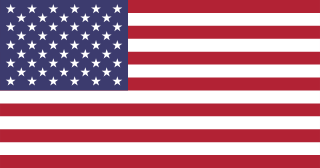
- description: 13 equal horizontal stripes of red (top and bottom) alternating with white; a blue rectangle in the upper-left corner has 50 five-pointed white stars, arranged in nine offset horizontal rows of six stars (top and bottom) alternating with rows of five stars
meaning: the stars represent the 50 states, and the stripes represent the 13 original colonies; blue stands for loyalty, devotion, truth, justice, and friendship; red for courage, zeal, and fervency; white for purity and rectitude of conduct
note 1: sometimes referred to by its nickname of "Old Glory"
note 2: the design and colors have been the basis for a number of other flags, including Chile, Liberia, Malaysia, and Puerto Rico - National symbol(s)
- bald eagle
- National color(s)
- red, white, blue
- National anthem(s)
- title: "The Star-Spangled Banner"
lyrics/music: Francis Scott KEY/John Stafford SMITH
history:
adopted 1931; during the War of 1812, Francis Scott KEY witnessed the successful American defense of Baltimore's Fort McHenry against a British naval bombardment, later writing a poem about it that would become the US national anthem; the lyrics were set to the tune of "The Anacreontic Song;" there are four verses, but only the first verse is sung - National heritage
- total World Heritage Sites: 26 (13 cultural, 12 natural, 1 mixed); note - includes one site in Puerto Rico
selected World Heritage Site locales:
Yellowstone National Park (n); Grand Canyon National Park (n); Cahokia Mounds State Historic Site (c); Independence Hall (c); Statue of Liberty (c); Yosemite National Park (n); Papahānaumokuākea (m); Monumental Earthworks of Poverty Point (c); The 20th-Century Architecture of Frank Lloyd Wright (c); Mesa Verde National Park (c); Mammoth Cave National Park (n); Monticello and the University of Virginia in Charlottesville (c); Olympic National Park (n); Everglades National Park (n); Kluane / Wrangell-St. Elias / Glacier Bay / Tatshenshini-Alsek (n); Redwood National and State Parks (n); Great Smoky Mountains National Park (n); La Fortaleza and San Juan National Historic Site in Puerto Rico (c); Chaco Culture (c); Hawaii Volcanoes National Park (n); Taos Pueblo (c); Carlsbad Caverns National Park (n); Waterton Glacier International Peace Park (n); Moravian Church Settlements (c); San Antonio Missions (c); Hopewell Ceremonial Earthworks (c)