FactbookCompare 0
← Back to all countries
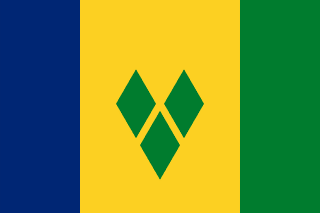
Flag of Saint Vincent and the Grenadines

Saint Vincent and the Grenadines

Saint Vincent and the Grenadines

Background
Resistance from native Caribs prevented colonization on Saint Vincent until 1719. France and England disputed the island for most of the 18th century, but it was ceded to England in 1783. The British prized Saint Vincent because of its fertile soil, which allowed for thriving slave-run plantations of sugar, coffee, indigo, tobacco, cotton, and cocoa. In 1834, the British abolished slavery. Immigration of indentured servants eased the ensuing labor shortage, as did subsequent immigrant waves from Portugal and East India. Conditions remained harsh for both former slaves and immigrant agricultural workers, however, as depressed world sugar prices kept the economy stagnant until the early 1900s. The economy then went into a period of decline, with many landowners abandoning their estates and leaving the land to be cultivated by liberated slaves. Between 1960 and 1962, Saint Vincent and the Grenadines was a separate administrative unit of the Federation of the West Indies. Autonomy was granted in 1969 and independence in 1979. In 2021, the eruption of the La Soufrière volcano in the north of Saint Vincent destroyed much of Saint Vincent’s most productive agricultural lands. Unlike most of its tourism-dependent neighbors, the Vincentian economy is primarily agricultural.
Location
Caribbean, islands between the Caribbean Sea and North Atlantic Ocean, north of Trinidad and Tobago
Geographic coordinates
13 15 N, 61 12 W
Map references
Central America and the Caribbean
Area
total: 389 sq km (Saint Vincent 344 sq km)
land: 389 sq km
water: 0 sq km
Area - comparative
twice the size of Washington, D.C.
Land boundaries
total: 0 km
Coastline
84 km
Maritime claims
territorial sea: 12 nm
contiguous zone: 24 nm
exclusive economic zone: 200 nm
continental shelf: 200 nm
Climate
tropical; little seasonal temperature variation; rainy season (May to November)
Terrain
volcanic, mountainous
Elevation
highest point: La Soufriere 1,234 m
lowest point: Caribbean Sea 0 m
Natural resources
hydropower, arable land
Land use
agricultural land: 17.9% (2023 est.)
agricultural land: arable land: arable land: 5.1% (2023 est.)
agricultural land: permanent crops: permanent crops: 7.7% (2023 est.)
agricultural land: permanent pasture: permanent pasture: 5.1% (2023 est.)
forest: 73.2% (2023 est.)
other: 8.8% (2023 est.)
Irrigated land
10 sq km (2012)
Population distribution
most of the population is concentrated in and around the capital of Kingstown
Natural hazards
hurricanes; La Soufrière volcano on the island of Saint Vincent is a constant threatvolcanism: La Soufrière (1,234 m) last erupted in 1979; the island of Saint Vincent is part of the volcanic-island arc of the Lesser Antilles that extends from Saba in the north to Grenada in the south
Geography - note
the administration of the islands of the Grenadines group is divided between Saint Vincent and the Grenadines and Grenada; Saint Vincent and the Grenadines is composed of 32 islands and cays
Population
total: 100,647 (2024 est.)
male: 51,249
female: 49,398
Nationality
noun: Saint Vincentian(s) or Vincentian(s)
adjective: Saint Vincentian or Vincentian
Ethnic groups
African descent 71.2%, mixed 23%, Indigenous 3%, East Indian/Indian 1.1%, European 1.5%, other 0.2% (2012 est.)
Languages
English, Vincentian Creole English, French patois
Religions
Protestant 75% (Pentecostal 27.6%, Anglican 13.9%, Seventh Day Adventist 11.6%, Baptist 8.9%, Methodist 8.7%, Evangelical 3.8%, Salvation Army 0.3%, Presbyterian/Congregational 0.3%), Roman Catholic 6.3%, Rastafarian 1.1%, Jehovah's Witness 0.8%, other 4.7%, none 7.5%, unspecified 4.7% (2012 est.)
Age structure
0-14 years: 18.8% (male 9,527/female 9,353)
15-64 years: 68.2% (male 35,401/female 33,288)
65 years and over: 13% (2024 est.) (male 6,321/female 6,757)
Dependency ratios
total dependency ratio: 46.5 (2024 est.)
youth dependency ratio: 27.5 (2024 est.)
elderly dependency ratio: 19 (2024 est.)
potential support ratio: 5.3 (2024 est.)
Median age
total: 38.1 years (2025 est.)
male: 37.7 years
female: 37.4 years
Population growth rate
-0.15% (2025 est.)
Birth rate
11.72 births/1,000 population (2025 est.)
Death rate
7.75 deaths/1,000 population (2025 est.)
Net migration rate
-5.43 migrant(s)/1,000 population (2025 est.)
Population distribution
most of the population is concentrated in and around the capital of Kingstown
Urbanization
urban population: 54.3% of total population (2023)
rate of urbanization: 0.94% annual rate of change (2020-25 est.)
Major urban areas - population
27,000 KINGSTOWN (capital) (2018)
Sex ratio
at birth: 1.03 male(s)/female
0-14 years: 1.02 male(s)/female
15-64 years: 1.06 male(s)/female
65 years and over: 0.94 male(s)/female
total population: 1.04 male(s)/female (2024 est.)
Maternal mortality ratio
56 deaths/100,000 live births (2023 est.)
Infant mortality rate
total: 12 deaths/1,000 live births (2025 est.)
male: 13.9 deaths/1,000 live births
female: 10.7 deaths/1,000 live births
Life expectancy at birth
total population: 77.2 years (2024 est.)
male: 75.2 years
female: 79.3 years
Total fertility rate
1.73 children born/woman (2025 est.)
Gross reproduction rate
0.85 (2025 est.)
Health expenditure
Health expenditure (as % of GDP): 5.4% of GDP (2021)
Health expenditure (as % of national budget): 8.6% of national budget (2022 est.)
Physician density
0.66 physicians/1,000 population (2012)
Hospital bed density
4.2 beds/1,000 population (2021 est.)
Sanitation facility access
improved: total: total: 90.2% of population
Obesity - adult prevalence rate
23.7% (2016)
Alcohol consumption per capita
total: 7.48 liters of pure alcohol (2019 est.)
beer: 2.52 liters of pure alcohol (2019 est.)
wine: 0.24 liters of pure alcohol (2019 est.)
spirits: 4.48 liters of pure alcohol (2019 est.)
other alcohols: 0.23 liters of pure alcohol (2019 est.)
Education expenditure
Education expenditure (% GDP): 6.5% of GDP (2023 est.)
Education expenditure (% national budget): 12.6% national budget (2024 est.)
School life expectancy (primary to tertiary education)
total: 15 years (2015 est.)
male: 14 years (2015 est.)
female: 15 years (2015 est.)
Environmental issues
pollution of coastal waters and shorelines from boats; poor land-use planning; deforestation; watershed management; squatter settlement control
International environmental agreements
party to: Biodiversity, Climate Change, Climate Change-Kyoto Protocol, Climate Change-Paris Agreement, Comprehensive Nuclear Test Ban, Desertification, Endangered Species, Environmental Modification, Hazardous Wastes, Law of the Sea, Marine Dumping-London Convention, Ozone Layer Protection, Ship Pollution, Whaling
signed, but not ratified: none of the selected agreements
Climate
tropical; little seasonal temperature variation; rainy season (May to November)
Land use
agricultural land: 17.9% (2023 est.)
agricultural land: arable land: arable land: 5.1% (2023 est.)
agricultural land: permanent crops: permanent crops: 7.7% (2023 est.)
agricultural land: permanent pasture: permanent pasture: 5.1% (2023 est.)
forest: 73.2% (2023 est.)
other: 8.8% (2023 est.)
Urbanization
urban population: 54.3% of total population (2023)
rate of urbanization: 0.94% annual rate of change (2020-25 est.)
Carbon dioxide emissions
total emissions: 268,000 metric tonnes of CO2 (2023 est.)
from coal and metallurgical coke: 19,000 metric tonnes of CO2 (2023 est.)
from petroleum and other liquids: 249,000 metric tonnes of CO2 (2023 est.)
Particulate matter emissions
9.5 micrograms per cubic meter (2019 est.)
Waste and recycling
municipal solid waste generated annually: 31,600 tons (2024 est.)
percent of municipal solid waste recycled: 13.3% (2022 est.)
Total water withdrawal
municipal: 8.5 million cubic meters (2022 est.)
industrial: 2,000 cubic meters (2022 est.)
agricultural: 0 cubic meters (2022 est.)
Total renewable water resources
100 million cubic meters (2022 est.)
Country name
conventional long form: none
conventional short form: Saint Vincent and the Grenadines
etymology: explorer Christopher COLUMBUS named the island after Saint VINCENT of Saragossa because 22 January 1498, the day of discovery, was the saint's feast day
Government type
parliamentary democracy under a constitutional monarchy; a Commonwealth realm
Capital
name: Kingstown
geographic coordinates: 13 08 N, 61 13 W
time difference: UTC-4 (1 hour ahead of Washington, DC, during Standard Time)
Administrative divisions
6 parishes; Charlotte, Grenadines, Saint Andrew, Saint David, Saint George, Saint Patrick
Legal system
English common law
Constitution
history: previous 1969, 1975; latest drafted 26 July 1979, effective 27 October 1979 (The Saint Vincent Constitution Order 1979)
amendment process: proposed by the House of Assembly; passage requires at least two-thirds majority vote of the Assembly membership and assent of the governor general; passage of amendments to constitutional sections on fundamental rights and freedoms, citizen protections, various government functions and authorities, and constitutional amendment procedures requires approval by the Assembly membership, approval in a referendum of at least two thirds of the votes cast, and assent of the governor general
International law organization participation
has not submitted an ICJ jurisdiction declaration; accepts ICCt jurisdiction
Citizenship
citizenship by birth: yes
citizenship by descent only: at least one parent must be a citizen of Saint Vincent and the Grenadines
dual citizenship recognized: yes
residency requirement for naturalization: 7 years
Suffrage
18 years of age; universal
Executive branch
chief of state: King CHARLES III (since 8 September 2022); represented by Governor General Stanley JOHN (since 6 January 2026)
head of government: Prime Minister Godwin FRIDAY (since 28 November 2025)
cabinet: Cabinet appointed by the governor general on the advice of the prime minister
election/appointment process: the monarchy is hereditary; governor general appointed by the monarch; following legislative elections, the governor general usually appoints the leader of the majority party or majority coalition as prime minister; deputy prime minister also appointed by governor general on the advice of the prime minister
Legislative branch
legislature name: House of Assembly
legislative structure: unicameral
number of seats: 22 (15 directly elected; 6 appointed)
electoral system: plurality/majority
scope of elections: full renewal
term in office: 5 years
most recent election date: 11/27/2025
parties elected and seats per party: United Labour Party (ULP) (9); New Democratic Party (NDP) (6)
percentage of women in chamber: 21.7%
expected date of next election: November 2030
Judicial branch
highest court(s): the Eastern Caribbean Supreme Court (ECSC) is the superior court of the Organization of Eastern Caribbean States; the ECSC is headquartered on St. Lucia and consists of the Court of Appeal -- headed by the chief justice and 4 judges -- and the High Court with 18 judges; the Court of Appeal travels to member states on a schedule to hear appeals from the High Court and subordinate courts; Saint Vincent and the Grenadines is a member of the Caribbean Court of Justice
judge selection and term of office: chief justice of Eastern Caribbean Supreme Court appointed by the British monarch; other justices and judges appointed by the Judicial and Legal Services Commission, an independent body of judicial officials; Court of Appeal justices appointed for life with mandatory retirement at age 65; High Court judges appointed for life with mandatory retirement at age 62
subordinate courts: magistrates' courts
Political parties
New Democratic Party or NDPSVG Green Party or SVGPUnity Labor Party or ULP (formed in 1994 by the coalition of Saint Vincent Labor Party or SVLP and the Movement for National Unity or MNU)
Diplomatic representation in the US
chief of mission: Ambassador Lou-Anne Gaylene GILCHRIST (since 18 January 2017)
chancery: 1627 K Street, NW, Suite 704, Washington, DC 20006
telephone: [1] (202) 364-6730
FAX: [1] (202) 364-6736
email address and website: mail@embsvg.comhttp://wa.embassy.gov.vc/washington/
consulate(s) general: New York
Diplomatic representation from the US
embassy: the US does not have an embassy in Saint Vincent and the Grenadines; the US Ambassador to Barbados is accredited to Saint Vincent and the Grenadines
International organization participation
ACP, ACS, AOSIS, C, Caricom, CDB, CELAC, FAO, G-77, IBRD, ICAO, ICCt, ICRM, IDA, IFAD, IFRCS, ILO, IMF, IMO, Interpol, IOC, IOM, ISO (subscriber), ITU, MIGA, NAM, OAS, OECS, OPANAL, OPCW, Petrocaribe, UN, UNCTAD, UNESCO, UNIDO, UPU, WFTU (NGOs), WHO, WIPO, WTO
Independence
27 October 1979 (from the UK)
National holiday
Independence Day, 27 October (1979)
Flag
description: three vertical bands of blue (left side), gold (double-width), and green; the gold band has three green diamonds arranged in a "V" pattern that stands for "Vincent" meaning: the diamonds represent the islands as "the Gems of the Antilles" and are set slightly lowered in the gold band to reflect the country's position in the Antilles; blue stands for the tropical sky and sea, yellow for the sand, and green for vegetation
National symbol(s)
Saint Vincent parrot
National color(s)
blue, gold, green
National anthem(s)
title: "God Save the King"
lyrics/music: unknown
history: in use since 1745
Economic overview
upper middle-income Caribbean island economy; key agriculture and tourism sectors; environmentally fragile; diversifying economy across services, science and knowledge, and creative industries; CARICOM member and US Caribbean Basin Initiative beneficiary
Real GDP (purchasing power parity)
Real GDP (purchasing power parity) 2024: $1.883 billion (2024 est.)
Real GDP (purchasing power parity) 2023: $1.809 billion (2023 est.)
Real GDP (purchasing power parity) 2022: $1.718 billion (2022 est.)
Real GDP growth rate
Real GDP growth rate 2024: 4.1% (2024 est.)
Real GDP growth rate 2023: 5.3% (2023 est.)
Real GDP growth rate 2022: 3.1% (2022 est.)
Real GDP per capita
Real GDP per capita 2024: $18,700 (2024 est.)
Real GDP per capita 2023: $17,900 (2023 est.)
Real GDP per capita 2022: $16,800 (2022 est.)
GDP (official exchange rate)
$1.157 billion (2024 est.)
Inflation rate (consumer prices)
Inflation rate (consumer prices) 2024: 3.6% (2024 est.)
Inflation rate (consumer prices) 2023: 4.6% (2023 est.)
Inflation rate (consumer prices) 2022: 5.7% (2022 est.)
GDP - composition, by sector of origin
agriculture: 3.5% (2024 est.)
industry: 15.4% (2024 est.)
services: 66.4% (2024 est.)
Agricultural products
bananas, root vegetables, plantains, spices, coconuts, fruits, apples, vegetables, mangoes/guavas, sweet potatoes (2023)
Industries
tourism; food processing, cement, furniture, clothing, starch
Industrial production growth rate
7.3% (2024 est.)
Labor force
52,100 (2024 est.)
Unemployment rate
Unemployment rate 2024: 18.1% (2024 est.)
Unemployment rate 2023: 18.6% (2023 est.)
Unemployment rate 2022: 19.5% (2022 est.)
Youth unemployment rate (ages 15-24)
total: 41.4% (2024 est.)
male: 41.4% (2024 est.)
female: 41.4% (2024 est.)
Remittances
Remittances 2024: 8.2% of GDP (2024 est.)
Remittances 2023: 8.5% of GDP (2023 est.)
Remittances 2022: 9% of GDP (2022 est.)
Budget
revenues: $226.404 million (2017 est.)
expenditures: $208.744 million (2017 est.)
Public debt
Public debt 2016: 82.8% of GDP (2016 est.)
Taxes and other revenues
23.8% (of GDP) (2017 est.)
Current account balance
Current account balance 2024: -$156.589 million (2024 est.)
Current account balance 2023: -$180.43 million (2023 est.)
Current account balance 2022: -$199.727 million (2022 est.)
Exports
Exports 2024: $425.182 million (2024 est.)
Exports 2023: $345.098 million (2023 est.)
Exports 2022: $278.292 million (2022 est.)
Exports - partners
Croatia 16%, Barbados 14%, USA 10%, St. Lucia 10%, St. Kitts & Nevis 8% (2023)
Exports - commodities
ships, wheat flours, animal food, shellfish, construction vehicles (2023)
Imports
Imports 2024: $641.179 million (2024 est.)
Imports 2023: $588.865 million (2023 est.)
Imports 2022: $540.833 million (2022 est.)
Imports - partners
USA 37%, Italy 7%, Trinidad & Tobago 7%, China 6%, UK 6% (2023)
Imports - commodities
ships, refined petroleum, wheat, coal, poultry (2023)
Reserves of foreign exchange and gold
Reserves of foreign exchange and gold 2024: $316.824 million (2024 est.)
Reserves of foreign exchange and gold 2023: $280.564 million (2023 est.)
Reserves of foreign exchange and gold 2022: $320.193 million (2022 est.)
Debt - external
Debt - external 2023: $456.971 million (2023 est.)
Exchange rates
Currency: East Caribbean dollars (XCD) per US dollar -
Exchange rates 2024: 2.7 (2024 est.)
Exchange rates 2023: 2.7 (2023 est.)
Exchange rates 2022: 2.7 (2022 est.)
Exchange rates 2021: 2.7 (2021 est.)
Exchange rates 2020: 2.7 (2020 est.)
Electricity access
electrification - total population: 100% (2022 est.)
Electricity
installed generating capacity: 55,000 kW (2023 est.)
consumption: 140.316 million kWh (2023 est.)
transmission/distribution losses: 10.868 million kWh (2023 est.)
Electricity generation sources
fossil fuels: 86.1% of total installed capacity (2023 est.)
solar: 1.3% of total installed capacity (2023 est.)
hydroelectricity: 12.6% of total installed capacity (2023 est.)
Coal
exports: 8 metric tons (2023 est.)
imports: 8,000 metric tons (2023 est.)
Petroleum
refined petroleum consumption: 2,000 bbl/day (2023 est.)
Energy consumption per capita
Total energy consumption per capita 2023: 37.253 million Btu/person (2023 est.)
Telephones - fixed lines
total subscriptions: 10,000 (2023 est.)
subscriptions per 100 inhabitants: 10 (2023 est.)
Telephones - mobile cellular
total subscriptions: 103,000 (2023 est.)
subscriptions per 100 inhabitants: 100 (2022 est.)
Broadcast media
St. Vincent and the Grenadines Broadcasting Corporation operates 1 TV station and 5 repeater stations that provide near total coverage to the multi-island state; multi-channel cable TV service available; a partially government-funded national radio service broadcasts on 1 station and has 2 repeater stations; about a dozen privately owned radio stations and repeater stations
Internet country code
.vc
Internet users
percent of population: 76% (2023 est.)
Broadband - fixed subscriptions
total: 31,000 (2023 est.)
subscriptions per 100 inhabitants: 30 (2023 est.)
Civil aircraft registration country code prefix
J8
Airports
5 (2025)
Merchant marine
total: 830 (2023)
by type: bulk carrier 30, container ship 18, general cargo 137, oil tanker 16, other 629
Ports
total ports: 1 (2024)
large: 0
medium: 0
small: 1
very small: 0
ports with oil terminals: 1
key ports: Kingstown
Military and security forces
no regular military forces; Ministry of National Security: Royal Saint Vincent and the Grenadines Police Force (RSVPF) (2025)
Military - note
the country has been a member of the Caribbean Regional Security System (RSS) since its creation in 1982; RSS signatories (Antigua and Barbuda, Barbados, Dominica, Grenada, Guyana, Saint Kitts and Nevis, and Saint Lucia) agreed to prepare contingency plans and assist one another, on request, in national emergencies, prevention of smuggling, search and rescue, immigration control, fishery protection, customs and excise control, maritime policing duties, protection of off-shore installations, pollution control, national and other disasters, and threats to national security (2025)